


Listen to the article
Central African Republic’s Constitutional Council Upholds Touadéra’s Third-Term Victory
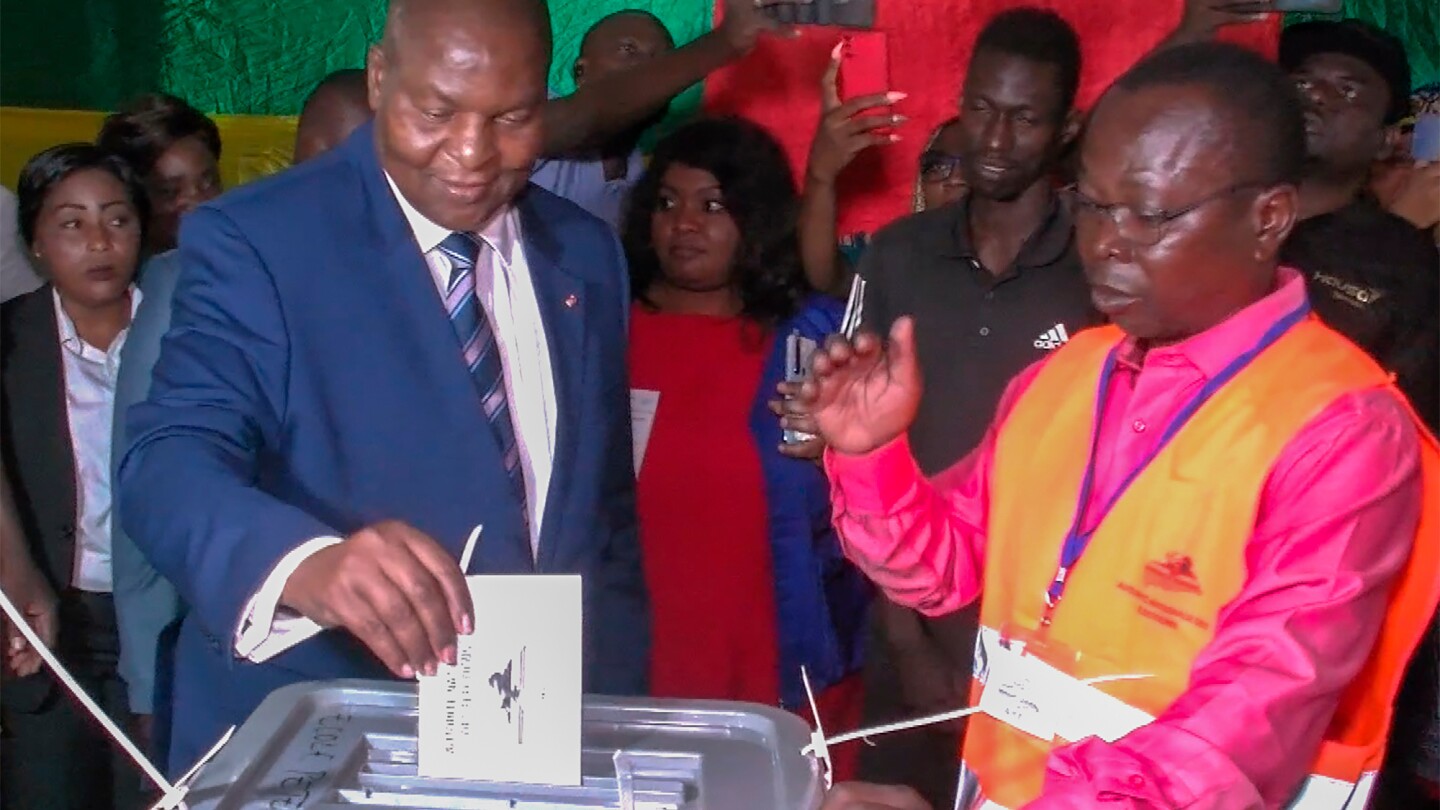
The Central African Republic’s Constitutional Council officially confirmed President Faustin-Archange Touadéra’s victory in last month’s presidential election on Monday, rejecting opposition appeals and paving the way for his controversial third term in office.
According to the final results, Touadéra secured 77.9% of the vote, slightly higher than the 76.15% announced in preliminary results earlier this month. His main challenger, Anicet Georges Dologuélé, received 13.1%, marginally lower than the initially reported 14.66%.
The Council dismissed Dologuélé’s appeal to annul the election, citing a lack of supporting documentation. Dologuélé had contested the results on January 6, alleging widespread fraud and improper conduct by the National Elections Authority. In a bold move earlier this month, he had even proclaimed himself the rightful winner.
Following the Council’s decision, Dologuélé’s party, the Union for Central African Renewal, issued a statement on Facebook accepting the ruling in a “spirit of republican responsibility” while maintaining that their political struggle would continue. “Our fight has never been one of disorder. It is about electoral truth, the sovereignty of the people and respect for democratic rules,” said party spokesperson Yves Sanghamy.
The election took place in a highly contentious political climate. Touadéra, 68, faced only six challengers after the main opposition coalition boycotted the process, denouncing what they described as an unequal political environment that favored the incumbent. Political analysts note that Touadéra has systematically consolidated power within state institutions during his tenure.
A particularly controversial development occurred in 2023, when a referendum removed presidential term limits in the country’s constitution. This constitutional change, criticized by opposition groups and some international observers, allowed Touadéra to pursue his third term.
The election marked a historic moment for the Central African Republic, as approximately 2.4 million registered voters participated in the country’s first simultaneous vote for all levels of government, including presidential, legislative, regional, and municipal positions. However, this milestone was overshadowed by concerns about the fairness of the electoral process.
The Central African Republic has struggled with political instability and armed conflict since 2013, when predominantly Muslim rebels known as Séléka seized power and ousted then-President François Bozizé. Though a peace agreement between the government and 14 armed groups was signed in 2019, it has only partially reduced violence, with six groups subsequently withdrawing from the accord.
The country’s security situation remains complex, particularly due to the significant role played by Russian mercenary forces. The Wagner Group, a Russian private military company, has been responsible for President Touadéra’s personal security and has assisted government forces in their fight against rebel groups. However, tensions have reportedly emerged between Touadéra and Moscow after Russia demanded the replacement of Wagner with the government-controlled Africa Corps.
This arrangement highlights the Central African Republic’s geopolitical importance, as Russia has sought to expand its influence in Africa through military presence and resource extraction agreements. The country is rich in diamonds, gold, and other minerals, making it an attractive partner for foreign powers seeking to secure access to natural resources.
President Touadéra’s inauguration is scheduled for March 30, at which point he will officially begin his third term. The international community will be watching closely to see how he addresses the country’s persistent challenges, including armed conflict, poverty, and the influence of foreign actors in national affairs.
Fact Checker
Verify the accuracy of this article using The Disinformation Commission analysis and real-time sources.

12 Comments
The mining and resource sector in the Central African Republic will be closely watching this political development, as it could impact investment and operations in the country.
Stability and security are crucial for the extractive industries to thrive, so the resolution of this electoral dispute will be important for the country’s economic future.
This election outcome highlights the ongoing political challenges in the Central African Republic. I hope the government can work to address the concerns raised by the opposition and build greater trust in the democratic process.
This election outcome is certainly controversial, with claims of fraud and improper conduct. It will be interesting to see how the political situation develops in the Central African Republic going forward.
The constitutional council’s decision to uphold the results despite the opposition’s appeals raises concerns about the integrity of the electoral process.
This election result is sure to have ripple effects throughout the region, particularly in terms of regional security and stability. The mining and energy sectors will be watching closely.
With the president’s third term now confirmed, I wonder what his policy priorities will be regarding the mining and natural resource sectors. Transparency and good governance will be key.
The high margin of victory for President Touadéra is surprising given the allegations of fraud. I wonder what independent election observers have to say about the credibility of these results.
The opposition’s acceptance of the ruling in a ‘spirit of republican responsibility’ suggests they may be focusing on future political battles rather than contesting this outcome.
The mining and commodities community will be closely monitoring the situation in the Central African Republic to assess the investment climate and potential risks or opportunities.
Ultimately, the Central African Republic needs to find a way to address the underlying political and security challenges that have plagued the country for years. Transparent and accountable governance will be crucial.
While the electoral process may have been flawed, it’s important that the political parties work together to find a constructive path forward for the country and its citizens.