


Listen to the article
Muslims Observe Ramadan During Winter Olympics in Italy
This year’s Olympic and Paralympic Games in Italy coincide with Ramadan, presenting unique challenges and opportunities for Muslim participants and visitors. The Muslim holy month, a time for dawn-to-dusk fasting, religious reflection and communal celebration, is being observed differently across the two host cities.
In Milan, a cosmopolitan hub with established Islamic centers, one mosque is extending hospitality beyond its community. Meanwhile, Muslims in the mountain resort of Cortina d’Ampezzo face greater challenges in finding suitable prayer spaces.
Open Doors in Milan’s Muslim Community
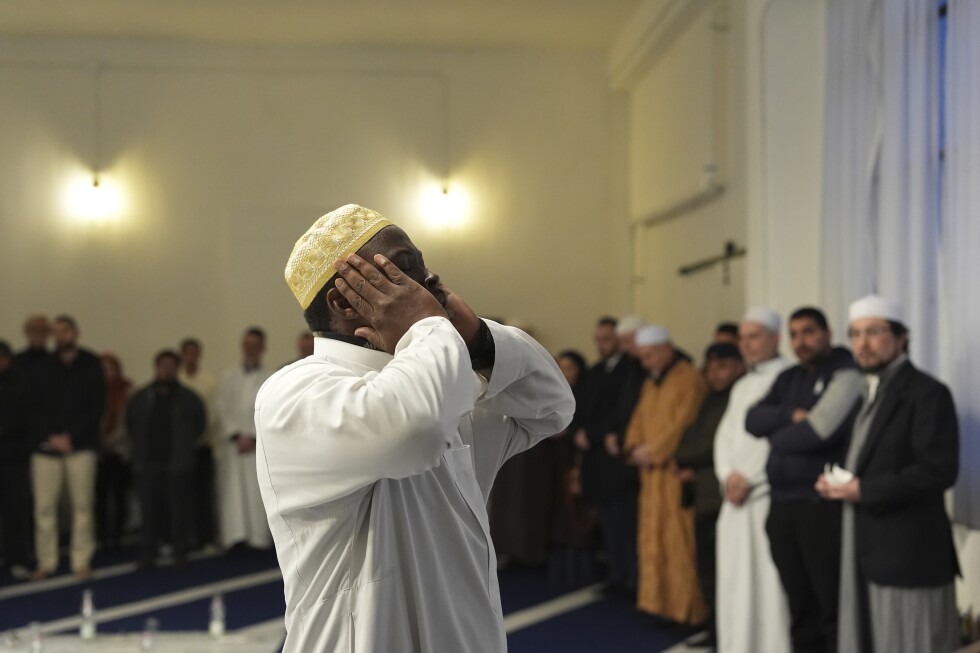
Milan’s Al-Wahid mosque, officially recognized as a place of worship since 2000, has embraced the Olympic period as an opportunity for interfaith engagement. Located near the city’s Navigli district, the mosque is hosting weekly open gatherings through March 14, welcoming visitors of all faiths to participate in iftar dinners when Muslims break their daily fast.
“The Olympics are a symbolic moment,” explains Imam Yahya Pallavicini, vice president of the Italian Islamic Religious Community (COREIS). “Sport, culture and art can help reduce prejudice and fear toward a particular culture or religious identity.”
On a recent Friday evening, dozens of Muslim worshippers gathered beneath hanging lamps, waiting for the call to prayer before breaking their fast with dates offered on silver plates. After sharing a meal of lentils, rice and meat, they concluded their evening with prayer.
These interfaith iftars reflect a growing global trend seen in Muslim-majority countries like Indonesia and Pakistan, as well as in nations where Muslims are a minority, such as Australia and the United States.
Demographic Shifts in Italy’s Religious Landscape
According to a 2025 report by ISMU, a Milan-based migration research institute, nearly 400,000 Muslims live in Lombardy, the Italian region that includes Milan. The largest groups originate from Morocco and Egypt, with significant communities also from Bangladesh, Pakistan and Bosnia.
While Italy remains predominantly Catholic, the Muslim population has grown to 1.7 million, now representing over 30% of the foreign resident population for the first time. This demographic shift occurs against a backdrop of political tension, as Premier Giorgia Meloni’s far-right government has pledged to crack down on migration.
Pallavicini notes that Italy’s Muslim community is evolving beyond its migrant roots. “A growing number of second-generation Italian Muslims, converts, and people born in Italy are part of today’s Muslim population,” he said.
Challenges in the Mountain Resort
The situation differs dramatically in Cortina d’Ampezzo, an upscale mountain town home to just over 5,000 residents, where finding prayer spaces has proven difficult for Muslim visitors.
Rabah Boubegtiten, who traveled from Paris to work as a driver with Qatari security, described driving over an hour on challenging roads to reach a mosque in Brunico, which he located through social media rather than traditional search methods.
“There are many nationalities here, many Muslims from various countries: Algerians, Tunisians, other Africans, and many Qataris because we are working with them during the Winter Olympic Games,” Boubegtiten explained. “They look everywhere to find a place to pray, but it’s almost impossible.”
While interfaith prayer rooms exist in each Olympic village for athletes, these spaces aren’t accessible to the general public or support staff.
Community Formation in the Dolomites
Despite these challenges, Muslim communities are gradually establishing themselves in the Dolomite region. In Brunico, a town of about 17,000 people, a recent Friday prayer attracted approximately 120 worshippers who gathered in a modest space surrounded by curtains. Following the service, attendees were asked for donations to help cover rent and utility bills.
Kreem Wardi, a 20-year-old student with a Moroccan Muslim father and Italian Catholic mother, notes that practicing Ramadan in Italy is possible, though not always convenient. “It is not easy to find a mosque everywhere in Italy. But in this area, we are fine for now, inshallah,” he said.
Wardi observed that the Brunico community rarely extends iftar invitations to non-Muslims or actively shares Ramadan traditions. “They maybe don’t want to talk about Islam. It’s not that they hate us Muslims, but it’s just that they are maybe not interested, so we don’t want to force it upon them,” he explained.
A Vision for Inclusive Recognition
Back in Milan, Amina Croce represents a new generation of Italian Muslims. Born to Italian Catholic parents who converted to Islam, the 28-year-old sees her faith as intrinsically connected to European history and identity.
“We believe this diversity is part of Italy’s broader cultural heritage,” said Croce, who leads the youth division of COREIS. “It may still be underappreciated, but we hope it will be recognized more in the future.”
As the Winter Olympics spotlight shines on Italy, the experiences of Muslim communities in both host cities reflect broader questions about religious diversity, integration, and recognition in contemporary European society.
Fact Checker
Verify the accuracy of this article using The Disinformation Commission analysis and real-time sources.

5 Comments
The challenges faced by Muslims in Cortina d’Ampezzo highlight the importance of advance planning and interfaith collaboration when hosting major events. Providing adequate prayer spaces is crucial for inclusion.
Interesting to see how different host cities are addressing the needs of Muslim Olympians and visitors during Ramadan. It’s great that the Al-Wahid mosque in Milan is reaching out to the wider community.
Sports and culture can indeed be powerful tools for bringing people together and promoting understanding. The open iftar dinners at the Al-Wahid mosque sound like a wonderful initiative.
The contrasting experiences in Milan and Cortina d’Ampezzo underscore the need for consistent, equitable policies to ensure all faiths can fully participate in and enjoy the Olympic experience.
Curious to learn more about the specific accommodations and support offered to Muslim participants and spectators across the different Olympic venues in Italy. Diversity and inclusion should be a top priority.