


Listen to the article
Violence Sparks Concerns Over Guadalajara’s World Cup Host Status
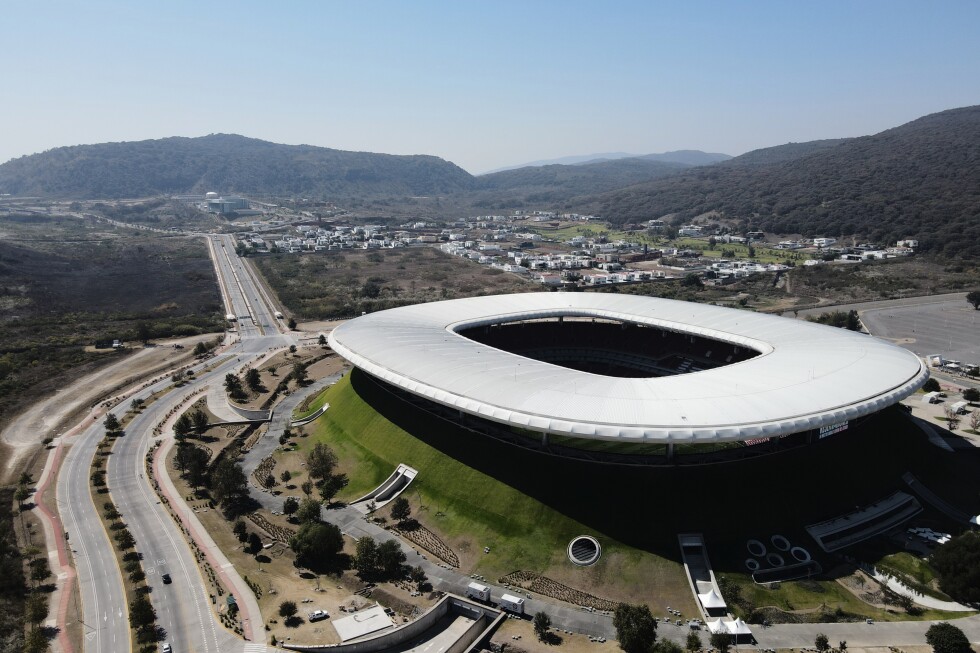
Hugo Alejandro Pérez was inside his home near Guadalajara’s FIFA World Cup stadium when gunfire and explosions erupted just outside his door. The 53-year-old restaurant owner had already harbored doubts about his city hosting the international sporting event. Now, following the violent aftermath of the Mexican military’s killing of the country’s most powerful cartel boss, his skepticism has only deepened.
“I don’t think they should host the World Cup here,” Pérez said. “We have so many problems, and they want to invest in the World Cup? With all the violence, it’s not a good idea.”
Pérez’s concerns reflect growing questions about Guadalajara’s capacity to safely host World Cup matches scheduled for 2026, even as the Mexican government vows the international event—jointly hosted by Mexico, the United States and Canada—will proceed without disruption.
President Claudia Sheinbaum has offered her assurances, stating at a recent news briefing that there is “every guarantee” and “no risk” for fans planning to attend the tournament. Jalisco Governor Jesús Pablo Lemus reinforced this message, saying he had spoken with local FIFA officials who have “absolutely no intention of removing any venues from Mexico.”
However, the Portuguese soccer federation announced it was “closely monitoring the delicate situation” in Mexico. The Portuguese national team is scheduled to play a friendly match against Mexico on March 28 at Mexico City’s newly renovated Azteca Stadium, which is set to host the opening World Cup match on June 11.
The western state of Jalisco, with Guadalajara as its capital, has long faced scrutiny due to cartel violence. The region serves as the central hub for the Jalisco New Generation Cartel (CJNG), whose leader Nemesio Oseguera Cervantes, known as “El Mencho,” was killed Sunday during a military operation.
The aftermath of Oseguera Cervantes’ death has been devastating. The operation and subsequent waves of violence killed 70 people. Cartel gunmen set fire to vehicles to block streets across multiple states, particularly in Jalisco, and engaged in firefights with Mexican forces through Monday, though the government claims the situation is now under control.
The military operation comes as Mexico’s government has intensified its offensive against cartels, partly in response to demands from U.S. President Donald Trump to crack down on criminal organizations. The White House confirmed that the U.S. provided intelligence support for the operation against Oseguera Cervantes, who was among the most wanted criminals in both countries.
Many security experts express concern that the death of “El Mencho” could trigger even more violence. The “kingpin strategy” of targeting cartel leaders has been criticized—even by President Sheinbaum herself—for often sparking internal conflicts between cartel factions and encouraging rival groups to make territorial grabs.
Vanda Felbab-Brown, an expert at the Brookings Institution, doesn’t anticipate immediate retaliatory attacks but notes the uncertain future: “If there is no clear line of succession (in CJNG), we might see a lot of fighting within the cartel, its breakup, and there are a lot of scenarios.”
On the day violence erupted, Pérez sheltered people from the street in his home as gunmen and soldiers exchanged fire for an hour. He now questions the logic of holding World Cup matches in Guadalajara, expressing doubt that any economic benefits would reach working-class neighborhoods like his, despite being just minutes from the stadium.
The World Cup is projected to generate $3 billion for Mexico’s economy, according to the Mexican Soccer Federation. But for residents like Pérez, the potential benefits seem remote compared to the immediate security concerns.
“It doesn’t help us residents at all, honestly. They should move it to Monterrey or Mexico City. But right now here, we’re not convinced,” he said. “Things aren’t in good enough shape for foreigners to be coming to Jalisco for an event like this.”
Despite these concerns, Guadalajara was returning to normal by Tuesday. Businesses reopened after two days of closure, and streets filled with traffic once again. Workers continued renovations at the World Cup stadium while heavily armed police and National Guard members patrolled the city.
Some residents, like taxi driver Juan Carlos Pila, believe the violence has been overblown by social media and local news. “People should come, man. Everyone is welcome,” he said after spending two days waiting with his family for calm to return.
Others remain concerned about the long-term impact. In Tapalpa, the mountain town where “El Mencho” was killed, store owner Maria Dolores Aguirre worries about the effect on tourism, which her family business has depended on for over 50 years.
“It’s going to affect us. It’s collateral damage,” Aguirre said. “The government is going to have to have a lot of security… The entire world just saw what happened and, of course, people are going to think twice about coming.”
Fact Checker
Verify the accuracy of this article using The Disinformation Commission analysis and real-time sources.

10 Comments
The recent cartel violence is deeply troubling. While the economic benefits of hosting the World Cup could be significant, public safety has to come first. I hope the authorities take this threat seriously and act accordingly.
Well said. The optics of hosting the World Cup amid ongoing cartel conflicts could be disastrous if not managed carefully. Tough decisions may lie ahead for Mexico’s leaders.
It’s understandable that locals are skeptical about hosting the World Cup given the ongoing cartel violence. The government’s assurances will need to be backed up by concrete, visible security measures to convince the public. This is a high-stakes challenge for Mexico.
Absolutely. The stakes are incredibly high, both in terms of Mexico’s global reputation and the very real risks to public safety. Transparent, collaborative planning will be essential to make this work.
The cartel violence in Mexico is deeply concerning. While the government insists the World Cup will be safe, I can understand the locals’ doubts and worries. Security must be the top priority for an event of this scale.
Agreed, the safety of players and fans should be the primary concern. Mexico has a lot of work to do to restore stability and public trust before the World Cup.
It’s a tough situation. The World Cup could be an opportunity to showcase Mexico, but the violence poses real risks. I hope the authorities can take decisive action to improve security and reassure the public.
Absolutely. The government’s assurances will ring hollow if they can’t demonstrably improve the situation on the ground. Transparent planning and contingency measures are crucial.
Cartel violence is a major concern that shouldn’t be downplayed. The government needs to work closely with local communities to develop comprehensive security plans before committing to host World Cup matches. Transparency and public trust will be key.
I agree. Rushing ahead without addressing the underlying instability and threats could backfire spectacularly. Mexico has to find a way to balance economic and political interests with the safety of players and fans.