


Listen to the article
Thousands gathered in Kathmandu on Sunday to celebrate Shivaratri, one of Nepal’s most significant Hindu festivals, where cannabis consumption was openly permitted in honor of Lord Shiva.
The ancient Pashupatinath Temple became the focal point as devotees from across Nepal and neighboring India lined up to pay homage to Shiva, a principal deity in Hinduism. The festival, which translates to “Shiva’s Night,” represents one of the rare occasions when marijuana use is tolerated in a country where it is otherwise strictly prohibited.
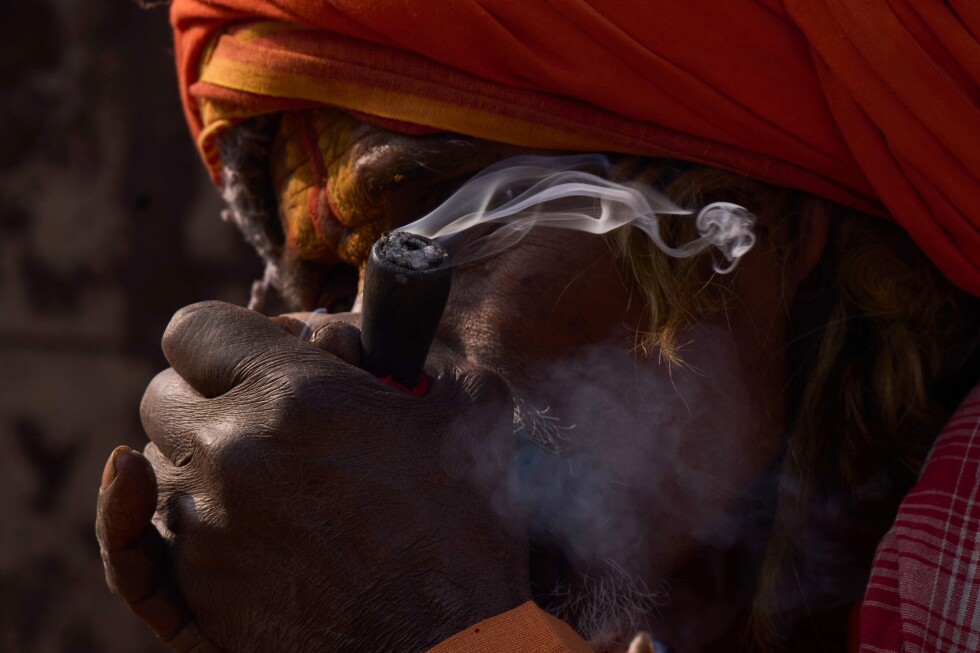
Along the banks of the Bagmati River opposite the temple, holy men known as sadhus, their bodies covered in sacred ash, could be seen smoking marijuana freely. Many Nepali men and women joined them on the forested Bankali hills, participating in what is considered a spiritually significant practice during the festival.
“This is the one day we can connect with Shiva through this sacred plant,” said Ramesh Bhandari, a 28-year-old devotee from Kathmandu who attends the festival annually. “It’s not about recreation, but about following traditions that are thousands of years old.”
The connection between Shiva and cannabis runs deep in Hindu mythology. Iconography often depicts the deity smoking the substance, and religious texts reference its use in spiritual practices. During Shivaratri, this connection is celebrated through rituals, prayers, and traditional songs that echoed throughout the temple grounds as devotees danced in devotion.
Outside this religious context, however, Nepal maintains strict anti-drug policies. Marijuana use typically carries penalties of up to one month imprisonment for users, while traffickers can face up to ten years behind bars. The contrast between these stringent laws and the festival’s permissive atmosphere highlights the complex relationship between cultural traditions and modern legislation.
Nepal’s history with cannabis has seen dramatic shifts over the decades. In the 1960s and early 1970s, the country became a renowned destination on the “hippie trail,” with government-licensed shops and tea houses legally selling marijuana products to tourists and locals alike. The practice was abruptly ended in 1976 when marijuana was outlawed under pressure from international anti-narcotics campaigns.
In recent years, there have been growing efforts to reconsider these prohibitions. Several members of Nepal’s parliament have proposed bills to decriminalize cannabis, particularly for medicinal purposes and to allow farming in rural areas where the plant grows naturally and could provide economic opportunities for local communities.
Proponents argue that legalization could boost tourism and create a valuable export industry, especially as many Western nations have begun liberalizing their own marijuana laws. A 2020 proposal sought to regulate cannabis production and sales, but progress has stalled amid political changes and competing legislative priorities.
“Nepal could benefit enormously from regulated cannabis production,” explained Dr. Suman Thapa, an economist who has studied potential market impacts. “The plant grows naturally here and could provide sustainable income for farmers in remote regions who currently struggle with limited agricultural options.”
For now, the Shivaratri festival remains one of the few contexts where authorities tacitly allow this ancient practice to continue. The celebration represents a living museum of pre-prohibition customs, preserved within the bounds of religious exception.
As devotees departed the temple grounds by sunset, many carried with them not just the spiritual blessing of having honored Shiva, but also a connection to practices that have defined Nepali Hindu traditions for centuries—practices that exist in an increasingly complicated legal and cultural space in modern Nepal.
Fact Checker
Verify the accuracy of this article using The Disinformation Commission analysis and real-time sources.

10 Comments
Fascinating how the Shivaratri festival in Nepal incorporates the ritualistic use of cannabis. It’s a unique cultural tradition with deep roots in Hindu mythology and spirituality. While the open consumption may raise some eyebrows, it’s fascinating to learn about the religious significance behind the practice.
I agree, it’s a complex and nuanced issue. The religious and cultural context is important to consider, rather than simply judging it through a modern legal lens. It’s valuable to learn about these traditional practices, even if they differ from current norms.
This article provides an intriguing look at the intersection of spirituality, culture, and drug use. The Shivaratri festival’s embrace of cannabis consumption, despite its general prohibition, highlights the contextual nature of such practices. It’s a reminder that societal norms around substances can vary greatly across different belief systems and traditions.
You make a good point. It’s important to approach these topics with an open mind and understanding of diverse cultural perspectives, rather than imposing a narrow, Western-centric view. This festival showcases the complexity of how different societies view and interact with certain substances.
The Shivaratri festival in Nepal provides a fascinating window into the historical and religious significance of cannabis use in Hinduism. While the open consumption may surprise some, it’s clear that for many devotees, this practice is deeply rooted in spiritual tradition and connection to the divine. It’s a nuanced issue that warrants careful consideration of cultural context.
I agree, this festival highlights the need to approach discussions around drug use and legality with nuance and cultural awareness. The religious and spiritual dimensions of cannabis consumption in Hinduism add important layers of complexity that shouldn’t be overlooked.
This article offers a thought-provoking look at the interplay between religion, culture, and the legal status of certain substances. The open embrace of cannabis use during the Shivaratri festival in Nepal serves as a reminder that our modern notions of legality and morality surrounding drugs can be heavily influenced by cultural context. It’s a complex issue that deserves careful examination.
Well said. This festival highlights how cultural and religious traditions can shape very different attitudes and practices around substances that may be prohibited in other contexts. It’s a valuable lesson in the need for nuance and cultural sensitivity when approaching these topics.
The Shivaratri festival in Nepal provides a fascinating glimpse into the religious and cultural significance of cannabis use within Hinduism. While the open consumption may surprise some, it’s clear that for many devotees, this practice is deeply rooted in spiritual tradition and connection to the divine. It’s a complex issue that warrants careful consideration of historical and cultural context.
Absolutely. This festival is a powerful reminder that our modern, Western-centric notions of legality and morality surrounding drugs can be heavily influenced by cultural context. It’s a valuable lesson in approaching these topics with nuance and an open mind to diverse perspectives.