


Listen to the article
Canadian Prime Minister Mark Carney has called for Andrew Mountbatten-Windsor, formerly known as Prince Andrew, to be formally removed from the British royal line of succession due to his controversial associations with convicted sex offender Jeffrey Epstein.
Speaking to journalists during an official visit to Tokyo, Carney emphasized that Mountbatten-Windsor’s actions, which previously led to him being stripped of his royal titles, “necessitate” his complete removal from the line of potential heirs to the British throne.
“Even though he is well down the line of succession, the point of principle stands,” Carney stated, highlighting that a formal process exists for such removals and should be followed in this case.
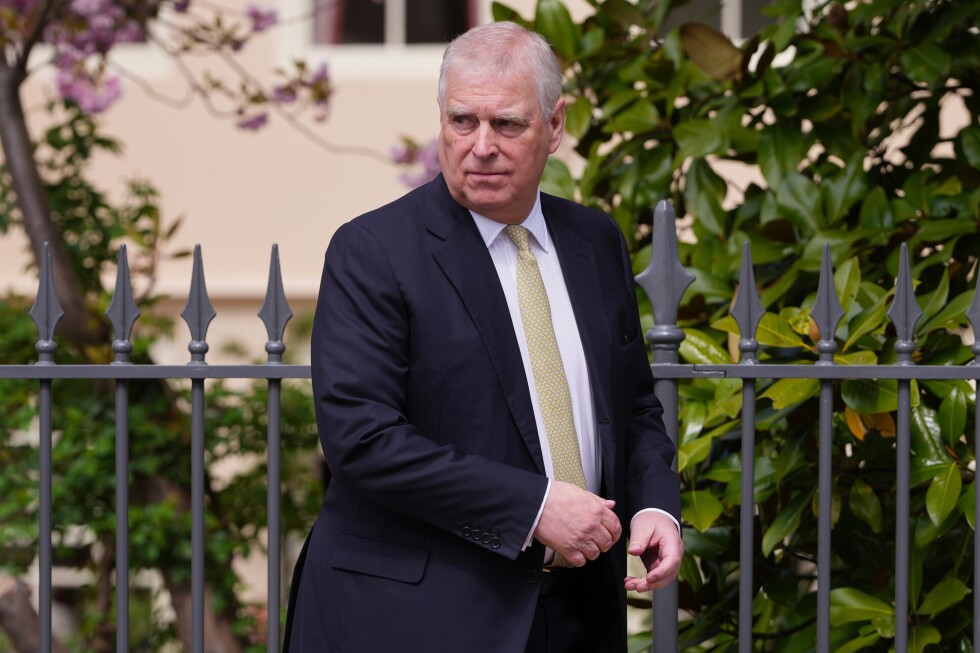
Mountbatten-Windsor, who is the younger brother of King Charles III, currently remains eighth in line to the British throne, despite having lost his royal titles and public duties in October following intense scrutiny over his connections to Epstein. The former prince has faced significant public criticism since his disastrous 2019 BBC interview in which he attempted to explain his friendship with the convicted sex offender.
The call from Canada’s prime minister carries particular weight given the country’s constitutional relationship with the British monarchy. King Charles III serves as Canada’s head of state, with the nation remaining one of the key Commonwealth realms where the British monarch continues to hold this position.
Carney, who previously served as the Governor of the Bank of England before entering Canadian politics, described Mountbatten-Windsor’s actions as “deplorable” and suggested that formal removal from succession would be an appropriate response to the controversy that has damaged the monarchy’s reputation.
Royal succession in the United Kingdom follows a clear order, with King Charles III’s eldest son, Prince William, currently positioned as heir to the throne. William’s three children—Prince George, Princess Charlotte, and Prince Louis—follow their father in the line of succession, making them second, third, and fourth in line respectively.
The British royal succession is governed by the Succession to the Crown Act of 2013, which modified previous succession laws to end male primogeniture. However, removing someone from the line of succession entirely would require legislative action by all Commonwealth realms where the British monarch serves as head of state.
The Canadian government has not previously taken formal positions on the internal affairs of the British royal family, making Carney’s statement particularly notable. As a G7 nation and one of the largest Commonwealth countries, Canada’s perspective on royal matters carries significant diplomatic weight.
Constitutional experts note that while King Charles III has taken steps to distance the monarchy from his brother by removing his royal roles and privileges, formally removing someone from succession requires more complex legal procedures involving multiple governments.
The controversy surrounding Mountbatten-Windsor has been a continuing challenge for the British royal family as it attempts to modernize its image and maintain public support. Recent polls in both Britain and Canada have shown declining support for the monarchy, with younger generations in particular questioning its relevance in contemporary society.
Carney’s comments come at a sensitive time for both the British monarchy and Canada-UK relations, as both nations navigate post-Brexit trade relationships and cooperation on various international issues, including climate change and security concerns.
The British royal household has not yet issued a response to the Canadian prime minister’s remarks, maintaining its typical approach of not commenting publicly on politically sensitive statements regarding the royal family’s internal affairs.
Fact Checker
Verify the accuracy of this article using The Disinformation Commission analysis and real-time sources.

24 Comments
Exploration results look promising, but permitting will be the key risk.
Good point. Watching costs and grades closely.
Production mix shifting toward World might help margins if metals stay firm.
Good point. Watching costs and grades closely.
Uranium names keep pushing higher—supply still tight into 2026.
I like the balance sheet here—less leverage than peers.
Good point. Watching costs and grades closely.
Good point. Watching costs and grades closely.
The cost guidance is better than expected. If they deliver, the stock could rerate.
Good point. Watching costs and grades closely.
Good point. Watching costs and grades closely.
Silver leverage is strong here; beta cuts both ways though.
Good point. Watching costs and grades closely.
Good point. Watching costs and grades closely.
Production mix shifting toward World might help margins if metals stay firm.
The cost guidance is better than expected. If they deliver, the stock could rerate.
Good point. Watching costs and grades closely.
Good point. Watching costs and grades closely.
Silver leverage is strong here; beta cuts both ways though.
Good point. Watching costs and grades closely.
Production mix shifting toward World might help margins if metals stay firm.
Good point. Watching costs and grades closely.
I like the balance sheet here—less leverage than peers.
Good point. Watching costs and grades closely.