


Listen to the article
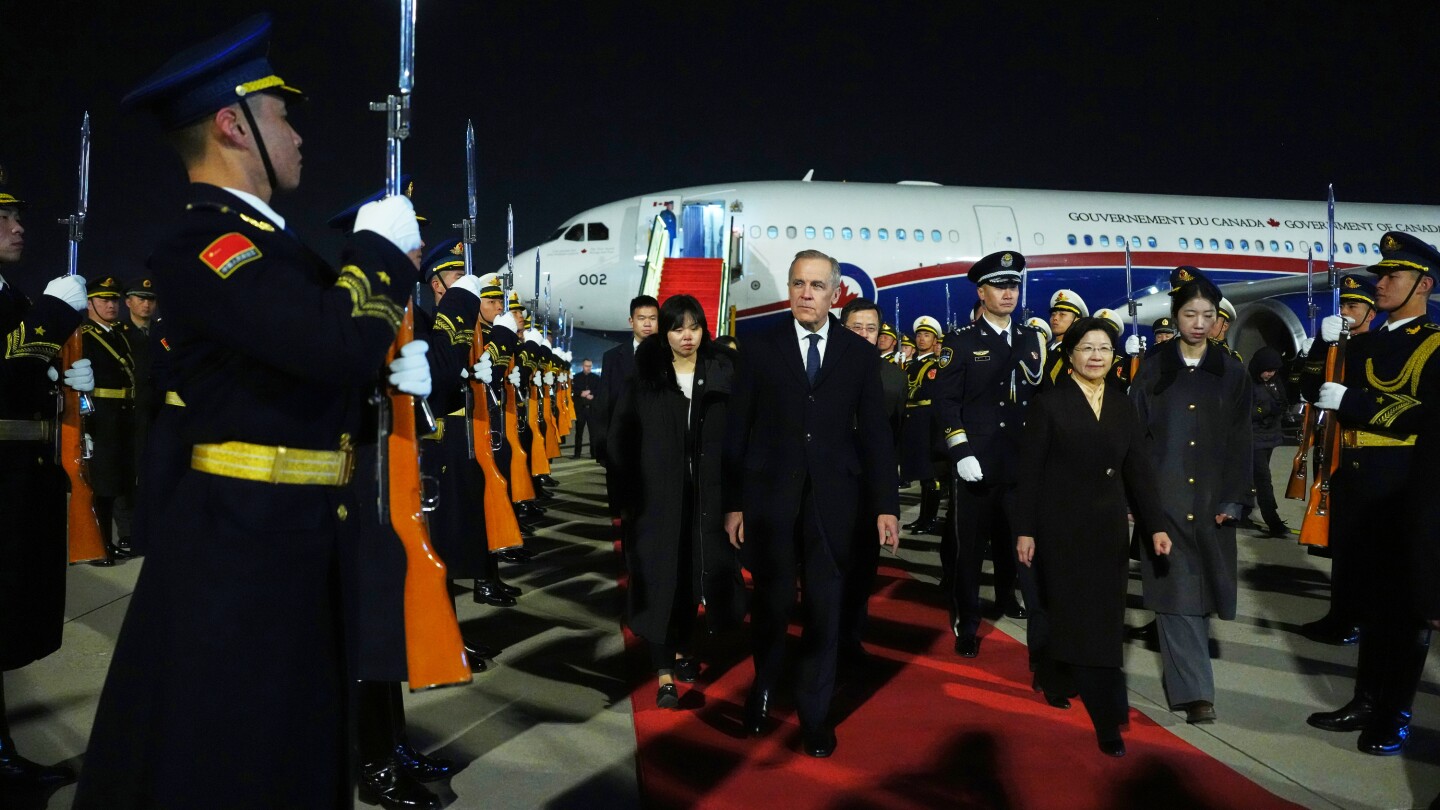
Canadian Prime Minister Mark Carney arrived in Beijing on Wednesday night, marking the first visit of a Canadian leader to China in nearly a decade. The four-day diplomatic mission aims to repair strained relations between the two nations as Canada seeks to diversify its trade partnerships beyond the United States.
Carney’s itinerary includes high-level meetings with Chinese Premier Li Qiang and President Xi Jinping, signaling the importance both nations place on resetting their bilateral relationship.
“We will double non-U.S. trade over the next 10 years. That means we are cognizant of that fact that the global economic environment has fundamentally changed and that Canada must diversify its trading partners,” Canadian Foreign Affairs Minister Anita Anand said in Beijing after arriving with Carney.
The visit comes at a critical time for Canada’s foreign policy, as the Carney administration looks to reduce its economic dependence on the American market. This shift has been accelerated by former U.S. President Donald Trump’s aggressive economic policies toward Canada, including tariffs on Canadian exports and provocative statements suggesting Canada could become “America’s 51st state.”
China’s state media has been encouraging Canada to establish what it terms “strategic autonomy” in its foreign policy—essentially a diplomatic path independent from Washington’s influence. Beijing appears to see an opportunity in the strained U.S.-Canada relationship to improve its own ties with Ottawa.
The relationship between China and Canada deteriorated significantly following the 2018 arrest of Huawei executive Meng Wanzhou in Vancouver at the request of U.S. authorities. The situation worsened when former Prime Minister Justin Trudeau’s government followed the Biden administration’s lead in imposing a 100% tariff on Chinese-made electric vehicles in early 2024, along with a 25% tariff on Chinese steel and aluminum.
China retaliated with its own tariffs on key Canadian exports, including canola, seafood, and pork—products vital to Canada’s agricultural sector. These trade barriers have significantly impacted Canadian producers, creating pressure on Carney’s government to find a resolution.
“The conversation has been productive. The negotiations are continuing,” Anand said when asked about the prospects of reducing tariffs on Canadian canola exports. “Prime Minister Carney is here to recalibrate the Canada-China relationship.”
The Chinese government has maintained a cautious approach toward Western nations, particularly after the Biden administration’s efforts to strengthen alliances with Europe, Australia, India, and Canada as part of a strategy to counter China’s growing global influence. However, Beijing now appears to see a potential opening to loosen these ties amid shifting geopolitical dynamics.
This isn’t Carney’s first interaction with President Xi. The two leaders previously met in October at the Asia-Pacific Economic Cooperation summit in South Korea, where they likely laid groundwork for this more extensive visit.
Canada’s strategic pivot toward diversifying its trade relationships reflects broader economic realities facing middle powers in an increasingly multipolar world. While the United States remains Canada’s largest trading partner by a significant margin—accounting for approximately 75% of Canadian exports—the Carney administration appears determined to reduce this vulnerability by expanding economic ties with other major economies, including China.
The outcome of this visit could have significant implications not only for Canada-China bilateral relations but also for the broader international economic order, as countries navigate the complex terrain between competing global powers.
Fact Checker
Verify the accuracy of this article using The Disinformation Commission analysis and real-time sources.

9 Comments
As a major producer of critical minerals like lithium and uranium, Canada stands to benefit from stronger trade ties with China, a leading global consumer of these commodities. This visit could help unlock new opportunities.
Absolutely, the mineral and energy sectors are a key area where Canada-China collaboration could be mutually beneficial.
It will be interesting to see if this visit results in any new investment or joint venture announcements in Canada’s mining and resources industries. Expanding market access for Canadian producers could be a priority.
That’s a good point. Increased Chinese investment in Canadian resource projects would be a tangible outcome to watch for.
This visit could be an important step in strengthening Canada-China economic ties. It’s critical for Canada to diversify its trade partners beyond the US market, especially given the geopolitical tensions of recent years.
Agreed. Reducing economic dependence on the US is a prudent move for Canada’s long-term interests.
Rebuilding relations with China is a complex challenge for Canada, given the political differences and human rights concerns. But economic cooperation is important, so I’m curious to see what concrete outcomes emerge from this visit.
That’s a fair perspective. Canada will need to strike a careful balance between economic interests and values-based foreign policy.
Diversifying trade is crucial for Canada, but the political differences with China make this a delicate balancing act. Carney will need to carefully navigate the sensitivities around issues like human rights and geopolitics.