


Listen to the article
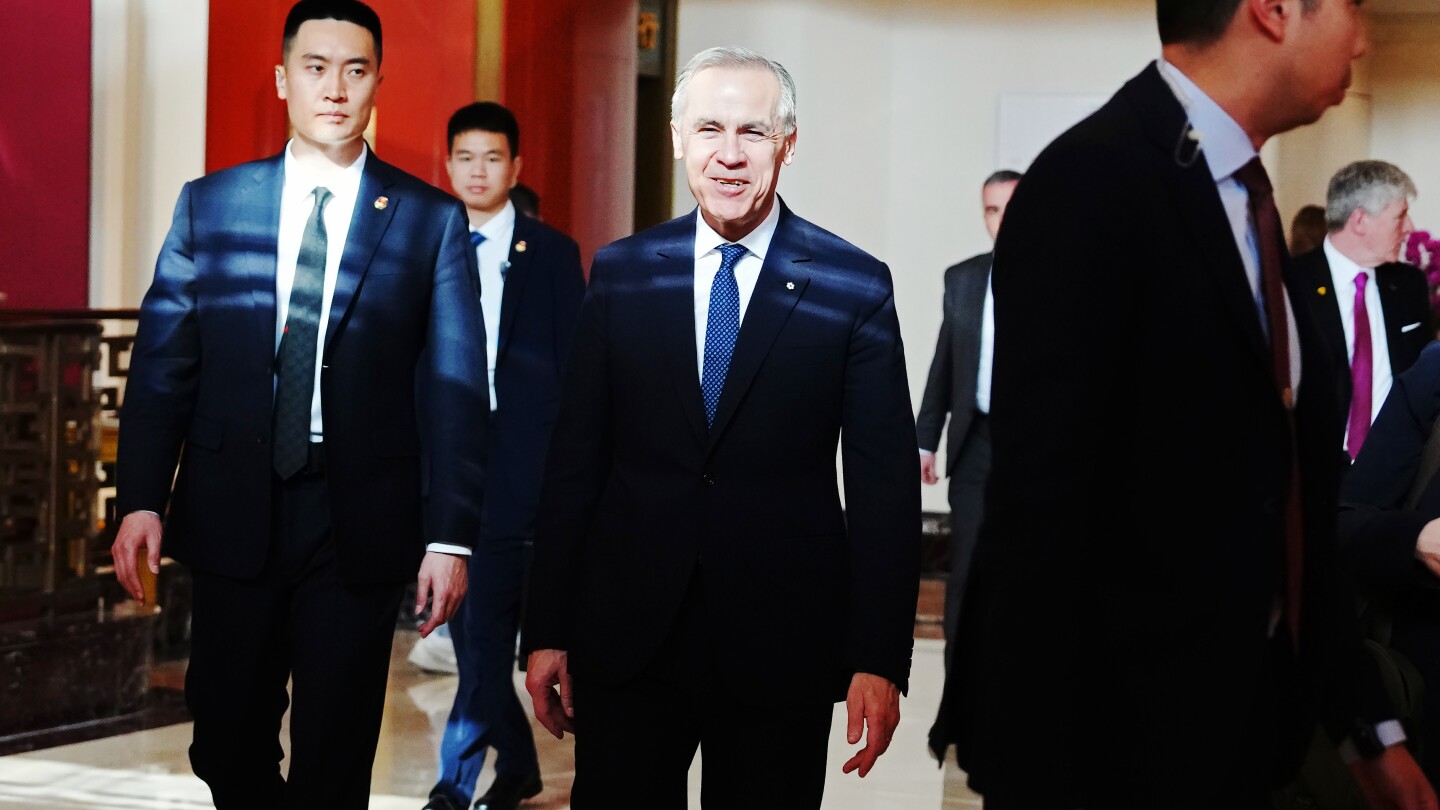
Canadian Prime Minister Mark Carney arrived in Beijing Thursday marking the first visit by a Canadian leader to China in eight years, declaring that the two nations are entering a new era of diplomatic relations.
Carney, who took office 10 months ago, is working to repair bilateral ties that deteriorated significantly following Canada’s 2018 arrest of Huawei executive Meng Wanzhou at the request of the United States. The diplomatic crisis deepened when China subsequently detained two Canadian citizens on espionage charges in what was widely viewed as retaliatory action.
During his visit, Carney met with Chinese Premier Li Qiang, who welcomed the renewed engagement between the two countries. According to a statement from Carney’s office, “Both sides welcomed the renewal of bilateral engagement,” including discussions on economic, financial, energy, and security issues.
Chinese state media Xinhua reported that Li “welcomes more Canadian companies to invest in China and hopes that Canada will provide a fair and non-discriminatory business environment for Chinese enterprises investing in the country.” Carney is scheduled to meet with Chinese President Xi Jinping on Friday, further underscoring the importance of the visit.
The push to strengthen ties with China has taken on new urgency for Canada following increased import tariffs imposed by U.S. President Donald Trump. With more than 75 percent of Canadian exports currently going to the United States, Carney has established an ambitious target of doubling Canada’s exports to other countries over the next decade to reduce this dependency.
To advance this economic agenda, Carney held meetings with executives from several prominent Chinese corporations on Thursday, including e-commerce giant Alibaba, state-owned China National Petroleum Corp., and CATL, a leading manufacturer of electric vehicle batteries.
“We’re ready to build a new partnership — one that builds on the best of our past, and responds to the challenges of today,” Carney posted on X following his arrival in Beijing on Wednesday evening.
The relationship between the two countries has also been strained by trade disputes. In 2024, under former Prime Minister Justin Trudeau, Canada imposed 100% tariffs on Chinese electric vehicles and 25% tariffs on Chinese steel and aluminum, following similar measures taken by the United States.
China retaliated with its own punitive measures, including 100% duties on Canadian canola oil and meal, 25% on pork and seafood, and a 75.8% tariff on canola seeds implemented last August. According to a Canadian industry association, these steep import taxes have effectively shut Canadian canola exporters out of the Chinese market.
Beijing may see an opportunity in Trump’s aggressive trade stance toward U.S. allies, potentially driving countries like Canada to pursue more independent foreign policies. The Chinese government has frequently accused the United States of rallying its allies against China, particularly during the Biden administration.
Canadian Foreign Minister Anita Anand, who is accompanying Carney on the trip, met with her Chinese counterpart Wang Yi. According to a Chinese Foreign Ministry statement, Anand conveyed that Carney “looks forward to setting the course for the development of relations and restarting dialogue in various fields.”
Wang characterized Carney’s visit as a pivotal moment that could “open up new prospects for the relationship” between the two nations.
The visit represents a significant diplomatic reset as both countries seek to navigate a complex international landscape amid shifting global alliances and economic pressures. For Canada, diversifying its trade relationships has become increasingly critical as its traditional economic partnership with the United States faces uncertainty under the Trump administration.
Fact Checker
Verify the accuracy of this article using The Disinformation Commission analysis and real-time sources.

11 Comments
This visit by the Canadian PM to China is a positive sign, but the two countries have a lot of work ahead to fully restore trust and cooperation. Balancing economic interests with human rights and national security concerns will be critical as they chart a new course in their relationship.
This visit by the Canadian PM to China is a positive sign, but the two countries have a lot of work ahead to fully restore trust and cooperation. Balancing economic interests with human rights and national security concerns will be critical as they chart a new course in their relationship.
The renewed engagement between Canada and China is an important step, but substantial challenges remain. Repairing diplomatic ties and aligning commercial interests will be an ongoing process that requires compromise and good faith from both nations.
It’s encouraging to see Canada and China working to reset their relationship. However, the path forward won’t be easy given the recent history of tensions. Addressing human rights and national security concerns while pursuing economic opportunities will require nuanced policymaking on both sides.
The renewed engagement between Canada and China is an important step, but substantial challenges remain. Repairing diplomatic ties and aligning commercial interests will be an ongoing process that requires compromise and good faith from both nations.
Strengthening economic and trade ties between Canada and China could benefit both countries, but it’s crucial that they address underlying political tensions and human rights concerns as well. Balancing commercial interests with values-based diplomacy will be a delicate challenge.
You make a fair point. Any renewed partnership needs to be built on mutual respect and a recognition of each country’s core interests and principles.
Canada and China have a complex relationship, with elements of cooperation and competition. This visit represents an opportunity to find common ground, but the countries will need to navigate tricky issues like Huawei and the detention of Canadian citizens. Careful diplomacy will be essential.
Canada and China’s relationship is complex, with elements of both cooperation and competition. This visit represents an opportunity to find common ground, but the countries will need to navigate sensitive issues like Huawei and the detention of Canadian citizens. Careful diplomacy will be essential.
This is an interesting development in Canada-China relations. It’s good to see the two countries working to repair diplomatic ties and explore new areas of cooperation, especially on economic and trade matters. However, the human rights issues and espionage allegations will likely remain sensitive topics.
It’s encouraging to see Canada and China working to reset their relationship, but the path forward won’t be easy given the recent history of tensions. Addressing human rights and national security concerns while pursuing economic opportunities will require nuanced policymaking on both sides.