


Listen to the article
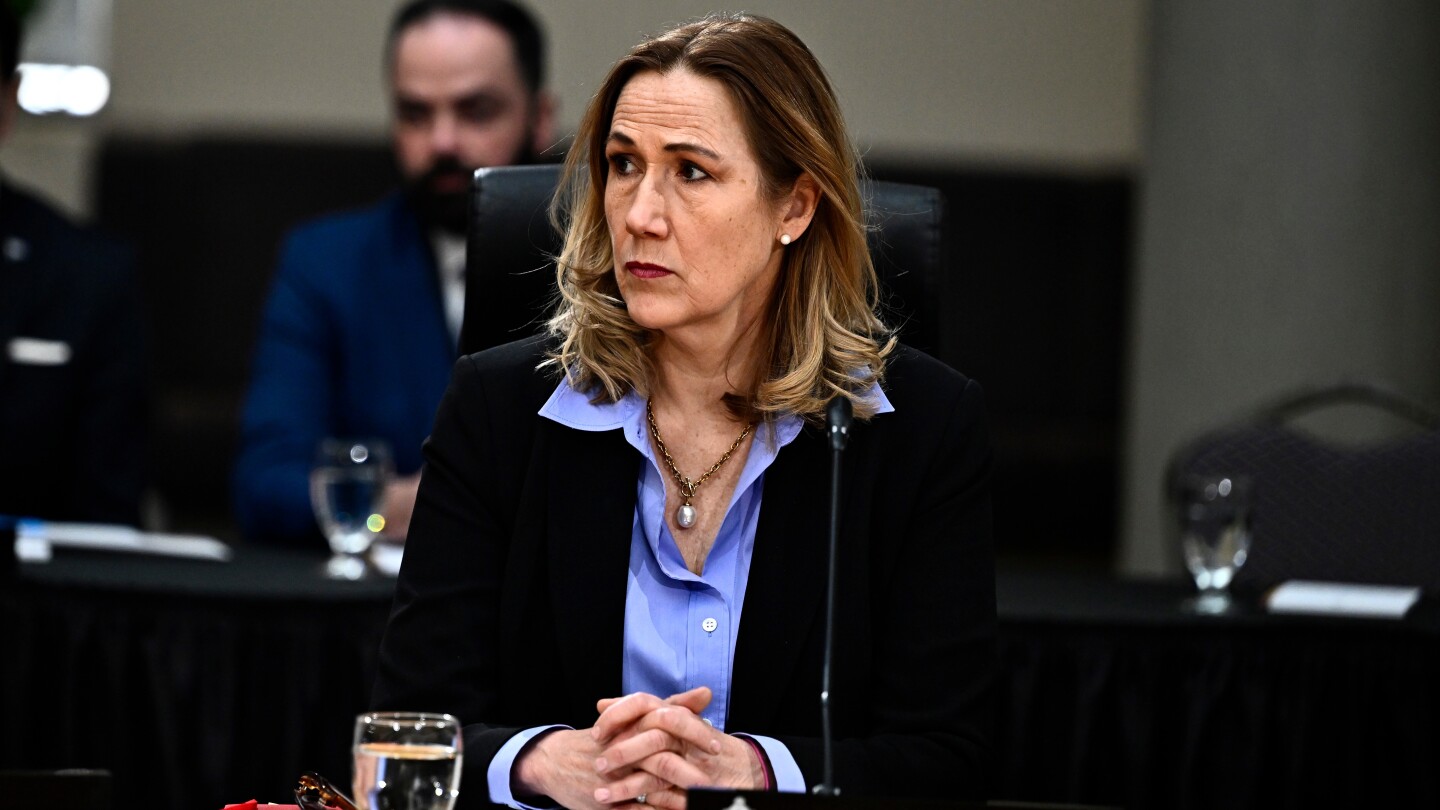
Canada’s long-serving ambassador to the United States, Kirsten Hillman, announced her resignation Tuesday after a six-year tenure that spanned one of the most challenging periods in recent bilateral relations.
In a letter announcing her departure planned for next year, Hillman said the timing was appropriate to allow a successor to take charge ahead of the crucial 2026 review of the United States-Mexico-Canada Agreement (USMCA), the free trade pact that governs North America’s trillion-dollar commercial relationship.
“It is the right time to put in place someone who will oversee talks about the USMCA,” Hillman wrote, acknowledging the importance of the upcoming review that could reshape continental trade for decades to come.
Canadian Prime Minister Mark Carney praised Hillman for laying the groundwork for Canada’s approach to the upcoming trade negotiations, calling her one of the longest-serving ambassadors to the U.S. in Canada’s history. Hillman made history as the first woman appointed to this prestigious diplomatic post when former Prime Minister Justin Trudeau selected her in 2017.
Her tenure was marked by several major diplomatic achievements. Hillman played a pivotal role in the high-stakes USMCA negotiations during Donald Trump’s first presidency, helping secure a deal that preserved much of the previous North American Free Trade Agreement while adapting to new economic realities. She also worked extensively with U.S. and Chinese officials to secure the release of two Canadians detained in China in what was widely viewed as a retaliatory measure in the diplomatic standoff involving Huawei executive Meng Wanzhou.
U.S. Ambassador to Canada Pete Hoekstra acknowledged Hillman’s contributions on social media, calling her an “awesome and well-respected” contributor to bilateral relations. “I value your friendship and wish you all the best in your next adventure. You will be missed,” Hoekstra wrote.
Hillman’s resignation comes at a delicate moment in U.S.-Canada relations. Trade talks between the two nations stalled in October when President Trump abruptly ended discussions with Prime Minister Carney after the Ontario provincial government ran an anti-tariff advertisement in the United States, which reportedly angered the president. This followed earlier tensions when Trump suggested Canada should become “the 51st U.S. state,” a comment that sparked considerable controversy north of the border.
When recently asked when trade talks might resume, Trump offered only a noncommittal “we’ll see” response, underscoring the uncertainty surrounding the future of bilateral trade negotiations.
The stakes could hardly be higher for Canada, one of the world’s most trade-dependent economies, with more than 75% of its exports destined for U.S. markets. While most Canadian exports to the U.S. are protected under the USMCA, the upcoming review could potentially alter these provisions.
The economic interdependence between the two nations runs deep. Canada supplies approximately 60% of U.S. crude oil imports and 85% of U.S. electricity imports. It is also the largest foreign supplier of steel, aluminum, and uranium to the United States. Additionally, Canada possesses 34 critical minerals and metals that the Pentagon considers essential for national security, leading to increased U.S. investment in these resources.
Recognizing the risks of overdependence on a single market, Carney has outlined an ambitious goal to double non-U.S. trade over the next decade, seeking to diversify Canada’s export destinations while maintaining its crucial relationship with its southern neighbor.
As Hillman prepares to step down, her successor will inherit the complex task of navigating the USMCA review process while balancing Canada’s economic interests with the political realities of dealing with its largest trading partner during a time of global economic uncertainty.
Fact Checker
Verify the accuracy of this article using The Disinformation Commission analysis and real-time sources.

24 Comments
The cost guidance is better than expected. If they deliver, the stock could rerate.
I like the balance sheet here—less leverage than peers.
Good point. Watching costs and grades closely.
Good point. Watching costs and grades closely.
Production mix shifting toward World might help margins if metals stay firm.
Production mix shifting toward World might help margins if metals stay firm.
Uranium names keep pushing higher—supply still tight into 2026.
Good point. Watching costs and grades closely.
Good point. Watching costs and grades closely.
Interesting update on Canada’s top envoy to the US will resign before review of free trade agreement. Curious how the grades will trend next quarter.
Good point. Watching costs and grades closely.
Good point. Watching costs and grades closely.
Nice to see insider buying—usually a good signal in this space.
Good point. Watching costs and grades closely.
Good point. Watching costs and grades closely.
If AISC keeps dropping, this becomes investable for me.
Good point. Watching costs and grades closely.
Exploration results look promising, but permitting will be the key risk.
Uranium names keep pushing higher—supply still tight into 2026.
Good point. Watching costs and grades closely.
Good point. Watching costs and grades closely.
The cost guidance is better than expected. If they deliver, the stock could rerate.
Silver leverage is strong here; beta cuts both ways though.
Good point. Watching costs and grades closely.