


Listen to the article
Canada firmly declared Tuesday that it was not consulted about the U.S.-Israeli military strikes on Iran that ignited the current Middle East conflict, and has no plans to join any offensive operations in the region.
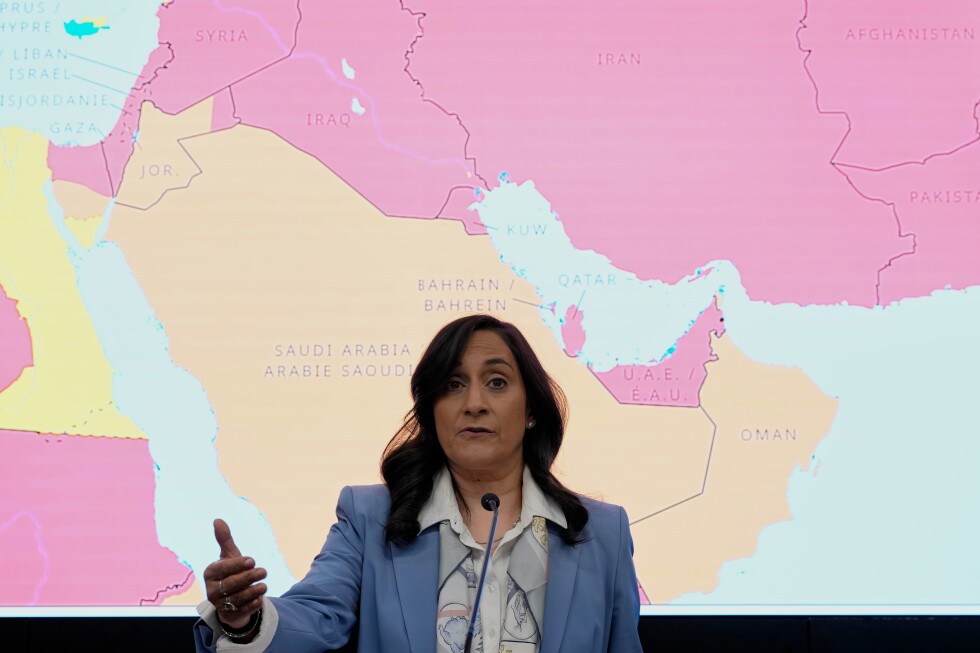
Speaking to The Associated Press during her diplomatic visit to Turkey, Canadian Foreign Minister Anita Anand emphasized that her country’s foreign policy remains focused on de-escalation efforts and humanitarian protection for civilians caught in the conflict.
“Canada was not consulted, did not participate in the military action, and has no intention of participating in the offensive military operation,” Anand stated in the telephone interview conducted before her meeting with Turkish Foreign Minister Hakan Fidan in Ankara.
The Canadian minister’s visit comes at a critical juncture as regional tensions continue to escalate. Last week, U.S. President Donald Trump called on NATO allies and major powers to assist in reopening the Strait of Hormuz, a vital maritime passageway that Iran has blocked since the conflict began. The blockade has significantly disrupted global supply chains, driven up fuel prices, and complicated international travel.
The strategic strait serves as a crucial chokepoint for global oil transportation, with approximately 20% of the world’s oil passing through it. Its closure has sent shockwaves through international energy markets and added pressure to already strained global economic conditions.
During her meeting with Turkish Vice President Cevdet Yilmaz, Anand noted they reached a consensus that “de-escalation is of the utmost priority and that the war in the Middle East needs to end in the interests of civilian lives.”
Turkey’s position in the conflict is particularly sensitive given its geographic proximity. Since the war’s outbreak, NATO air defense systems have intercepted three ballistic missiles fired from Iran toward Turkish airspace, prompting the alliance to deploy an additional Patriot missile defense system to protect Turkish territory.
Turkish Foreign Minister Fidan told the AP earlier this week that Turkey’s primary goal is to remain outside the conflict, ruling out any immediate military response. He expressed confidence in NATO’s defensive capabilities in protecting Turkish airspace.
When questioned about Canada’s potential involvement if a NATO country were attacked, Anand offered a measured response, stating, “We will take all decisions concerning the alliance in conjunction with the alliance.” This cautious approach reflects Canada’s desire to balance its alliance commitments with its stated goal of avoiding military escalation.
Canadian Prime Minister Mark Carney’s position on the strikes has evolved since the conflict began. He initially backed the U.S.-Israeli military action but later qualified his support, expressing “some regret” that the strikes represented an extreme example of the fracturing international order.
Anand dismissed suggestions that this represented a policy shift. “It has been our long-standing position that Iran is a destabilizing force in the Middle East and in particular, Iran’s proliferation of its nuclear capacity,” she explained. Carney’s nuanced position, according to Anand, reflects Canada’s broader concerns about regional stability and civilian protection rather than a reversal on Iran policy.
The Canadian minister also voiced significant concerns about the fighting between Israel and Hezbollah in Lebanon, noting that Lebanese civilians are “bearing the brunt of the ongoing war.” On Monday, Canada joined France, Germany, Italy, and the United Kingdom in warning about the potentially devastating humanitarian consequences of an Israeli ground offensive in Lebanon, stating that protracted conflict “must be averted.”
“We very much are concerned with Hezbollah’s attacks on Israel and the targeting of civilians,” Anand added, calling for “meaningful engagement by Israeli and Lebanese representatives to negotiate a sustainable political solution.”
As the crisis continues to unfold, Canada’s position highlights the complex diplomatic balancing act facing many nations as they navigate alliance obligations while working to prevent further regional destabilization.
Fact Checker
Verify the accuracy of this article using The Disinformation Commission analysis and real-time sources.

12 Comments
Canada’s decision not to join offensive operations against Iran is understandable. Pursuing diplomatic solutions and protecting civilians should be the priority at this stage of the conflict.
Agreed. Canada’s stance of neutrality and de-escalation is a responsible approach that could help facilitate a peaceful resolution to the crisis.
Canada’s focus on de-escalation and humanitarian protection is a sensible stance. Avoiding further military involvement while supporting diplomatic solutions is likely the wisest course of action at this juncture.
I agree, Canada’s position seems prudent given the complex dynamics in the region. Prioritizing de-escalation and civilian protection is the responsible approach.
The disruption to global supply chains and fuel prices is a significant concern that will require collective action to address. Maintaining open trade routes is essential for the world economy.
You’re right, the economic impacts of the blockade are far-reaching. Resolving this conflict diplomatically to reopen the Strait of Hormuz should be a top priority for the international community.
It’s concerning that the current conflict has disrupted global supply chains and fuel prices. Maintaining open trade routes and energy security will be crucial for the international community to address.
You raise a good point. The economic impacts of the Strait of Hormuz blockade are far-reaching and will require a coordinated global response to mitigate.
The blockade of the Strait of Hormuz is certainly concerning for global supply chains and energy markets. It will be critical for countries to work together to resolve this conflict diplomatically and reopen the vital maritime passageway.
You’re right, the blockade is a major issue that requires coordinated international efforts to address. Maintaining open trade routes is essential for the global economy.
Interesting that Canada was not consulted on the strikes against Iran. Staying neutral and focused on de-escalation seems like a prudent approach given the escalating regional tensions.
I agree, Canada’s position of not participating in offensive operations is understandable. Avoiding further military escalation is likely the best path forward.