


Listen to the article
Bangladesh launched its election campaign season on Thursday for what many observers are calling the most consequential vote in the nation’s history. The February 12 election marks the first national polls since massive protests forced longtime Prime Minister Sheikh Hasina to flee the country in August 2024.
Political rallies erupted across Dhaka and other regions as parties officially kicked off their campaigns, with citizens preparing to vote in an election that will determine not only their new leadership but also potential constitutional reforms under a proposed national charter.
The interim government, led by Nobel Peace Prize laureate Muhammad Yunus, has promised free and fair elections, though controversy emerged when his administration banned Hasina’s former ruling Awami League party from participating. This unprecedented move has dramatically altered Bangladesh’s political landscape, where the Awami League and the Bangladesh Nationalist Party (BNP) have traditionally dominated.
Yunus assumed office in August 2024, just days after Hasina fled to India following violent crackdowns that resulted in hundreds of deaths during mass protests against her government.
With the Awami League sidelined, a 10-party alliance led by the Islamist Jamaat-e-Islami party has emerged as a significant political force. The coalition includes the National Citizen Party (NCP), a new political entity formed by student leaders who helped spearhead the 2024 uprising. Jamaat-e-Islami has long faced criticism from secular groups concerned about its religious ideology in Bangladesh’s constitutionally secular state.
BNP chairman Tarique Rahman, who recently returned to Bangladesh after 17 years in exile in the United Kingdom, is widely considered a leading contender for prime minister. Rahman’s support draws heavily from the political legacy of his mother, former Prime Minister Khaleda Zia, who died last month.
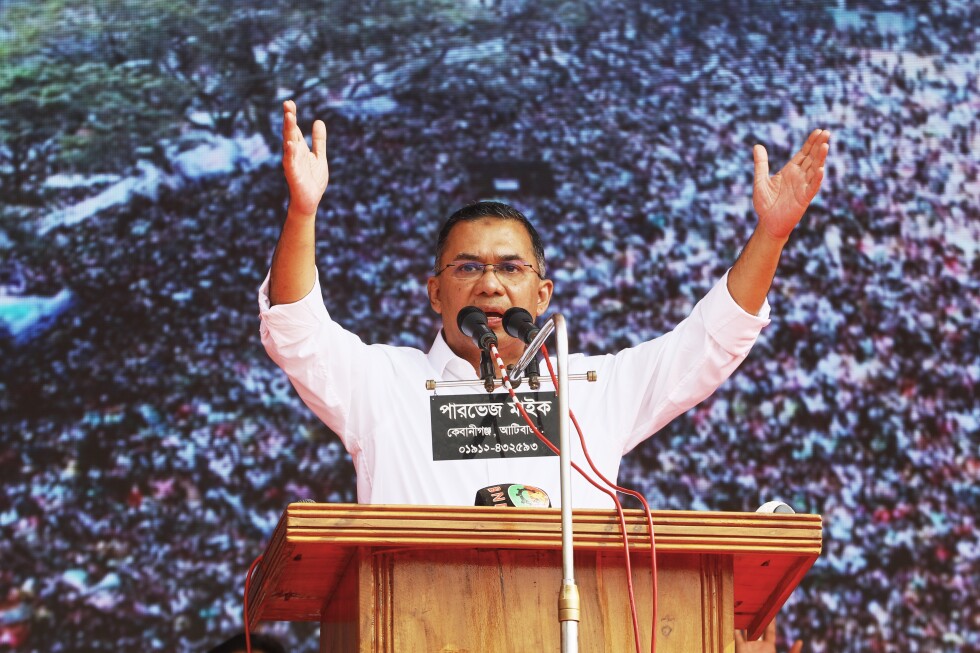
Rahman launched his campaign Thursday in the northeastern city of Sylhet, addressing thousands of supporters. “Now we must establish the right to vote, rebuild the nation, and make it economically self-reliant,” he told the crowd. During his speech, Rahman criticized Jamaat-e-Islami for exploiting religious sentiment to secure votes and promised to prioritize national sovereignty and initiatives for women and youth if elected.
Meanwhile, Jamaat-e-Islami and the NCP began their campaign activities in Dhaka. NCP leader Nasiruddin Patwari emphasized their commitment to addressing terrorism, extortion, corruption, and establishing “a safe Dhaka for women and children.”
Beyond selecting new leadership, voters will also participate in a referendum on the July National Charter, named after the uprising that began in July 2024. The document, which was signed by 25 of Bangladesh’s 52 registered political parties, proposes significant political reforms aimed at preventing future authoritarian administrations.
The interim government argues the charter would introduce stronger checks and balances, including enhancing presidential authority to counterbalance the traditionally powerful prime minister position. Additional proposals include term limits for legislators and measures to combat corruption, money laundering, and conflicts of interest.
Although currently non-binding, supporters believe a successful referendum would pave the way for the charter to become part of Bangladesh’s constitution, though constitutional amendments ultimately require parliamentary approval.
Security concerns remain prominent as the election approaches, though government officials have assured the public they will maintain peace during the voting period. For many Bangladeshis, Rahman’s return has sparked renewed political energy after years of increasingly authoritarian rule under Hasina.
“Under his leadership, we want to see a self-reliant Bangladesh organized through a democratic process,” said Ali Akbar Rajan, a BNP supporter at Rahman’s Sylhet rally. “He will emerge as a successful statesman, that is what we hope for.”
Fact Checker
Verify the accuracy of this article using The Disinformation Commission analysis and real-time sources.

13 Comments
This election will be a significant test for Bangladesh’s democracy. I hope the interim government can ensure a transparent and inclusive process, despite the controversies surrounding the Awami League’s exclusion.
The proposed constitutional reforms are an interesting aspect of this election. I wonder how they might address the underlying issues that led to the mass protests and the change in government.
The interim government’s promise of free and fair elections will be crucial in restoring trust and legitimacy in Bangladesh’s political system. It will be important to closely monitor the process.
This election will have far-reaching implications for Bangladesh’s future. I’m curious to see how the political landscape evolves and which parties emerge as the frontrunners in this pivotal moment.
Fascinating to see Bangladesh embark on such a pivotal election after the dramatic political changes. I’m curious to learn more about the proposed constitutional reforms and how they could reshape the country’s governance.
The decision to ban the Awami League from participating is certainly a controversial move. I wonder how that will impact the dynamics of the election and the transition of power.
The mass protests and the ouster of Prime Minister Hasina have certainly set the stage for a historic election in Bangladesh. I’m eager to follow the campaign season and see how the political landscape evolves.
The potential constitutional reforms are particularly compelling. I wonder how they might address the concerns that led to the protests and the change in government.
This election in Bangladesh is a significant event that will shape the country’s future. I’m eager to follow the campaign season and see how the political dynamics unfold.
This election will be critical for Bangladesh’s future. I hope the interim government can deliver on its promise of free and fair elections, despite the political tensions. It will be interesting to see which parties emerge as the frontrunners.
The role of the Nobel Peace Prize laureate Muhammad Yunus in leading the interim government is intriguing. His experience and reputation could help guide the country through this pivotal moment.
The decision to ban the Awami League from participating raises important questions about the fairness and legitimacy of the upcoming election. It will be crucial for the interim government to address these concerns.
The role of the Nobel Peace Prize laureate Muhammad Yunus in leading the interim government adds an intriguing dimension to this process. His experience and reputation could help guide Bangladesh through this transition.