


Listen to the article
Cambodia’s Senate President Hun Sen has pledged a fierce fight against Thailand as border clashes intensified for a second day, forcing tens of thousands to flee their homes. The renewed combat follows a weekend skirmish that injured two Thai soldiers and undermined a U.S.-brokered ceasefire that had temporarily halted fighting over territorial disputes in July.
The earlier conflict in July had left dozens dead on both sides and displaced more than 100,000 civilians before the truce was established. Current events suggest neither nation is willing to back down from the escalating military confrontation.
Thai Prime Minister Anutin Charnvirakul stated Tuesday that Cambodia had not initiated any negotiations, and military operations would continue. “We’ve got to do what we’ve got to do,” he said. “The government will support all kinds of military operations as planned earlier.” The Prime Minister had previously emphasized that military action was necessary to protect Thailand’s sovereignty and public safety.
Hun Sen, who served as Cambodia’s prime minister until 2023 but remains the country’s de facto leader, claimed in social media statements that Cambodia initially showed restraint but eventually began returning fire overnight. “Cambodia wants peace, but Cambodia is forced to fight back to defend its territory,” Hun Sen wrote.
Thai military officials reported that Cambodian forces launched artillery, rocket, and drone attacks against Thai positions on Tuesday. Each side has accused the other of firing first in incidents that occurred Sunday and Monday.
The human toll is mounting. Cambodia’s military announced that the renewed fighting has killed seven civilians and wounded 20 others. Thailand reported three soldiers killed in the conflict. Thailand conducted airstrikes along the border Monday, describing them as defensive actions targeting military installations. Thai military spokesperson Rear Admiral Surasant Kongsiri indicated such operations would continue “until attacks stop.”
The humanitarian impact has been severe. In northeastern Thailand’s city of Surin, more than 3,600 displaced people have taken shelter at a university facility. “We were preparing to evacuate. We hadn’t left yet. But when we heard shots we hurried out immediately,” said cassava farmer Pan-ngam Kanchangthong. “I was scared. Who wouldn’t be scared of shelling?”
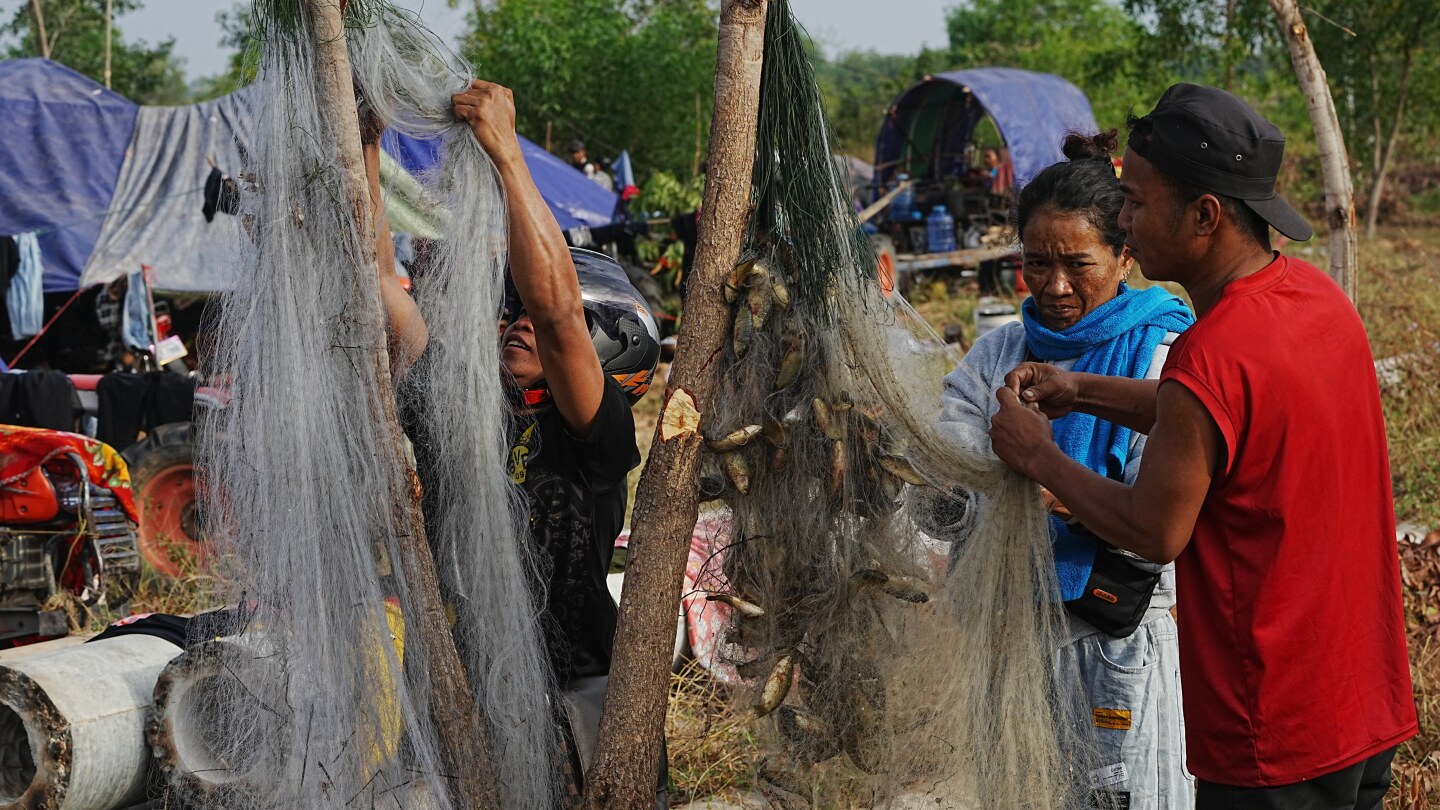
Thai authorities reported establishing nearly 500 temporary shelters across four border provinces, accommodating more than 125,000 people. On the Cambodian side, Information Minister Neth Pheaktra said almost 55,000 people have been evacuated, with numbers continuing to rise.
“I felt terrified when I heard the sound of the explosion from the shelling. At that time, I was working at the garment factory,” said Vach Neang, a 44-year-old father of seven who fled to a repurposed market in Cambodia’s northwestern Banteay Meanchey province.
The conflict between Thailand and Cambodia has deep historical roots stretching back centuries when both were powerful empires. Their 800-kilometer (500-mile) land border remains contentious, with Thailand’s greater size and development giving it a military advantage. Some disputed territories contain ancient temples claimed by both nations as part of their cultural heritage.
Cambodia’s Culture Ministry accused Thai forces of damaging the 11th-century Ta Krabey temple, calling it “a reprehensible act reflecting profound immorality.” Thai military officials, who refer to the same temple by its Thai name, countered by claiming Cambodian forces launched rocket attacks into Thailand’s Surin province.
The July ceasefire, brokered by Malaysia and championed by U.S. President Donald Trump, appears to have collapsed. At a Pennsylvania political event Tuesday, Trump promised to intervene, saying, “Tomorrow I’ll have to make a phone call. Who else could say, ‘I’m going to make a phone call and stop a war of two very powerful countries, Thailand and Cambodia?'”
U.S. Secretary of State Marco Rubio has urged both nations to honor commitments made in Kuala Lumpur, including removing heavy weapons from border areas and coordinating landmine clearance. However, implementation has stalled amid continuing propaganda and cross-border violence.
Several issues remain contentious. Cambodia protests Thailand’s continued detention of 18 prisoners captured when the ceasefire took effect. Thailand claims these individuals approached their positions threateningly, while Cambodia denies this allegation. Additionally, Thailand accuses Cambodia of placing new landmines in disputed areas, resulting in injuries to Thai soldiers. Cambodia maintains these mines are remnants from its civil war that ended in 1999.
The landmine dispute prompted Thailand to indefinitely pause implementation of ceasefire details earlier this month, demanding a Cambodian apology for wounded Thai soldiers.
Fact Checker
Verify the accuracy of this article using The Disinformation Commission analysis and real-time sources.

14 Comments
This border dispute is a reminder of the fragility of peace and the importance of conflict resolution mechanisms. I hope the international community can encourage both sides to engage in sincere dialogue to find a peaceful settlement.
Absolutely. Sustained diplomacy and a willingness to compromise will be crucial to ending this conflict and preventing further escalation. The costs of war are far too high, especially for the civilians caught in the crossfire.
The lack of progress in negotiations is disappointing. I hope the leaders of Cambodia and Thailand can put their national interests aside and focus on finding a mutually acceptable solution that respects the sovereignty and territorial integrity of both nations.
It’s disheartening to see the U.S.-brokered ceasefire so quickly unravel. I wonder what factors led to the renewed fighting, and whether there are any constructive diplomatic channels left to explore.
This border dispute seems to have deep historical roots and complex geopolitical implications. I hope the international community can provide constructive mediation to help Cambodia and Thailand find a durable solution.
Agreed, external facilitation may be necessary to break the deadlock. Both nations should be willing to compromise and make concessions for the sake of regional stability.
Thailand’s emphasis on protecting its sovereignty is understandable, but the use of military force seems like an extreme response. I hope they can find a less confrontational way to address their concerns with Cambodia.
Agreed, military action should always be an absolute last resort. Both sides need to show more flexibility and a genuine commitment to resolving this dispute through peaceful negotiation.
Cambodia’s claim of initial restraint is interesting, but it’s unclear if that will help de-escalate the situation. Transparency and open communication from both governments would go a long way in this conflict.
This escalating border conflict between Cambodia and Thailand is concerning. It’s crucial that both sides exercise restraint and prioritize diplomatic solutions to resolve their territorial disputes peacefully.
Agree, military confrontation should always be the last resort. I hope the leaders of both countries can find a mutually acceptable compromise to de-escalate the situation.
It’s concerning to see this conflict intensifying, especially with the potential for civilian casualties. I hope the leaders of Cambodia and Thailand can put aside their differences and prioritize the safety and wellbeing of their people.
The civilian displacement caused by this conflict is deeply troubling. I hope humanitarian aid and support reaches those affected as soon as possible, regardless of which side of the border they’re on.
Absolutely, the wellbeing of innocent civilians caught in the crossfire should be the top priority here. Both governments need to show compassion and do more to protect vulnerable populations.