


Listen to the article
Bulgaria’s President Rumen Radev Resigns Amid Political Turmoil
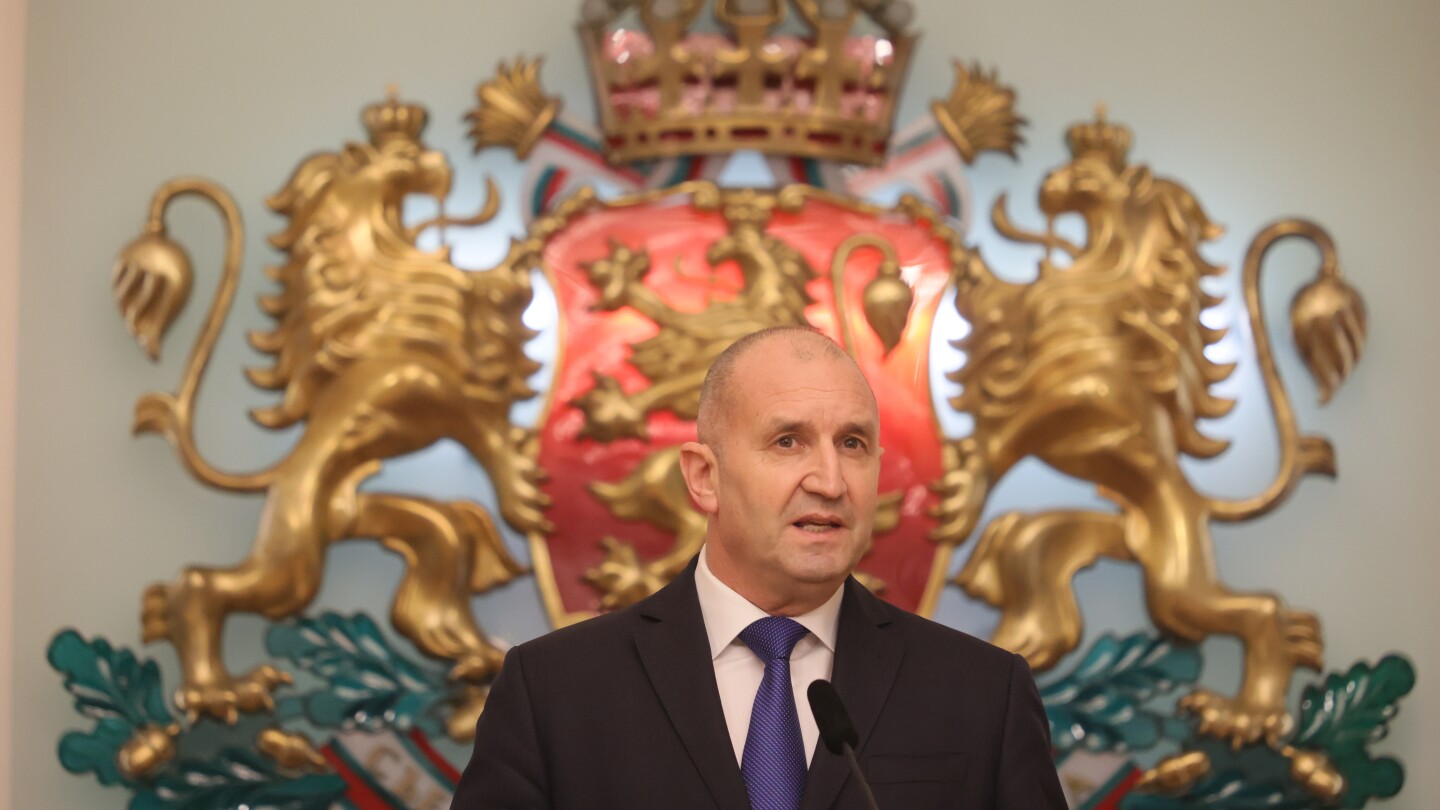
Bulgaria’s left-leaning President Rumen Radev announced his resignation on Monday, stepping down from his largely ceremonial role amid growing speculation that he plans to contest upcoming parliamentary elections.
In a televised address to the nation, Radev confirmed he would formally submit his resignation to the Constitutional Court on Tuesday, marking the first time a Bulgarian head of state has resigned since the fall of communism.
“The battle for the future of our homeland lies ahead, and I believe we will face it together with all of you — the worthy, the inspired, and the unyielding! We are ready. We can, and we will succeed!” Radev declared, using language that strongly hinted at political ambitions beyond the presidency.
Under Bulgaria’s constitution, Vice President Iliana Yotova will be sworn in by parliament to serve as interim president until the end of Radev’s mandate, which was originally set to expire in 2026.
The resignation comes at a critical juncture for Bulgaria, which has been mired in political instability for years. As both a European Union and NATO member, the Balkan nation is struggling to overcome a protracted political crisis that has seen seven parliamentary elections since 2021, with an eighth now on the horizon.
Last month, large anti-corruption protests swept across Bulgaria, forcing the resignation of the center-right coalition government led by the GERB party. Subsequent attempts to form a new government within the current parliament have failed, necessitating fresh elections.
The 62-year-old Radev, a former Air Force general who has served as president since 2017, has been a vocal critic of GERB leader Boyko Borissov. He has also consistently opposed politician and oligarch Delyan Peevski, who remains under U.S. and U.K. sanctions for corruption and whose MRF New Beginning party had backed the outgoing government.
Throughout December’s protests, Radev positioned himself as an ally of demonstrators, further distancing himself from the center-right government he had long opposed. Political analysts note that this strategic alignment has bolstered his popularity among Bulgarians frustrated with endemic corruption and political gridlock.
While Radev did not explicitly confirm plans to form a new political party in his resignation speech, he has previously signaled such intentions. When questioned recently about his political future, he spoke of the need for a party that “unites all democrats — left and right — regardless of where they belong or whether they are politically active at all, because we all need fair elections and democratic, free development.”
Bulgaria’s political landscape remains deeply fragmented, with no party holding a clear majority. Radev’s potential entry into electoral politics could significantly reshape this landscape, particularly if he manages to unite various anti-corruption and reformist factions.
The timing of his resignation appears calculated, giving him sufficient runway to organize a political movement ahead of elections expected in the coming months. As a relatively popular figure who has positioned himself above partisan politics, Radev may be able to capitalize on public dissatisfaction with traditional political parties.
The move represents a significant gamble for Radev, who is trading the security of his presidential position for the uncertainty of electoral politics. However, it also reflects the severity of Bulgaria’s political crisis and the perceived need for new leadership to break the cycle of instability that has plagued the country’s governance.
As Bulgaria prepares for yet another election, citizens and international observers alike will be watching closely to see whether Radev’s political gambit can help resolve the country’s governance challenges or whether it will further complicate an already complex political environment.
Fact Checker
Verify the accuracy of this article using The Disinformation Commission analysis and real-time sources.

7 Comments
Radev’s departure comes at a critical time for Bulgaria, with the country facing political and economic challenges. His decision to step down raises questions about his future plans and the direction the country may take.
Radev’s resignation is a significant event that could have far-reaching implications for Bulgaria’s political landscape. It will be worth following how the transition of power unfolds and what it means for the country’s relations with the EU and NATO.
Interesting development in Bulgarian politics. Radev’s resignation suggests he may be positioning himself for a bigger political role. It will be important to see how the interim president handles the country’s ongoing stability issues.
Radev’s resignation is an unexpected move that could signal a shift in the political landscape in Bulgaria. It will be interesting to see how this plays out and what it means for the country’s future direction.
The news of Radev’s resignation is sure to generate a lot of discussion and debate. As a key figure in Bulgarian politics, his decision to step down raises questions about his future plans and the direction the country may take.
The resignation of President Radev is a significant development in Bulgarian politics. With the country facing economic and political challenges, it will be important to see how the interim president navigates this transition period.
Radev’s decision to step down is sure to generate a lot of speculation and discussion. As a key player in Bulgarian politics, his next move will be closely watched by both domestic and international observers.