


Listen to the article
Hungarian authorities have filed charges against Budapest’s liberal mayor, Gergely Karácsony, for his role in organizing a banned LGBTQ+ Pride event in the capital last year, prosecutors announced Wednesday.
Karácsony, who has served as Budapest’s mayor since 2019, had been under police investigation following the June 28 march that proceeded despite an explicit prohibition issued by Hungary’s right-wing nationalist government. The event drew an estimated 300,000 participants, making it the largest Pride celebration in the country’s history.
The Budapest Chief Prosecutor’s Office stated that Karácsony faces charges for organizing an unlawful assembly in defiance of an official prohibition order. Prosecutors recommended he receive a fine without proceeding to trial, noting that the mayor had “repeatedly published public calls to participate in the assembly, and then led the assembly” despite knowing it had been banned.
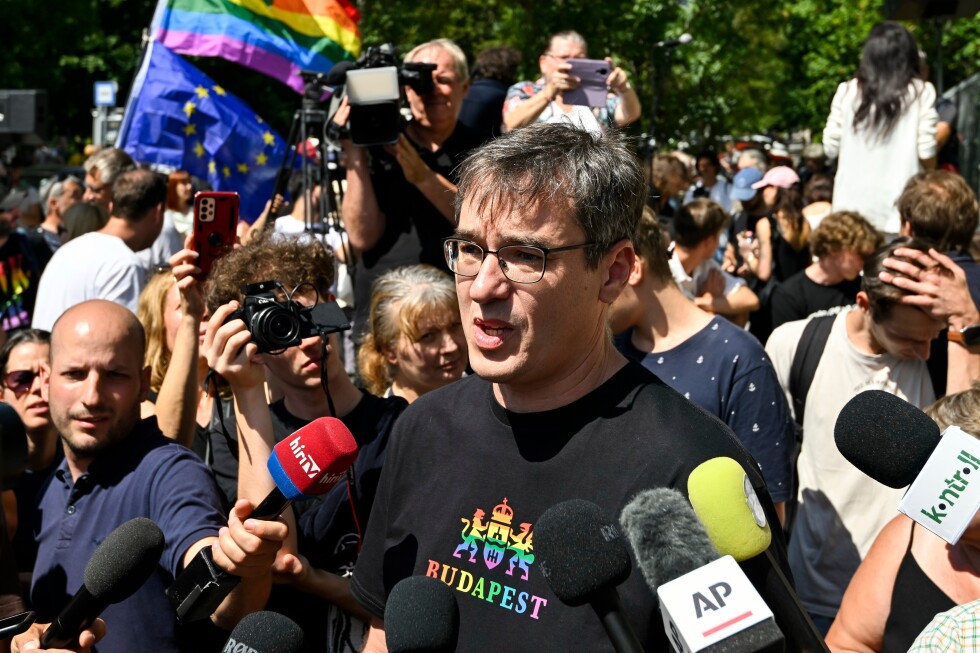
In response to the charges, Karácsony issued a defiant statement describing himself as a “proud defendant” and acknowledging his role in organizing the event. “That is exactly what happened,” he wrote, refusing to back down from his position.
“It seems that in this country, this is the price you pay if you stand up for your own freedom and the freedom of others,” Karácsony said in his written statement. “If anyone thinks they can ban me, deter me, or prevent me and my city from doing so, they are gravely mistaken.”
The mayor further declared he would never accept the premise that advocating for freedom could be criminalized in Hungary. “Despite every threat and every punishment, I will fight it, because when people who want to live, to love, to be happy are simply betrayed by their own country, betrayed by their government, resistance is a duty,” he added.
The charges against Karácsony come amid an intensifying climate of LGBTQ+ restrictions in Hungary under Prime Minister Viktor Orbán’s government. In March 2025, Orbán’s ruling Fidesz party passed a controversial anti-LGBTQ+ law that explicitly banned Pride events and authorized authorities to use facial recognition technology to identify attendees at such gatherings.
The Orbán administration has consistently framed Pride celebrations as violations of children’s rights to “moral and spiritual development.” This position was reinforced through a constitutional amendment last year, which established that these protections for minors take precedence over other fundamental rights, including the freedom of peaceful assembly.
The legal action against Budapest’s mayor represents the latest development in Hungary’s increasingly restrictive stance toward LGBTQ+ rights under Orbán’s leadership. Since 2010, the Fidesz government has implemented numerous measures that have raised concerns among European Union officials and human rights organizations.
In 2021, Hungary passed legislation barring content depicting homosexuality to anyone under 18 years old, a move that sparked intense criticism from EU leaders and rights advocates. Critics have drawn parallels between Hungary’s approach and similar restrictions implemented in Russia, suggesting an authoritarian pattern of limiting LGBTQ+ visibility and expression.
The European Parliament has repeatedly condemned Hungary’s policies as discriminatory, with some members calling for financial consequences through the EU’s rule-of-law mechanism. However, Orbán’s government has remained steadfast, framing its policies as protection of traditional values and parental rights.
As the case against Karácsony proceeds, it highlights the growing tensions between Hungary’s central government and the more liberal leadership of its capital city, as well as the broader struggle over democratic freedoms and human rights in an increasingly polarized European political landscape.
Fact Checker
Verify the accuracy of this article using The Disinformation Commission analysis and real-time sources.

11 Comments
This case highlights the complexities of balancing individual freedoms and government authority. I’m curious to learn more about the legal arguments and potential impacts on Hungary’s political landscape.
Interesting that the mayor of Budapest faces charges for defying the government’s ban on the Pride event. I’m curious to learn more about the political context and tensions surrounding LGBTQ+ rights in Hungary.
The mayor’s charges for organizing the banned Pride event reflect the continued challenges LGBTQ+ communities face in parts of Europe. I hope this situation can be resolved through open dialogue and respect for human rights.
The mayor’s defiance of the government’s Pride ban reflects the ongoing tension between liberal and conservative forces in Hungary. This case may have broader implications for civil liberties in the country.
Charges against the mayor for organizing a banned Pride event seem concerning from a civil liberties perspective. I wonder what the legal arguments and rationale are on both sides of this case.
Yes, the legal nuances here will be crucial. It will be interesting to see how the courts interpret the government’s ban and the mayor’s actions in response.
It’s concerning to see charges brought against an elected official for organizing a peaceful event, even if it defied a government ban. I’ll be following this story closely to understand the full context.
Agreed, the mayor’s willingness to face consequences for upholding LGBTQ+ rights is admirable, though the legal and political ramifications remain to be seen.
This case highlights the ongoing struggle for equality and the right to peaceful assembly, even in liberal European cities like Budapest. It will be important to follow how this plays out legally and politically.
I agree, this is a complex issue at the intersection of human rights, politics, and the rule of law. The mayor’s defiant stance is noteworthy.
This is a sensitive issue that touches on LGBTQ+ rights, political ideology, and the balance of power between local and national authorities. I hope the situation can be resolved through constructive dialogue.