


Listen to the article
Brazil’s Telenovelas: The Breeding Ground for Oscar-Worthy Talent
While Hollywood actors prepare to celebrate at Sunday’s Academy Awards, Brazil’s entertainment landscape tells a different story—one where television studios, not movie sets, serve as the primary launchpad for the nation’s biggest stars.
Since the 1960s, telenovelas produced by Brazil’s broadcasting giant TV Globo have evolved from simple daily dramas into a formidable cultural and economic force. Today, the network operates 13 studios, three set towns, and 122 edit bays, reaching up to 60 million viewers—nearly 30% of Brazil’s 213 million population—every week.
Many Brazilian actors in internationally acclaimed films first became household names through these telenovelas. Wagner Moura, lead actor in this year’s four-category Oscar nominee “The Secret Agent,” began his journey to stardom in the telenovela “A Lua Me Disse” (The Moon Told Me) over two decades ago. Similarly, Fernanda Torres, who starred in “I’m Still Here”—Brazil’s first best international feature Oscar winner—gained national recognition through TV Globo’s comedic series.
“Globo’s telenovelas are key for Brazil’s audiovisual production,” explains Amauri Soares, director of TV Globo and Globo Studios. He describes them as “a continuous platform of creation and production of content,” noting that even independent films like “The Secret Agent” benefit from Globo’s investment and talent pool.
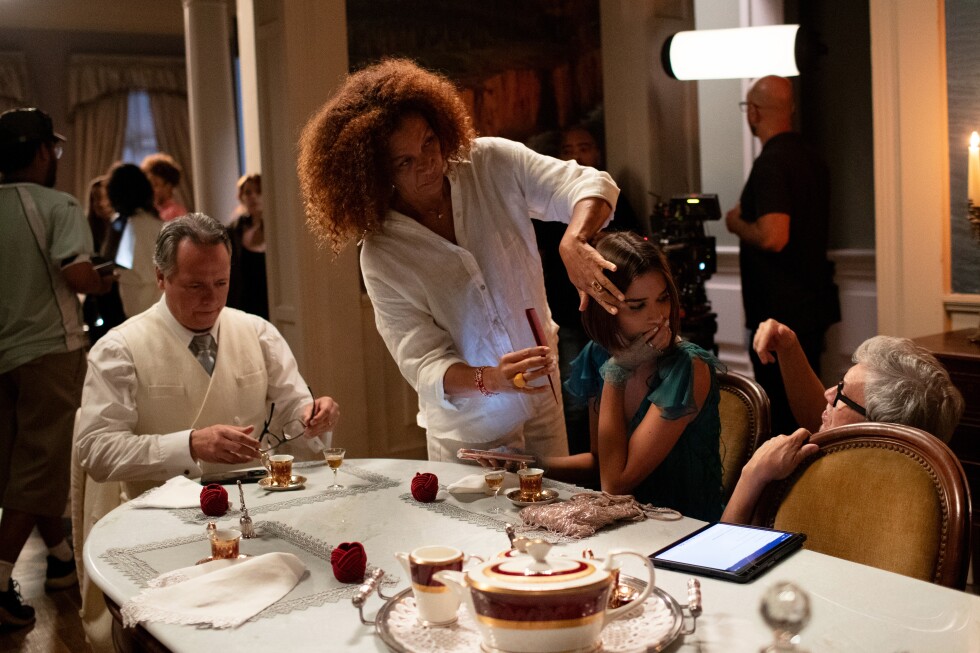
The scale of telenovela production is immense. TV Globo broadcasts three different telenovelas simultaneously each evening, with productions typically running six months, airing Monday through Saturday. These shows employ more than 1,000 people, and season finales often become national events, with viewing parties at bars, restaurants, and even gyms.
The economic impact is equally impressive. A remake of the hit telenovela “Vale Tudo” (Anything Goes) reportedly generated over 200 million reais ($38 million) in advertising revenue—four times the global box office earnings of “The Secret Agent.” This financial reality shapes the industry’s talent ecosystem.
Each year, TV Globo recruits up to 70 new actors from theater, film, and regional productions. These performers gain invaluable experience working with high-end equipment and cutting-edge techniques before many venture into other productions, including international cinema.
The interconnection between Brazil’s telenovelas and film industry continues to strengthen. Dira Paes, a veteran actor who frequently serves as TV Globo’s commentator during Oscar broadcasts, notes that professionals increasingly move between both mediums. Paes, who recently starred in the popular series “Pantanal” (Wetlands) and the internationally acclaimed film “Manas,” describes the unique appeal of telenovelas: “When you do it on prime-time, you experience the power of an entire nation watching you.”
Brazil’s socioeconomic reality has played a significant role in this television-dominated entertainment landscape. With about 3,500 movie theaters nationwide—mostly concentrated in major cities and dominated by American blockbusters—television has become the most accessible form of entertainment for millions.
“Brazilian cinema holds a grudge for not having the same reach as telenovelas,” explains Mauricio Stycer, an author and critic of TV culture. He notes that actors often face a difficult choice: “To be popular and have a sure income every month or to take risks in a career that involves theater and cinema? TV was always a safe haven for most actors.”
While TV Globo’s dominance has diminished somewhat with the rise of streaming services, the network remains Brazil’s premier destination for acting talent. “Up until the year 2000, Globo alone was responsible for about 50% of TV ratings in Brazil,” Stycer notes.
Actor and director Lázaro Ramos, who will attend this year’s Academy Awards to support his friend Moura, emphasizes that Brazilians have learned to appreciate both telenovelas and films. “Brazilians see themselves in telenovelas, more and more. Our acclaimed writers created many of them based on literature classics,” he says.
For Brazilian performers, the ability to move between mediums is essential for career sustainability. “An American actor could get $10 million for a film. That’s not the Brazilian reality,” Ramos acknowledges. “But telenovelas are not a lesser product; they are a product of the highest quality.”
As the global film community turns its attention to Sunday’s Academy Awards, Brazil’s unique entertainment ecosystem continues to prove that sometimes the path to Oscar glory runs straight through a television studio.
Fact Checker
Verify the accuracy of this article using The Disinformation Commission analysis and real-time sources.

7 Comments
This article highlights the importance of looking beyond traditional Hollywood-centric narratives when it comes to global filmmaking. Brazil’s telenovela industry is clearly a force to be reckoned with, and it’s exciting to see its influence being recognized on the world stage.
The fact that stars like Wagner Moura and Fernanda Torres first gained fame through telenovelas before transitioning to acclaimed films is a testament to the depth of talent and creativity in Brazil’s entertainment industry. It will be interesting to see if more telenovela alumni make their mark at future Academy Awards.
It’s fascinating to learn about the scale and influence of Brazil’s telenovela industry. The fact that it reaches nearly 30% of the country’s population on a weekly basis is truly remarkable. It’s no wonder it has become such a powerful incubator for acting and filmmaking talent.
The fact that stars like Wagner Moura and Fernanda Torres first gained prominence through telenovelas before making the leap to acclaimed films is a testament to the strength of Brazil’s entertainment ecosystem. It will be fascinating to see if more telenovela alumni follow in their footsteps.
I’m curious to learn more about the business model and production capabilities of TV Globo, Brazil’s broadcasting giant. Maintaining 13 studios, three set towns, and 122 edit bays to reach 60 million viewers weekly is an impressive feat. It speaks to the scale and influence of the telenovela industry in Brazil.
While the Oscars tend to focus on Hollywood, it’s refreshing to see the spotlight shift to Brazil’s vibrant entertainment landscape and the role telenovelas play in cultivating world-class talent. This just goes to show the global diversity of filmmaking and the importance of looking beyond traditional industry hubs.
Fascinating to learn that Brazil’s telenovela industry is such a powerful incubator for Oscar-worthy talent. It’s incredible how these daily dramas have evolved into a cultural and economic force, reaching millions of viewers and launching the careers of many acclaimed actors.