


Listen to the article
Brazil’s President Luiz Inácio Lula da Silva has expressed support for a national ban on online betting platforms, citing growing concerns over household debt and financial hardship across the country.
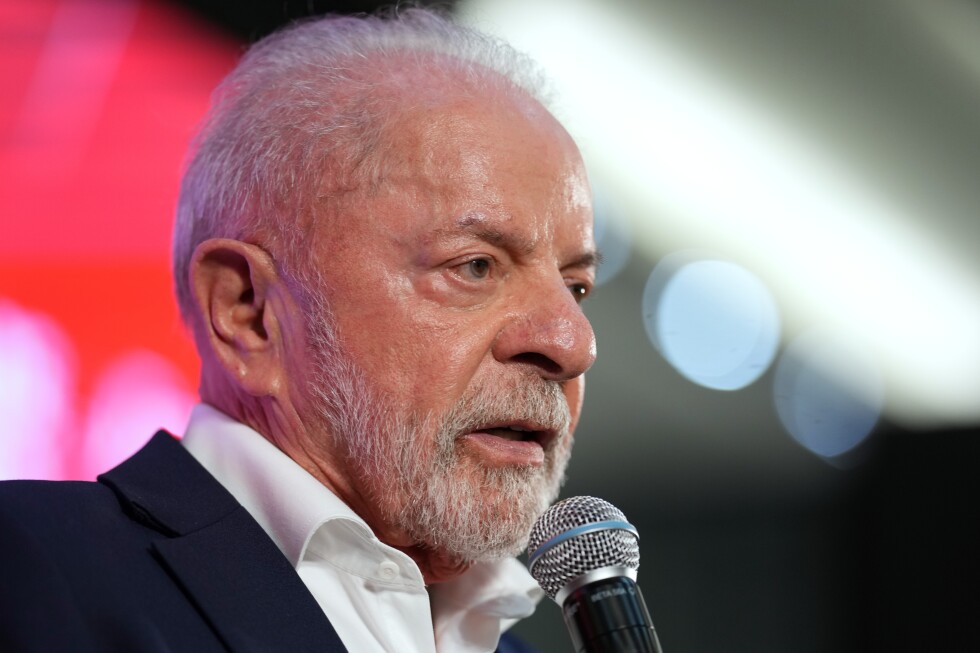
“If it is up to me, we close them,” Lula said during an interview with news outlet ICL Noticias on Wednesday. “I am deeply worried about the indebtedness of the Brazilian people. If these platforms cause harm, why don’t we end them? We are discussing this very seriously.”
The 80-year-old president, who is seeking reelection in October, described online gambling as “a massive tragedy” for millions of Brazilian families struggling with mounting debt. Brazil has emerged as one of the world’s largest betting markets, with annual revenues estimated at more than $4 billion.
Lula acknowledged that implementing such a ban would require legislative approval, noting that many lawmakers maintain alliances with betting companies. This political reality presents a significant challenge to any potential prohibition, as the gambling industry has established deep connections within Brazil’s political landscape.
The online betting industry in Brazil operates under a legal framework established in 2018 when then-President Michel Temer signed legislation permitting sports betting. Lula’s administration introduced regulations for betting companies in 2025 after blocking several operators the previous year. Currently, the government is pursuing higher tax rates on these companies, which currently pay 12% of their income.
Industry representatives have advocated for regulations that promote market reliability while arguing against tax increases. They contend that higher taxation would disadvantage local companies trying to establish themselves in Brazil, while offshore sites would continue accessing the Brazilian market without obtaining licenses or meeting other requirements.
Brazil’s debt crisis has reached alarming levels. According to figures published in March by a Brazilian commerce and services confederation, more than 80% of the country’s families carry some form of debt—the highest rate since 2010. Market analysts attribute a portion of this financial stress to the explosive growth of the online betting industry.
The situation has drawn criticism from religious groups and social activists who have long opposed gambling in Brazil, where traditional forms of gambling remain illegal. Despite these concerns, betting companies have secured sponsorship deals with almost every popular soccer club in Brazil’s first and second divisions, increasing their visibility and social acceptance.
The betting industry’s integration into Brazilian sports culture is further solidified by endorsements from prominent current and former soccer players. Stars such as Vinícius Júnior, Ronaldo Nazário, and Roberto Rivellino serve as ambassadors for both local and international betting brands, lending their celebrity status to promote these platforms.
The potential ban represents a significant shift in Brazil’s approach to the gambling industry. After years of increasing liberalization and integration of betting into mainstream culture, Lula’s administration appears ready to reconsider the social costs of this economic activity.
Financial experts note that Brazil’s experience mirrors global concerns about online gambling’s accessibility. The ease of mobile betting has removed traditional barriers to participation, allowing individuals to wager money quickly and repeatedly without the physical and social constraints that existed in traditional gambling environments.
If Brazil proceeds with restrictions on online betting, it would join a growing list of countries reassessing gambling policies in light of addiction concerns and financial impacts on vulnerable populations. The debate highlights the tension between economic opportunities presented by the gambling industry and the social responsibilities of government to protect citizens from potential harm.
Fact Checker
Verify the accuracy of this article using The Disinformation Commission analysis and real-time sources.

8 Comments
This is a complex issue with valid concerns on both sides. While protecting vulnerable consumers is important, a blanket ban may have unintended consequences. I hope Lula and lawmakers can find a balanced approach that addresses the root problems without stifling the entire industry.
You raise a fair point. Any regulation should carefully weigh the impacts and seek constructive solutions rather than rash prohibitions.
Household debt and financial hardship are serious issues that require attention. However, a ban on online betting may be a heavy-handed approach. Regulating the industry with safeguards could be more effective in protecting consumers without eliminating their freedom of choice.
Agreed. Regulations that prioritize consumer protection while allowing the legal industry to operate could be a more balanced solution.
This is a challenging issue without easy solutions. I hope President Lula and lawmakers can find a way to protect vulnerable consumers while also preserving individual freedoms and supporting legal businesses. Careful policy development with input from all stakeholders will be crucial.
I appreciate President Lula’s concern for the wellbeing of Brazilian families, but a nationwide ban may be an overreaction. Thoughtful regulation and oversight of the online betting sector could help mitigate the risks while preserving consumer choice. This is a complex issue that requires nuanced policymaking.
While I understand the president’s worries about the societal impacts of online gambling, a complete ban seems like an extreme measure. Responsible regulation, consumer education, and support services could be more effective in addressing the root problems without resorting to prohibition.
That’s a reasonable perspective. A balanced, evidence-based approach is likely to yield better long-term results than a sweeping ban.