


Listen to the article
Brazilian Finance Minister Resigns to Run for São Paulo Governor
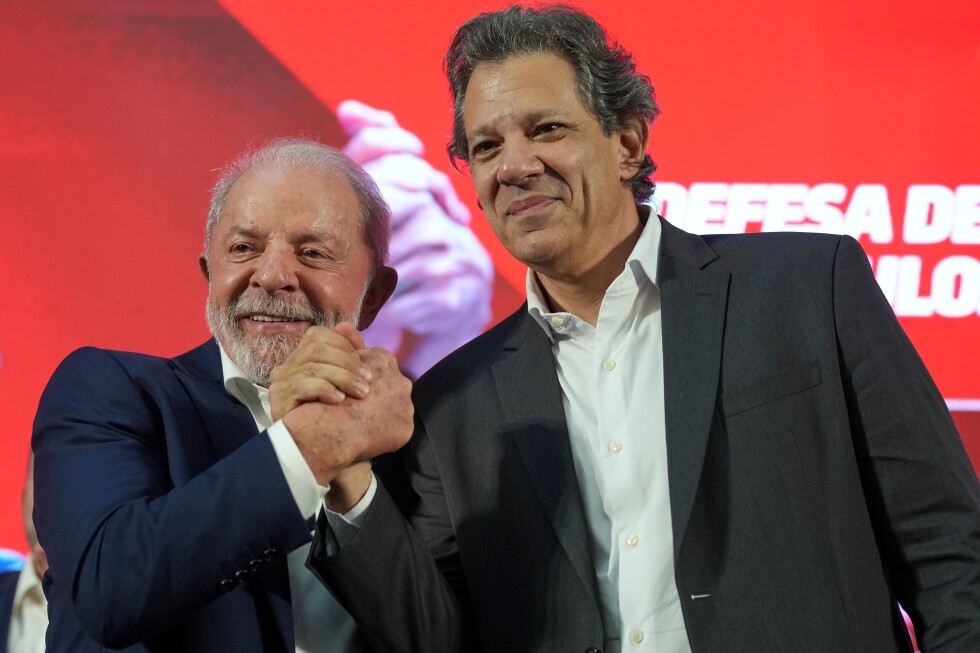
Brazil’s Finance Minister Fernando Haddad has stepped down from his role to pursue the governorship of São Paulo state, according to an official announcement published Friday in Brazil’s government gazette. The 61-year-old Haddad, widely viewed as a potential political successor to 80-year-old President Luiz Inácio Lula da Silva, will be replaced by Dario Durigan, who previously served as executive-secretary of the finance ministry.
“I don’t run in elections to bargain, I run to win,” Haddad declared Thursday at an event in São Bernardo do Campo, a city in São Paulo state. “Political victory is always possible: you just have to present yourself with integrity and a strong plan.”
Haddad will likely face incumbent Governor Tarcísio de Freitas, an ally of former President Jair Bolsonaro. While current polls show de Freitas leading, political analysts suggest the gubernatorial bid could bolster Haddad’s national profile regardless of the outcome.
“Lula’s Workers’ Party is really counting on him, including for Lula’s succession,” explained Paulo Henrique Cassimiro, a politics professor at Rio de Janeiro State University. “Even if he loses, running brings a very large amount of political capital, raises the person’s profile and makes the candidate’s name more widely known.”
The move comes at a pivotal moment in Brazilian politics. President Lula, who announced his re-election bid last October, has described the country’s political situation as “very grave.” Recent polls show Lula in a tight race with potential challenger Flávio Bolsonaro, the former president’s eldest son who has indicated his intention to run.
“If we don’t bring forward the best people we have in each city and each state, and if we don’t take up the fight to defend democracy, we run the risk, through inaction, of handing democracy back once again to the fascists,” Lula warned during Thursday’s event.
Haddad is no stranger to high-profile political contests. In 2018, he stood as the Workers’ Party presidential candidate when Lula was imprisoned on corruption charges. Although Haddad lost to Bolsonaro in that election, Lula’s convictions were later annulled by the Supreme Court, allowing him to defeat Bolsonaro in the 2022 presidential race.
During his tenure as finance minister, Haddad achieved significant policy victories, including implementing a long-awaited overhaul of Brazil’s goods and services tax system that had been under discussion for decades. He also successfully pushed through a popular income tax reform package that aimed to improve equity in the tax system.
However, his 20-month tenure at the finance ministry wasn’t without controversy. Earlier this year, Haddad faced backlash when he implemented tariffs on low-cost international online purchases, sparking social media memes that nicknamed him “Taxad” – a wordplay combining “tax” and his surname.
The leadership change at Brazil’s finance ministry comes at a challenging economic moment. Incoming Minister Durigan faces immediate pressure from rising global energy prices due to Middle East conflicts. Last week, the government announced temporary tax relief on diesel fuel to cushion the impact on consumers, offsetting the revenue loss with a new 12% tax on crude oil exports.
“A very intense war like the one we’re seeing in the Middle East is something quite complex for Durigan to manage,” noted Carla Beni, an economist at the Getulio Vargas Foundation, highlighting the significant challenges ahead for the new finance minister.
If Lula secures re-election, analysts suggest Haddad could potentially return to his cabinet position. In the meantime, his gubernatorial campaign will likely focus on contrasting his center-left economic vision with Governor de Freitas’ more market-friendly approach in São Paulo, Brazil’s wealthiest and most populous state.
The upcoming São Paulo gubernatorial race is expected to serve as a crucial barometer for Brazil’s political landscape ahead of the 2026 presidential election, when the country will choose Lula’s successor.
Fact Checker
Verify the accuracy of this article using The Disinformation Commission analysis and real-time sources.

12 Comments
Interesting move by Haddad. Running for São Paulo governor could raise his national profile, even if he doesn’t win. Mining and commodities investors will be watching this race closely to see how it could impact Brazil’s policies on those sectors.
Agreed. São Paulo is a major economic center, so the governor’s race will be closely watched. Haddad’s resignation as finance minister signals he’s serious about this bid.
Haddad’s resignation from the finance ministry is a bold move, but it reflects his ambition to become a major political force in Brazil. As a potential Lula successor, his positions on mining, energy, and other key sectors will be closely watched by investors and the public alike.
Well said. This race will be a crucial test for Haddad’s leadership abilities and his vision for Brazil’s economic future. Commodity producers and investors will be closely following his campaign platform and policy proposals.
This is a crucial moment for Haddad’s political career. If he can pull off an upset in São Paulo, it would significantly boost his chances of eventually succeeding Lula. But he’ll need to convince voters that he can deliver both economic stability and social progress.
Exactly. Haddad will have to strike the right balance between appealing to his left-wing base and reassuring the business community. His handling of this campaign could shape Brazil’s political landscape for years to come.
Haddad’s resignation as finance minister suggests he’s fully committed to this gubernatorial bid. It will be interesting to see if he continues his pragmatic, market-friendly approach or shifts to a more populist platform to energize his base.
Good point. His stance on mining, energy, and other key industries will be a major factor. Investors will be closely monitoring his policy proposals and rhetoric during the campaign.
Haddad faces an uphill battle against the incumbent, but a strong performance could still boost his political future. Given his background in finance, his policies on mining and commodities will be closely scrutinized.
Definitely. Haddad’s track record in the finance ministry will be heavily debated. Investors will want to know if he plans any major changes to Brazil’s resource policies.
This race will be a key test for Lula’s political machine. Haddad is seen as a potential successor, so his performance could shape the future of the Workers’ Party. Commodity producers will be watching to see if his campaign promises align with their interests.
Absolutely. São Paulo is a huge political and economic prize, so this will be a high-stakes battle. Haddad will need to walk a fine line between appealing to his base and reassuring the business community.