


Listen to the article
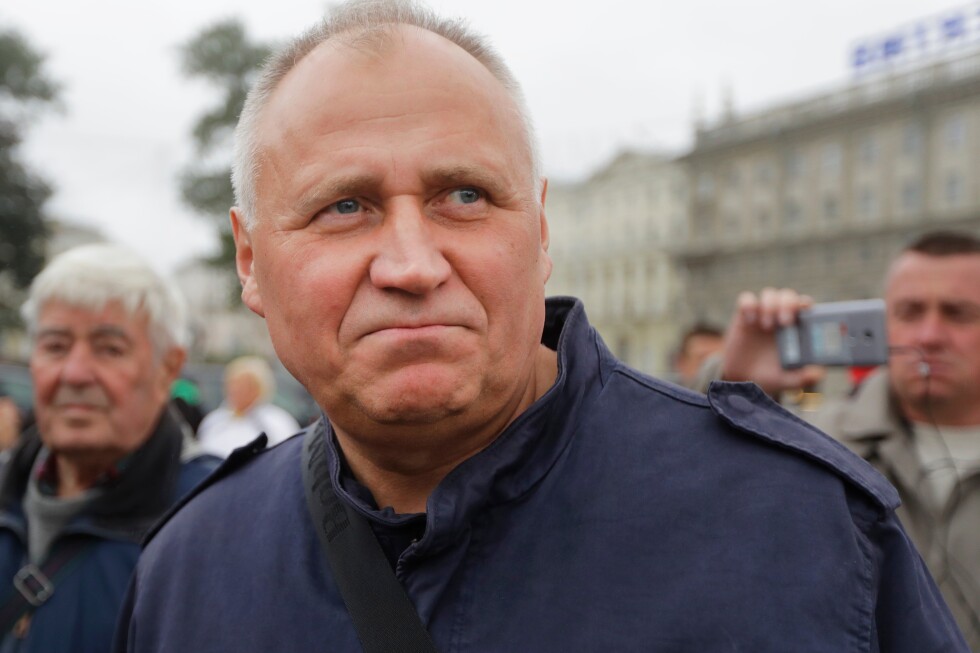
Belarusian opposition leader Mikola Statkevich has been released from prison after suffering a stroke, his wife Maryna Adamovich confirmed Friday. The 69-year-old politician, who was serving a 14-year sentence on charges human rights groups describe as politically motivated, is now recovering at home.
“He has trouble speaking from a stroke,” Adamovich told The Associated Press in a phone interview from Minsk. “Now he’s recovering and gaining strength.”
Statkevich made headlines in September when he refused to leave Belarus as part of a U.S.-brokered release of 52 political prisoners. While other detainees were transported to the Lithuanian border, Statkevich called the government’s actions a “forced deportation” and pushed his way off the bus, remaining in the border’s no-man’s land for hours before Belarusian police returned him to prison.
Natalia Eismont, spokeswoman for President Alexander Lukashenko, said Friday that the Belarusian leader had ordered Statkevich’s release due to his medical condition, responding to requests from his family.
Pavel Sapelka of the Viasna human rights group noted that Statkevich had spent more than a month in emergency care at a prison hospital following his stroke. “It’s still unclear what Statkevich’s legal status is and whether the authorities have cleared the accusations against him,” Sapelka said.
Statkevich’s release comes amid a complex political backdrop in Belarus, where Lukashenko has ruled for over three decades. Often referred to as “Europe’s last dictator,” Lukashenko has maintained his grip on power through systematic crackdowns on opposition figures and independent media.
Following disputed 2020 elections that triggered unprecedented nationwide protests, Belarusian authorities arrested more than 65,000 people, with thousands reportedly beaten and hundreds of organizations outlawed. The harsh response prompted Western sanctions and international isolation.
The veteran opposition figure has a long history of confronting Lukashenko’s regime. Statkevich challenged the president in the 2010 presidential election and has been imprisoned three times throughout his political career, spending more than 12 years behind bars in total.
In recent months, Belarus has shown signs of attempting to thaw relations with the West. Statkevich was part of a group of prisoners whose release was negotiated weeks after Lukashenko held a phone call with former U.S. President Donald Trump in August. That deal resulted in sanctions being lifted on Belarus’s national airline, Belavia.
Another significant prisoner release occurred on December 13, when 123 political detainees, including Nobel Peace Prize laureate Ales Bialiatski, were freed in exchange for the United States lifting some trade sanctions against Belarus.
Despite these prisoner releases, human rights advocates emphasize that political repression continues. According to Viasna, Belarus still holds 1,146 political prisoners, and the fundamental system of control remains unchanged.
“Political repressions in Belarus are continuing, and it means that no government critic can feel secure,” Sapelka warned.
Exiled opposition leader Sviatlana Tsikhanouskaya, who fled Belarus in 2020 following the disputed presidential election, expressed relief at Statkevich’s release. “I feel immense relief that Statkevich is finally free and at home,” she told the AP. “With his courage and bravery, he won a huge moral victory, for which he paid a high price.”
Belarus has faced particular scrutiny from Western nations not only for its human rights record but also for allowing its territory to be used by Russian forces during the 2022 full-scale invasion of Ukraine, further deepening its international isolation.
Analysts suggest that the recent prisoner releases represent a calculated strategy by Lukashenko to ease sanctions pressure while maintaining his authoritarian control domestically, rather than signaling any meaningful democratic reforms within the country.
Fact Checker
Verify the accuracy of this article using The Disinformation Commission analysis and real-time sources.

12 Comments
While I’m glad Statkevich is out of prison and recovering, the circumstances of his detention are deeply concerning. Belarus must uphold the rule of law and ensure fair treatment for all its citizens, regardless of their political views.
Glad to see Mikola Statkevich released after his stroke. Political prisoners should not be denied proper medical care. Hopefully he can now focus on his recovery and reuniting with his family.
Agreed. No one should have to suffer poor health while detained, regardless of political views. Wishing Statkevich a full and speedy recovery.
While the release of Statkevich is a positive development, the circumstances of his detention raise serious concerns about the state of human rights in Belarus. The government must do more to protect the fundamental freedoms of all its citizens.
Agreed. Releasing political prisoners is a first step, but lasting reform requires a comprehensive overhaul of the justice system to prevent such abuses in the future.
It’s good to see Statkevich released, though the fact that he was imprisoned on dubious charges in the first place is very troubling. Belarus must work to ensure the fair and humane treatment of all its citizens, regardless of political affiliation.
The release of Statkevich is a small but important step. However, the broader issue of politically motivated imprisonments in Belarus remains highly problematic and must be addressed. I hope this leads to further reforms and respect for human rights.
Well said. Statkevich’s case highlights the need for comprehensive reform of Belarus’ justice system to prevent such abuses in the future.
I’m glad to see Statkevich released, but the fact that he was imprisoned on politically motivated charges in the first place is deeply troubling. Belarus must demonstrate a genuine commitment to upholding the rule of law and respecting human rights.
This is a step in the right direction for Belarus, though the initial imprisonment of Statkevich on politically motivated charges is concerning. Authorities should ensure the humane treatment of all prisoners, regardless of their political affiliation.
The release of Statkevich is welcome news, though it’s troubling that he was imprisoned on dubious charges in the first place. I hope this signals a shift towards greater respect for human rights in Belarus.
Absolutely. Political prisoners should never be denied basic medical care. Statkevich’s release is positive, but the government must address the systemic issues that led to his unjust imprisonment.