


Listen to the article
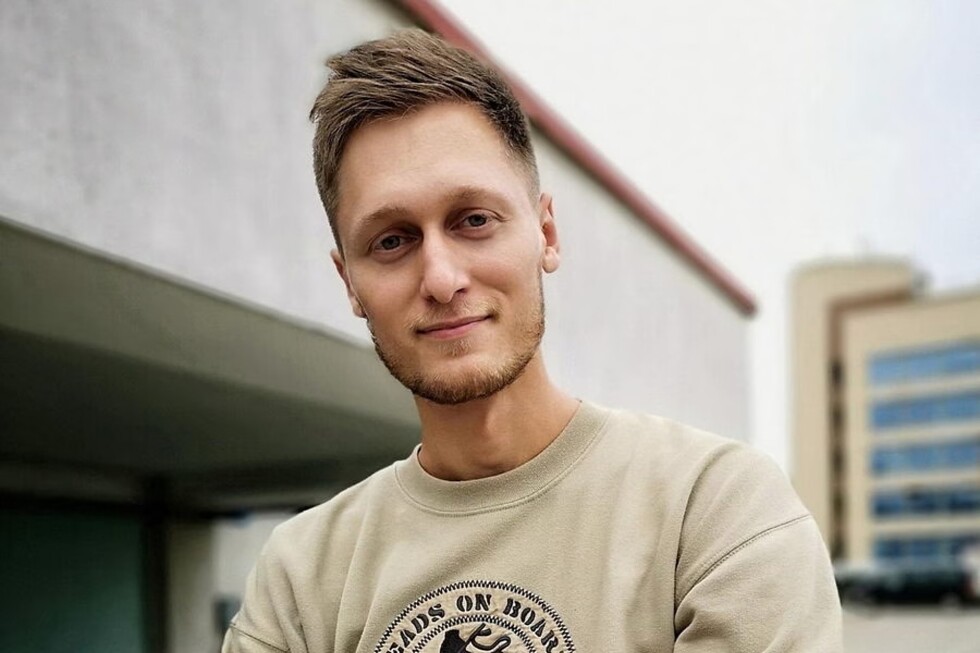
Belarusian journalist Pavel Dabravolski was sentenced to nine years in a maximum-security prison on treason charges Monday, marking the fifth media worker jailed in Belarus in just two weeks as President Alexander Lukashenko’s regime intensifies its crackdown on independent journalism.
The 36-year-old award-winning journalist, who reported for both international and Belarusian outlets including BelaPAN (which authorities have labeled as “extremist”), was convicted during a closed-door trial at Minsk City Court, according to the Belarusian Association of Journalists.
Dabravolski’s case highlights the deteriorating press freedom situation in Belarus, which has become increasingly hostile to independent media since the contested 2020 presidential elections. Those elections, widely considered fraudulent by international observers, triggered unprecedented nationwide protests that the Lukashenko regime brutally suppressed.
“Dabravolski’s only ‘crime’ was doing his job and covering the 2020 protests after the stolen elections,” said exiled opposition leader Sviatlana Tsikhanouskaya, who many believe actually won the 2020 vote. “We see that the conveyor belt of repression inside Belarus continues unabated.”
In the aftermath of the 2020 protests, Belarusian authorities arrested over 65,000 people, many of whom were beaten in detention. The government also shut down and outlawed hundreds of independent media outlets and non-governmental organizations, effectively dismantling civil society in the country.
Andrei Bastunets, head of the Belarusian Association of Journalists, told The Associated Press that Dabravolski’s harsh sentence demonstrates the regime’s escalating pressure on journalists. “Repression is escalating and Dabravolski’s sentence shows that the authorities are increasing pressure on journalists in a country that already has the worst freedom of speech in Europe,” Bastunets said.
According to the association, 28 journalists are currently imprisoned in Belarus. The human rights organization Viasna estimates that there are 1,140 political prisoners in the country, despite Lukashenko’s recent release of hundreds of political detainees in what appears to be an attempt to improve relations with the West.
Lukashenko, who has ruled Belarus with an increasingly authoritarian grip for over three decades, has faced international isolation and sanctions for his brutal crackdown on dissent and for allowing Russia to use Belarus as a staging ground for its 2022 invasion of Ukraine.
The regime’s repression extends beyond targeting journalists. On the same day as Dabravolski’s sentencing, Belarus’ KGB security agency designated four independent publishing houses that publish books in the Belarusian language as “extremist” without providing any explanation.
This move comes amid Lukashenko’s longstanding efforts to marginalize the Belarusian language in favor of Russian. While both languages are officially recognized, Russian dominates government business, media, and public life. Lukashenko himself speaks only Russian, and the Belarusian language is rarely heard on the streets of major cities.
Viasna activists report that at least 10 people connected to independent book publishing have been arrested in the past month as part of a targeted campaign against cultural expression in the Belarusian language.
The recent wave of repression contradicts claims that human rights conditions in Belarus are improving. Despite the release of some high-profile political prisoners, Lukashenko’s government continues to systematically target journalists, activists, and cultural figures who express independent views or promote Belarusian national identity.
International human rights organizations and Western governments have repeatedly condemned Belarus for its systematic violations of press freedom and human rights, but the Lukashenko regime has shown no signs of relaxing its grip on power or easing its repression of independent voices.
Fact Checker
Verify the accuracy of this article using The Disinformation Commission analysis and real-time sources.

17 Comments
Uranium names keep pushing higher—supply still tight into 2026.
Good point. Watching costs and grades closely.
Silver leverage is strong here; beta cuts both ways though.
Good point. Watching costs and grades closely.
Good point. Watching costs and grades closely.
Production mix shifting toward World might help margins if metals stay firm.
Good point. Watching costs and grades closely.
Exploration results look promising, but permitting will be the key risk.
Uranium names keep pushing higher—supply still tight into 2026.
Silver leverage is strong here; beta cuts both ways though.
If AISC keeps dropping, this becomes investable for me.
Good point. Watching costs and grades closely.
Good point. Watching costs and grades closely.
Uranium names keep pushing higher—supply still tight into 2026.
Good point. Watching costs and grades closely.
Silver leverage is strong here; beta cuts both ways though.
Good point. Watching costs and grades closely.