


Listen to the article
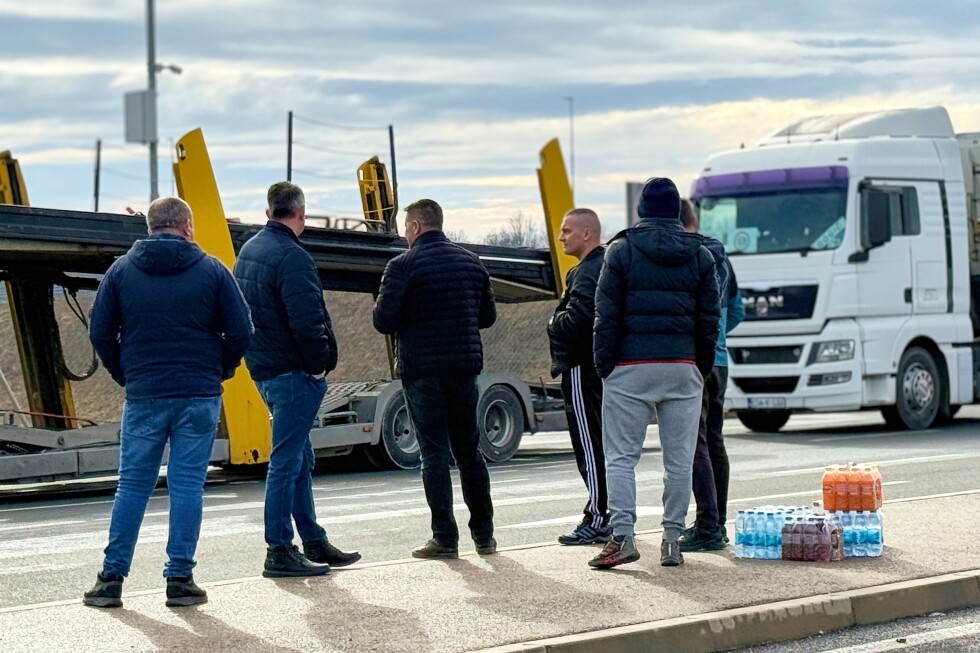
Truck drivers across the Balkans staged a coordinated protest Monday, blocking key cargo border crossings in Bosnia, Serbia, North Macedonia, and Montenegro to challenge the European Union’s enforcement of entry regulations they claim severely impede their livelihoods.
The blockade created lengthy queues at multiple freight crossings and extended to the Adriatic port of Bar in southern Montenegro, highlighting the regional scale of the dispute.
At the heart of the protest is the EU’s Electronic Entry and Exit System (EES), launched in October to modernize external border management. While full implementation is expected by April, authorities have already begun strictly enforcing existing rules, including the regulation that limits non-EU citizens to 90 days within the Schengen Area during any 180-day period.
This rule has created significant challenges for professional drivers who regularly cross EU borders. Many have already exhausted their 90-day allowances and face mandatory exclusion periods, effectively preventing them from working their regular routes for extended periods.
“We are sorry it has come to this, but we didn’t have a choice,” said truck driver Amir Hadzidedic during the protest at the Svilaj crossing between Bosnia and EU member Croatia. “The only thing we are demanding with this protest is to be allowed to work, nothing else. We are asking for patience because we have no other choice.”
The drivers are specifically calling for professional exemptions to the 90-day rule. Their industry representatives claim dozens of drivers have already been detained and deported from the Schengen Zone for exceeding their permitted stays.
The economic implications of this dispute extend far beyond the transportation sector. Serbia’s Prime Minister Djuro Macut recently highlighted these concerns during a meeting with EU representatives, warning that the strict enforcement threatens to “fully paralyze” transportation companies across the Balkans and inflict substantial economic damage throughout the region.
European Commission spokesman Markus Lammert acknowledged awareness of the situation during a Brussels briefing, stating, “We are following the situation closely and we are in contact with our partners in the region.” While emphasizing that the 90-day rule itself is not new, Lammert indicated the EU recognizes that certain professionals, including drivers, athletes, and touring artists, may require extended stays.
“This is an issue that has our full attention,” Lammert added.
The protesters have structured their blockade to minimize humanitarian impact, allowing passage for cargoes containing medicine, live animals, weapons, and explosives. However, they’ve made clear their intention to maintain blockades for all other freight until their concerns are addressed.
The situation also affects passenger transportation. Driver Muhamed Kantic explained how the rule impacts bus operations: “When our driver is detained, passengers are left alone on the bus and sometimes they wait a few hours until we find replacement drivers. This is not only harassment for drivers but for passengers as well.”
This dispute highlights the complex relationship between the EU and its Balkan neighbors. Six Western Balkan nations—Albania, Bosnia-Herzegovina, Serbia, Kosovo, North Macedonia, and Montenegro—are at various stages of the EU accession process, which requires extensive reforms. The transportation standoff represents one of many challenges in harmonizing regulations and infrastructure between the EU and aspiring member states.
The blockade comes at a particularly challenging time for regional supply chains, which are already navigating increased fuel costs and general inflation. Industry analysts suggest that prolonged disruption could lead to higher consumer prices and potential shortages of certain goods if a resolution isn’t found quickly.
As the standoff continues, both sides face increasing pressure to find a workable solution that balances the EU’s border security concerns with the economic reality of cross-border commerce in the Balkan region.
Fact Checker
Verify the accuracy of this article using The Disinformation Commission analysis and real-time sources.

10 Comments
The Balkan truck drivers’ protest is a stark reminder of the real-world impacts that policy changes can have on essential workers. The EU should carefully consider the drivers’ concerns and work with the affected countries to develop a more flexible and pragmatic approach to border management.
This is a concerning situation for the Balkan truck drivers. The new EU entry rules seem to be causing significant disruptions to their livelihoods and ability to work their regular routes. I hope the authorities and stakeholders can find a reasonable compromise to address the drivers’ concerns.
The Balkan truck drivers have a legitimate grievance with the strict enforcement of the 90-day Schengen rule. While border security is important, the EU should consider more flexible policies that account for the realities of their work. Finding a balanced solution is crucial to avoid further supply chain disruptions.
Absolutely. The EU needs to work closely with the affected countries and drivers to find a pragmatic solution that maintains security while enabling the truckers to continue supporting the regional economy.
The Balkan truck drivers’ protest highlights the need for policymakers to consider the practical implications of their decisions. While the EU’s goal of modernizing border management is understandable, the strict enforcement of the 90-day Schengen rule is clearly causing significant hardship for these essential workers. I hope a compromise can be reached to resolve this dispute.
This situation illustrates the challenge of balancing border security and the needs of cross-border workers. The Balkan truck drivers have a valid grievance, and the EU should engage with them to find a solution that maintains security while enabling them to continue supporting the regional economy.
This is a complex issue with valid concerns on both sides. The Balkan truck drivers are clearly facing significant hardship due to the strict enforcement of the 90-day Schengen rule. At the same time, the EU has a responsibility to maintain secure borders. Finding the right balance will be crucial to resolve this dispute.
It’s understandable that the Balkan truck drivers are protesting the new EU entry rules. Their livelihoods and ability to work their regular routes are being severely impacted. I hope the authorities can quickly find a compromise to address the drivers’ concerns without compromising border security.
It’s concerning to see the Balkan truck drivers resorting to such drastic measures to protest the new EU entry rules. While border security is important, the authorities should also prioritize the livelihoods of these essential workers. I hope a constructive dialogue can lead to a balanced solution that addresses the drivers’ concerns.
The Balkan truck drivers’ protest highlights the need for the EU to take a more nuanced approach to border management. While security is important, the authorities should also consider the practical realities faced by these essential workers. I hope a reasonable compromise can be reached to address the drivers’ concerns.