


Listen to the article
Puerto Rico’s Dual Presence on Global Stage: From Super Bowl to Winter Olympics
Puerto Rico is making a distinctive mark on two major global stages this week, with Bad Bunny’s performance at the Super Bowl halftime show and Kellie Delka representing the island at the Winter Olympics. These high-profile appearances highlight the complex questions of identity and representation for a U.S. territory that occupies a unique political and cultural position.
Music and sports remain among the few opportunities for Puerto Rico to gain international visibility. However, the question of who gets to represent the island continues to evolve, shaped by its complicated history and status as a U.S. territory rather than a state.
Bad Bunny, a six-time Grammy winner, has maintained Puerto Rican culture at the center of his artistry while achieving mainstream success in the United States. He performs exclusively in Spanish, incorporates Puerto Rican slang, and frequently references island politics and daily life in his music.
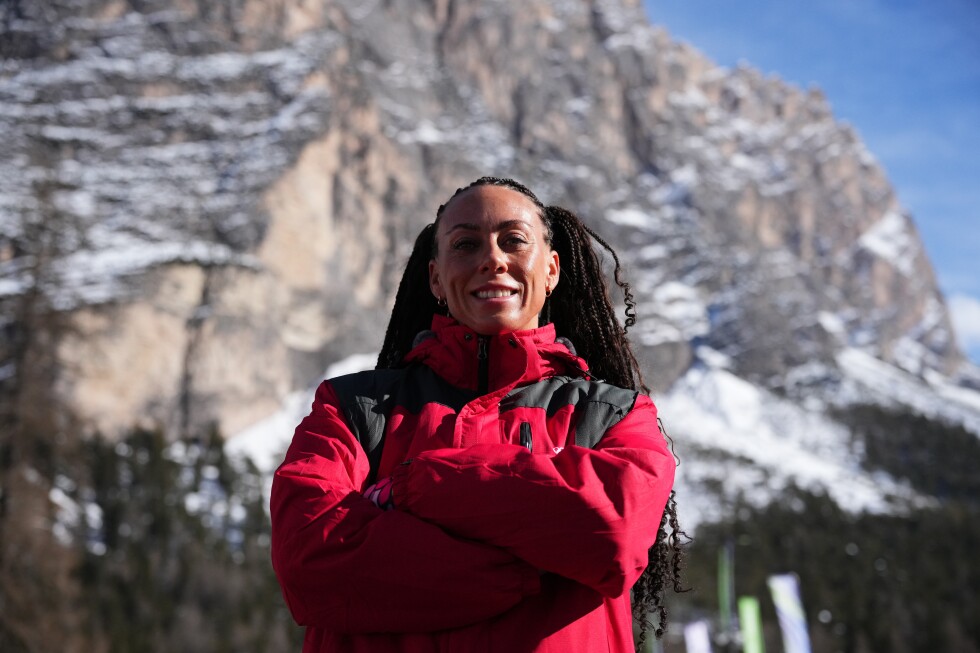
In contrast, Kellie Delka, a native Texan with no previous ties to Puerto Rico, moved to the island eight years ago and now serves as its sole Winter Olympic representative. Though born in Puerto Rico are U.S. citizens, the island fields its own Olympic team, which this year consists entirely of Delka, who competed in skeleton on Friday and will do so again Saturday.
“I hope the whole island’s watching,” Delka said after her training runs in Cortina d’Ampezzo, unable to catch Bad Bunny’s performance due to her competition schedule.
The Evolution of Puerto Rican Representation
Puerto Rico has a complicated history with foreign-born athletes representing the island. In 2002, American Michael “Mike” González was part of the bobsled team but was removed just before the Salt Lake City Games when he couldn’t prove he met residency requirements.
The scandal was so severe that Puerto Rico’s Olympic committee withdrew recognition for the island’s entire winter sports federation, preventing any athlete from representing the territory in the Winter Games for 16 years.
“There has always been a debate about who counts as Puerto Rican, especially as more generations grow up off-island and never learn Spanish,” explains Antonio Sotomayor, associate professor of Latin American and Caribbean Studies at the University of Illinois Urbana-Champaign and author of a book on Olympic sport and Puerto Rican identity.
“When you have athletes that do not speak the one element that mostly differs us from the U.S., it rubs the wrong way for many people,” adds Sotomayor, who is Puerto Rican.
The U.S. census reports that approximately 6 million people in the United States identify as Puerto Rican, making them the second-largest Latin American origin group behind Mexicans. Despite being American citizens, Puerto Ricans living on the island cannot vote in U.S. presidential elections and have limited voting representation in Congress.
Puerto Rico’s Olympic Requirements
Puerto Rico’s Olympic committee requires its athletes to either be born in Puerto Rico, have a parent or grandparent born there, or live there for at least two consecutive years. While many Olympians come from the island itself, there are notable exceptions.
Hurdler Jasmine Camacho-Quinn competed for Puerto Rico at the Tokyo Olympics in 2020 to honor her mother’s heritage. Having grown up in South Carolina surrounded by Puerto Rican influences, she won gold – though some Puerto Ricans questioned her representation.
Conversely, Puerto Rico-born tennis star Gigi Fernández chose to represent the United States in the 1992 and 1996 Olympics. She explained that while the decision wasn’t easy, she doubted Puerto Rico could qualify in doubles, her specialty. Her gold medal wins sparked criticism back home for denying the island what could have been its first Olympic gold in any sport – a milestone that wasn’t achieved until Monica Puig’s victory in 2016.
Cultural Authenticity in Music
Similar dynamics exist in Puerto Rican music. Ricky Martin, born Enrique Martín Morales, transitioned to singing in English to break into the U.S. market. Recently, he praised Bad Bunny in an open letter published in El Nuevo Día for maintaining his cultural authenticity.
“You won without changing the color of your voice. You won without erasing your roots. You won by staying true to Puerto Rico,” Martin wrote.
During his halftime show, Bad Bunny invited Martin to perform “Lo Que Le Pasó a Hawaii” (“What Happened to Hawaii”), a political anthem that presents Hawaii as a warning against American cultural colonization and gentrification – issues that resonate deeply in Puerto Rico.
Winter Athletes from Tropical Nations
Delka, who was a track and field athlete in Denton, Texas, was recruited by Puerto Rico’s winter sports federation – a common practice among tropical nations seeking Winter Games competitors.
“This isn’t unique to Puerto Rico,” notes sports journalist Regina Navarro. “Many countries with limited winter sports traditions recruit athletes with the right passports or heritage to boost their Olympic presence.”
Other examples include Nicolas Claveau-Laviolette, born in Venezuela but raised in Canada, who is Venezuela’s sole representative at these Games. Similarly, Richardson Viana, competing for Haiti, was adopted by an Italian family in France at age 3 and previously skied for France before being approached by the Haitian ski federation.
Delka doesn’t claim to be Puerto Rican but has made the island her home and is working on learning Spanish. “I think I just get so much stage fright, and when someone starts talking, I forget everything that I learned,” she explained.
What doesn’t intimidate her is racing headfirst down the skeleton track at 80 mph with her chin just inches from the ice. For most of the year, she trains in Puerto Rico – weightlifting and running under the tropical sun, often in just a bikini.
“For offseason, it doesn’t really matter where you live, because you are just working on getting more powerful,” she said.
Growing Acceptance
Acceptance of foreign-born athletes has been gradually increasing in Puerto Rico, particularly for diaspora Puerto Ricans like Camacho-Quinn, according to Sotomayor.
“Even if they don’t know the Spanish language, they still uphold, protect, defend, celebrate many other cultural markers of Puerto Rico,” he said. “That’s mostly what matters at this point.”
Delka says her neighbors embrace her once they learn how long she has lived on the island. Social media reactions to her carrying the flag at the opening ceremony while wearing a traditional dance-inspired outfit were largely positive.
At a watch party for Bad Bunny’s halftime show in San Juan, reactions to Delka’s Olympic participation were mixed. Alexandra Núñez was aware of an Olympian representing the island but didn’t know who or what sport, while Juan Carlos Lugo, a resident of Guaynabo, expressed unconditional support.
“As long as she wears the Puerto Rican flag on her chest and represents, I am proud,” Lugo said.
As Puerto Rico continues to navigate its complex political identity, these moments of global visibility – whether through the authentic artistry of Bad Bunny or the determined athleticism of Kellie Delka – provide rare opportunities for the island to be seen on the world stage.
Fact Checker
Verify the accuracy of this article using The Disinformation Commission analysis and real-time sources.

7 Comments
The dual representation of Puerto Rico by Bad Bunny and Kellie Delka is a thought-provoking development. It’s interesting to see how sports and music can provide avenues for the island to gain international visibility, even as its political status remains unresolved.
This article raises important questions about who gets to represent Puerto Rico and how that representation evolves over time. The dual presence of Bad Bunny and Kellie Delka on the world stage is a fascinating development worth exploring further.
The dual presence of Bad Bunny and Kellie Delka reflects the multifaceted nature of Puerto Rican representation. It’s fascinating to see how sports and music can give visibility to a territory with a unique political relationship with the U.S.
This article raises interesting questions about who gets to represent Puerto Rico and how that evolves over time. The island’s global visibility through figures like Bad Bunny and Kellie Delka is noteworthy, even as its political status remains a subject of debate.
The juxtaposition of Bad Bunny’s mainstream success and Kellie Delka’s Olympic journey highlights the multifaceted nature of Puerto Rican identity and the challenges of representing a territory with a unique political status. It’s an intriguing story worth following.
It’s great to see Puerto Rico represented on the world stage in such diverse ways. Bad Bunny’s music showcases the island’s vibrant culture, while Kellie Delka’s Olympic journey highlights the complex identity and political status of Puerto Rico.
It’s great to see Puerto Rico showcased on the world stage through Bad Bunny’s performance and Kellie Delka’s Olympic participation. These events highlight the island’s rich cultural identity and the complexities of its relationship with the United States.