


Listen to the article
Austrian Climber Convicted of Manslaughter After Girlfriend Freezes to Death on Mountain Expedition
An Austrian court has handed down a five-month suspended sentence and a €9,600 ($11,300) fine to a 37-year-old man after his girlfriend froze to death during their attempt to scale Austria’s highest mountain last year. The Innsbruck state court convicted the man of manslaughter caused by gross negligence following a one-day trial that concluded Thursday evening.
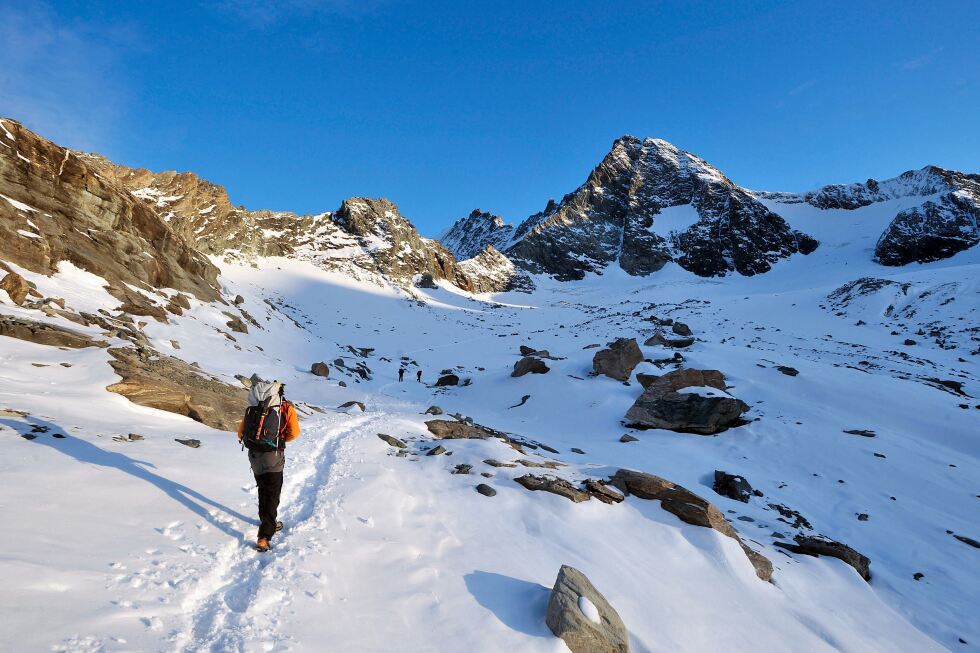
The fatal climbing expedition occurred in January 2025, when the couple set out to conquer the Grossglockner, a 3,798-meter (12,460-foot) peak in western Austria. According to prosecutors, the 33-year-old woman died approximately 50 meters (164 feet) below the summit after her boyfriend left her behind. Throughout the proceedings, the defendant maintained his innocence.
In delivering the verdict, Judge Norbert Hofer acknowledged that while the defendant had misjudged the mountain conditions, he had not deliberately abandoned his girlfriend. The judge noted that the woman’s mountaineering expertise was “galaxies” short of her partner’s capabilities. The sentence imposed was considerably less than the maximum three-year prison term possible under Austrian law.
“I don’t see you as a murderer, I don’t see you as a cold-hearted man,” Judge Hofer stated, referencing widespread social media commentary surrounding the case. “I see you as the one who ultimately tried to call help and stand by his girlfriend.”
Nevertheless, the court determined that the defendant had failed to fulfill his “leadership responsibility” during the expedition. Judge Hofer emphasized that the woman would almost certainly have survived “if the appropriate measures had been taken,” such as making an earlier emergency call or deciding to turn back when conditions deteriorated.
During the trial, the defendant expressed deep remorse, telling the court he was “endlessly sorry” for what had transpired. He claimed that all decisions regarding the climb, including the Grossglockner expedition, had been made jointly with his girlfriend. He further argued that he possessed no formal Alpine training himself and that his girlfriend’s mountaineering knowledge was not significantly inferior to his own.
The defendant also testified that his girlfriend had appeared in good condition when a police helicopter flew over them earlier in the climb, and he could not explain her rapid deterioration afterward. According to his testimony, he had descended the mountain to seek help only after consulting with her.
The case has highlighted the dangers of winter mountaineering in the Austrian Alps, where unpredictable weather conditions and extreme temperatures can quickly create life-threatening situations. The Grossglockner, located in the Hohe Tauern range, is a popular but challenging destination for climbers, particularly treacherous during winter months when temperatures can plummet dramatically and weather conditions change with little warning.
Alpine rescue experts emphasize that winter ascents require specialized equipment, extensive preparation, and the ability to recognize when to abort a climb. In recent years, Austrian authorities have reported an increase in mountain rescue operations as more inexperienced climbers attempt challenging peaks without adequate preparation or skills.
According to the Austrian Alpine Club, mountaineering accidents claim dozens of lives annually in the country’s mountains, with human error and poor judgment frequently cited as contributing factors.
The verdict in this case can be appealed, though it remains unclear whether the defendant intends to do so. The court did not publicly identify the man, in accordance with Austrian privacy regulations.
Fact Checker
Verify the accuracy of this article using The Disinformation Commission analysis and real-time sources.

5 Comments
Climbing the highest peak in Austria is no easy feat, and it’s tragic that this woman lost her life. The court’s ruling seems fair, acknowledging the man’s negligence while also recognizing the difficulty of the situation. It’s a sobering reminder of the dangers of mountaineering, even for experienced climbers. My condolences to the victim’s family.
This is a tragic case. It’s clear the man misjudged the conditions and made a poor decision, but not intentionally harming his girlfriend. Losing a partner in such a way must be devastating. Hopefully, the suspended sentence and fine provide some accountability while recognizing the nuanced circumstances.
Wow, this is a really sad story. While the man’s actions were negligent, it doesn’t seem he intentionally abandoned his girlfriend. The court’s sentence seems reasonable given the circumstances. Mountaineering is inherently risky, and even the most experienced climbers can make mistakes with devastating consequences. My heart goes out to the victim’s loved ones.
Mountaineering can be incredibly dangerous, even for experienced climbers. It’s a shame this couple’s expedition ended in such a terrible way. The court’s ruling seems reasonable given the details – a harsh punishment may not have been warranted if the man’s actions were truly not deliberate. Condolences to the victim’s family.
This case highlights the risks involved in extreme sports and expeditions. While the court’s decision may be appropriate, it’s a grim reminder that even small missteps can have tragic consequences. My heart goes out to the victim’s loved ones. I hope this serves as a cautionary tale for climbers to take the utmost precautions.