


Listen to the article
Australia’s landmark social media ban for minors has led to nearly 5 million account deactivations in just one month, according to Australian officials who announced the initial results on Friday. The world-first legislation requires major platforms to identify and remove users under the age of 16 or face substantial financial penalties.
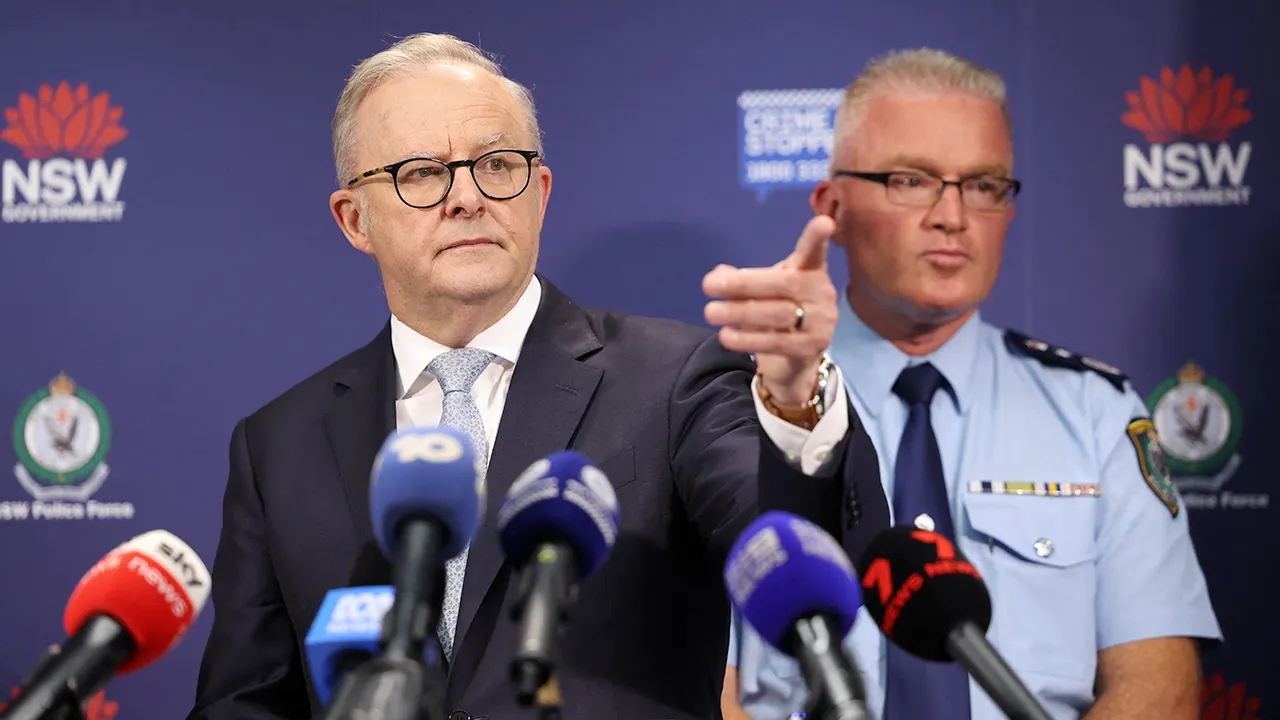
“Today, we can announce that this is working,” Prime Minister Anthony Albanese said during a news conference. “This is a source of Australian pride. This was world-leading legislation, but it is now being followed up around the world.”
The ban, which took effect in mid-December, applies to ten major social media platforms including Facebook, Instagram, X, TikTok, Snapchat, Kick, Reddit, Threads, Twitch, and YouTube. Companies face potential fines of up to $33 million if they fail to take “reasonable steps” to remove underage users from their services.
Communications Minister Anika Wells framed the policy as a victory against powerful tech corporations, saying, “We stared down everybody who said it couldn’t be done, some of the most powerful and rich companies in the world and their supporters. Now Australian parents can be confident that their kids can have their childhoods back.”
The scale of account removals appears significant relative to Australia’s youth population. Julie Inman Grant, Australia’s eSafety Commissioner, noted there are approximately 2.5 million Australians between the ages of 8 and 15, with around 84% of children aged 8 to 12 having at least one social media account. The removal of 4.7 million accounts suggests many underage users maintained multiple profiles across different platforms.
“We’re preventing predatory social media companies from accessing our children,” Inman Grant said during the news conference.
Tech companies have implemented various age verification methods to comply with the legislation. They can request identification documents, employ third-party age estimation technology that analyzes facial features, or make inferences based on existing user data, such as account history.
Meta, parent company of Facebook, Instagram, and Threads, reported removing nearly 550,000 accounts believed to belong to users under 16 within just one day after the ban commenced. This rapid response demonstrates how quickly platforms can act when faced with regulatory pressure and financial consequences.
Critics have questioned how effectively the ban can be enforced. Inman Grant acknowledged that some underage accounts remain active but compared the situation to other safety regulations. “We don’t expect safety laws to eliminate every single breach. If we did, speed limits would have failed because people speed, drinking limits would have failed because, believe it or not, some kids do get access to alcohol,” she explained.
The commissioner also addressed concerns about young users migrating to alternative platforms. While data showed an initial increase in downloads of alternative apps, Inman Grant said there wasn’t a corresponding spike in actual usage.
The Australian legislation has emerged amid growing global concern about social media’s effects on youth mental health, online harassment, and privacy. While the ban has garnered support from parents and child safety advocates, it has faced opposition from online privacy groups and youth representatives.
The policy is now inspiring similar considerations in other countries. France is reportedly planning to ban social media for children under 15 starting in 2026, while American lawmakers from both major parties have expressed interest in pursuing comparable measures.
U.S. Senator John Cornyn, a Republican from Texas, recently stated, “I think we ought to look at what Australia’s doing, for example, requiring access to these social media platforms to not be available to anybody under the age of 16.”
Democratic Senator Dick Durbin of Illinois has also indicated support for potential restrictions, saying, “Parents and grandparents need a helping hand; this is getting out of hand.”
As Australia continues to implement and refine its pioneering approach, the world is watching closely to evaluate both its effectiveness and its potential as a model for addressing concerns about youth social media use in other jurisdictions.
Fact Checker
Verify the accuracy of this article using The Disinformation Commission analysis and real-time sources.

17 Comments
The cost guidance is better than expected. If they deliver, the stock could rerate.
Silver leverage is strong here; beta cuts both ways though.
Interesting update on Australia Blocks 4.7 Million Minors from Social Media in First Month of Ban. Curious how the grades will trend next quarter.
Good point. Watching costs and grades closely.
Good point. Watching costs and grades closely.
Nice to see insider buying—usually a good signal in this space.
Good point. Watching costs and grades closely.
If AISC keeps dropping, this becomes investable for me.
Production mix shifting toward World might help margins if metals stay firm.
Uranium names keep pushing higher—supply still tight into 2026.
If AISC keeps dropping, this becomes investable for me.
If AISC keeps dropping, this becomes investable for me.
Good point. Watching costs and grades closely.
Uranium names keep pushing higher—supply still tight into 2026.
Interesting update on Australia Blocks 4.7 Million Minors from Social Media in First Month of Ban. Curious how the grades will trend next quarter.
Good point. Watching costs and grades closely.
Good point. Watching costs and grades closely.