


Listen to the article
Myanmar Defends Military Campaign Against Rohingya at UN Court, Denies Genocide Claims
Myanmar officials strongly defended the country’s 2017 military campaign against the Rohingya ethnic minority at the International Court of Justice on Friday, insisting the operation was a legitimate counter-terrorism effort rather than genocide.
“Myanmar was not obliged to remain idle and allow terrorists to have free reign of northern Rakhine state,” said Myanmar representative Ko Ko Hlaing, addressing judges at the UN’s highest court in The Hague, Netherlands.
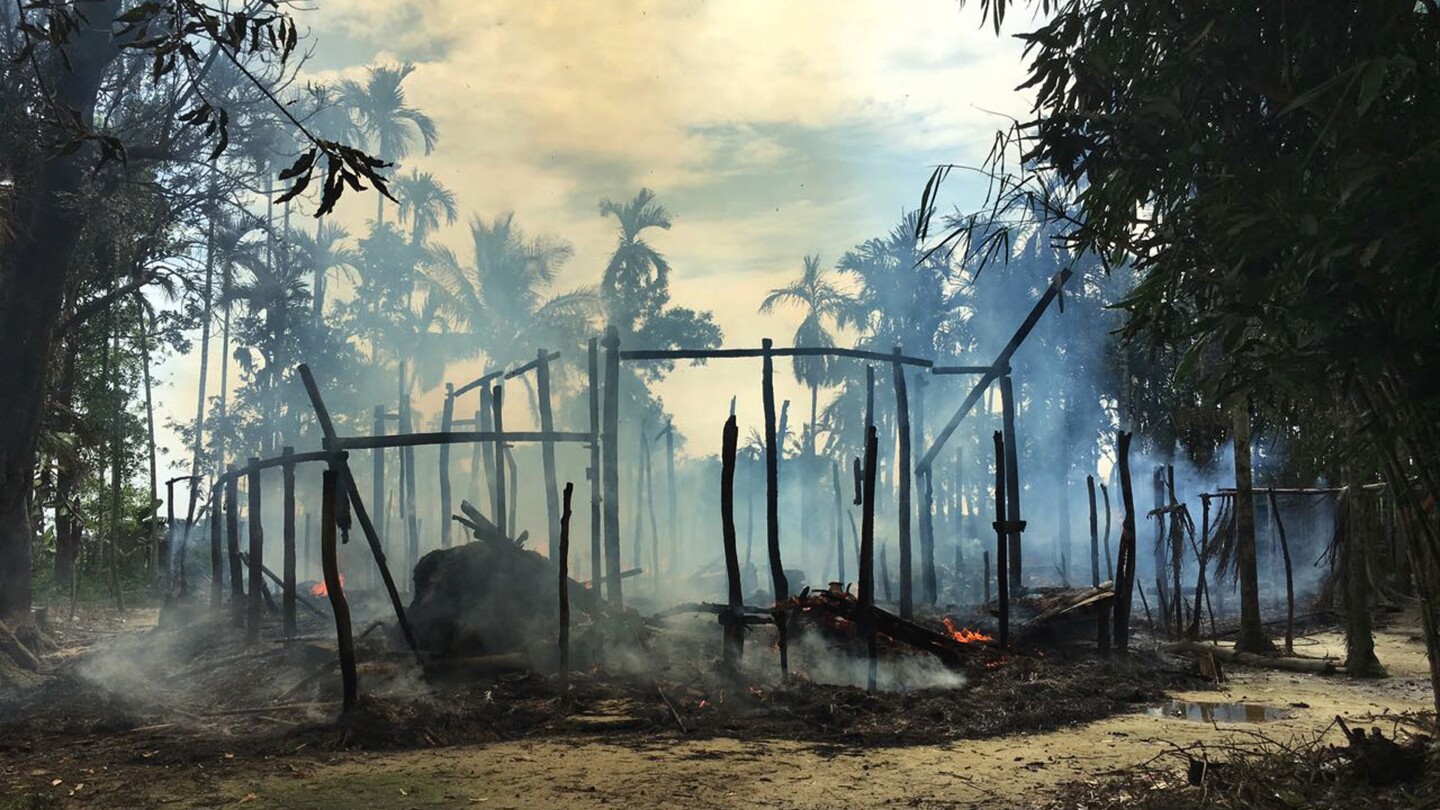
The Southeast Asian nation is responding to allegations brought by Gambia in 2019 that Myanmar violated the Genocide Convention through its military operations, which forced more than 700,000 Rohingya to flee to neighboring Bangladesh. Security forces were accused of mass rapes, killings and burning thousands of homes during the campaign, which followed an attack by a Rohingya insurgent group.
Hlaing disputed evidence cited by Gambia, including findings from a UN Human Rights Council fact-finding mission. “Myanmar’s position is that the Gambia has failed to meet its burden of proof,” he told the court. “This case will be decided on the basis of proven facts, not unsubstantiated allegations. Emotional anguish and blurry factual pictures are not a substitute for rigorous presentation of facts.”
The crisis continues to affect approximately 1.2 million Rohingya who remain in overcrowded camps in Bangladesh, where conditions are dire. Armed groups recruit children in the camps, and girls as young as 12 have reportedly been forced into prostitution. Severe aid cuts imposed during the Trump administration closed thousands of schools in the camps, with reports indicating some children have died of starvation.
Gambia’s Justice Minister Dawda Jallow previously told the court that the Rohingya had “endured decades of appalling persecution, and years of dehumanizing propaganda,” culminating in what he called “savage, genocidal ‘clearance operations'” followed by policies intended to “erase their existence in Myanmar.”
The African nation rejects Myanmar’s counter-terrorism justification, with Jallow stating that “genocidal intent is the only reasonable inference that can be drawn from Myanmar’s pattern of conduct.”
Myanmar has long marginalized the Rohingya, a predominantly Muslim minority in the Buddhist-majority country. Despite generations of Rohingya families living in Myanmar, authorities have consistently referred to them as “Bengalis” from Bangladesh. Nearly all Rohingya have been denied citizenship since 1982, effectively rendering them stateless.
The political landscape in Myanmar has shifted dramatically since the case began. When preliminary hearings took place in 2019, Nobel Peace Prize laureate Aung San Suu Kyi represented the country, denying genocide claims and characterizing the exodus as an unfortunate consequence of counter-insurgency operations.
Suu Kyi is now imprisoned following what her supporters describe as politically motivated convictions after the military seized power in February 2021. Her fall from power marked a stark reversal for Myanmar’s democratic aspirations and complicated the country’s international standing.
The International Court of Justice case is proceeding after judges rejected Myanmar’s argument in 2022 that Gambia, as a non-directly involved party, lacked standing to bring the case. Both nations are signatories to the Genocide Convention, which allows any signatory to hold another accountable.
In a parallel legal development, prosecutors at the International Criminal Court, also based in The Hague, requested an arrest warrant in late 2024 for Myanmar’s military leader, Senior General Min Aung Hlaing. The general, who seized power from Suu Kyi, faces accusations of crimes against humanity for persecuting the Rohingya. That request remains pending.
The Myanmar case represents one of the most significant applications of the Genocide Convention, which was established after World War II and the Holocaust to prevent and punish such atrocities. The court’s eventual ruling could have far-reaching implications for international accountability and the protection of vulnerable minorities worldwide.
Fact Checker
Verify the accuracy of this article using The Disinformation Commission analysis and real-time sources.

16 Comments
Myanmar seems to be taking a firm stance, but the allegations of genocide are extremely serious. I hope the court can get to the bottom of what really happened and hold anyone responsible accountable.
The situation is very complex, with competing narratives. Rigorous judicial scrutiny is needed to determine the facts and ensure justice is served.
As a major producer of critical minerals, Myanmar’s actions will be watched closely by the global mining community. Allegations of human rights abuses could have significant consequences for the country’s industry.
The mining industry has a responsibility to ensure its operations do not enable or exacerbate human rights violations. This case highlights the need for robust ESG standards and oversight.
Myanmar’s defense seems to rest on technical legal arguments, but the moral and humanitarian dimensions of this case cannot be ignored. The world is watching to see if justice will be served.
Agreed, this transcends just a legal dispute. The human suffering and alleged atrocities demand a serious reckoning, regardless of Myanmar’s technical arguments.
The mining industry has a vested interest in seeing stability and rule of law prevail in Myanmar. This case could have major ramifications for the country’s economy and international standing.
You raise a good point. Investors and companies will be closely monitoring this case and its potential impacts on Myanmar’s business environment and access to global markets.
While Myanmar denies the genocide claims, the evidence seems quite damning. The international community must continue to pressure for accountability and justice for the Rohingya people.
Agreed, this is a crucial test for international law and human rights. The ICJ must uphold its principles and ensure perpetrators face consequences.
As a major producer of critical minerals like rare earths, Myanmar’s actions and reputation will be closely scrutinized by the global mining industry. This case could have far-reaching implications.
You make an excellent point. The mining community has a vested interest in ensuring Myanmar’s operations and conduct are in line with international norms and human rights standards.
This is a complex and highly charged geopolitical issue. It’s important that the judicial process be allowed to run its course without undue influence or politicization.
Absolutely, the integrity of the ICJ proceedings is paramount. A fair, fact-based determination is essential for any chance of reconciliation and justice.
This is a complex and sensitive issue. It’s good that Myanmar is defending itself at the ICJ, but the evidence of atrocities against the Rohingya is quite extensive. The international community will be closely watching how this case unfolds.
Agreed, it’s crucial that all sides get a fair hearing at the ICJ. The truth needs to come out, whatever that may be.