


Listen to the article
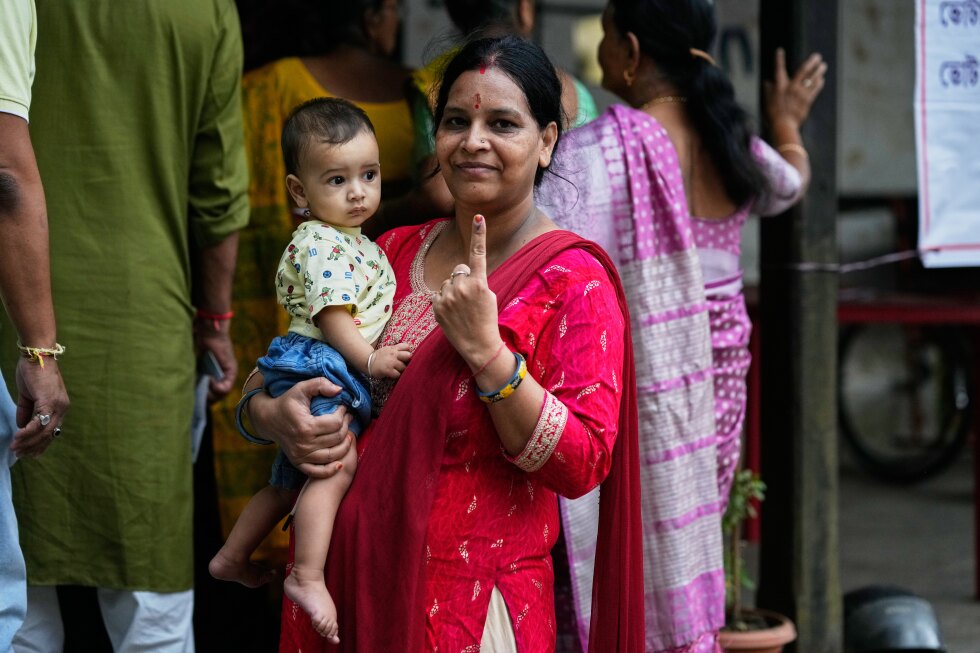
Voters in India’s Assam and Kerala states, along with the federally administered region of Puducherry, began casting ballots Thursday in crucial local elections that serve as a significant test of public support for Prime Minister Narendra Modi and his Bharatiya Janata Party (BJP).
The electoral contests pit the BJP and its regional allies against various opposition parties across these diverse regions. While Assam and Puducherry are currently governed by the BJP-led National Democratic Alliance, Kerala remains under opposition control. Two additional opposition-ruled states – West Bengal and Tamil Nadu – will hold elections later this month, with results for all five regions expected on May 4.
These elections unfold against a backdrop of mounting public concern over rising energy costs and tighter cooking gas supplies, issues exacerbated by ongoing conflicts in the Middle East that have disrupted global energy markets.
The outcome will indicate whether Modi’s party can successfully extend its political dominance by gaining ground in traditional opposition strongholds. A strong showing would significantly bolster his federal government, especially after the 2024 national election forced the ruling party to rely more heavily on regional allies to form a government.
For opposition parties, these contests represent a critical opportunity to build a sustainable challenge to the BJP’s nationwide dominance and potentially create momentum for future electoral battles.
In northeastern Assam, the BJP is campaigning to retain power primarily by emphasizing a hardline stance on immigration – a longstanding and deeply contentious issue in the state that shares a border with Bangladesh. The campaign has featured particularly sharp rhetoric from the ruling BJP, which has framed the election around claims of illegal immigration by Bengali-speaking Muslims, an approach that has drawn both support and criticism.
The landscape in southern Kerala presents an entirely different political challenge. Power in this state has traditionally alternated between alliances led by the Indian National Congress and communist parties. Despite investing heavily to expand its presence in Kerala, Modi’s party has historically struggled to gain significant political traction in this region known for its high literacy rates and distinct political culture.
In Puducherry, a relatively small federal territory, the BJP is relying on a coalition with a regional party to strengthen its position and consolidate power.
Perhaps the most closely watched and contentious upcoming electoral battle will take place in West Bengal, where the regional Trinamool Congress party has maintained power for three consecutive terms. Modi’s party has never governed West Bengal, and the campaign has been marked by heightened tensions following allegations of irregularities in the revision of electoral rolls.
Opposition parties have claimed that the Special Intensive Revision conducted by election officials has effectively disenfranchised millions of citizens, particularly those from minority Muslim communities. The Election Commission of India has firmly denied these allegations, stating that the exercise was designed to eliminate dead, duplicate, and fake voters from the electoral roll – a process it maintains has been implemented in several states according to standard procedures.
These elections come at a critical juncture for Indian democracy, with rising concerns about polarization, economic challenges, and questions about institutional independence. The outcomes will not only determine local governance for millions of Indians but also signal broader political trends that could shape national politics in the coming years.
Political analysts suggest these state elections will serve as crucial indicators of voter sentiment ahead of future national contests, with issues ranging from economic development and religious identity to regional autonomy and welfare policies dominating campaign narratives across these diverse regions.
Fact Checker
Verify the accuracy of this article using The Disinformation Commission analysis and real-time sources.

14 Comments
These state elections in India are an important barometer of public sentiment ahead of the 2024 national vote. The results could reverberate across the country’s policy landscape, particularly around issues like energy, commodities, and economic management.
With India’s rising energy demands, the public’s views on how the government is handling supply and pricing will be a key factor. These state polls may foreshadow the national electorate’s priorities come 2024.
Absolutely. Effective energy and resources policy will be crucial for any party aspiring to national leadership in India. Voters will be looking for solutions to the current cost and availability challenges.
With global energy and commodity markets in flux, India’s leadership on these issues is critical. These state polls may reveal whether the public believes the BJP has the right approach to address the country’s energy and resource needs.
As an investor focused on the mining and resources sectors, I’ll be closely monitoring these state election results. The policy direction of the next national government could hinge on how voters respond to energy and economic issues in these regional contests.
It’s noteworthy that the BJP’s regional allies are facing off against opposition parties in these elections. The balance of power in India’s federal system could shift depending on the results.
Yes, the regional dynamics at play will be fascinating to monitor. A strong showing by the opposition in states like Kerala could embolden them ahead of the 2024 national vote.
As an energy sector analyst, I’ll be closely tracking the election outcomes to gauge how they might impact investment opportunities in India’s mining, power generation, and related industries.
These state elections will provide important insights into voter sentiment on issues like energy security, economic management, and the performance of Modi’s government. The results could foreshadow the national landscape in 2024.
As a mining and commodities investor, I’ll be watching these election results closely. The outcome could influence policies and regulations around the energy and resources sectors, which are critical for India’s economic growth.
That’s a good point. Depending on the results, we could see shifts in the government’s approach to issues like mining permits, energy infrastructure, and commodity trade – all of interest to the investment community.
It will be intriguing to see if the opposition can capitalize on economic concerns and erode the BJP’s support in traditional strongholds like Assam. The national implications of these state elections are significant.
Interesting to see these key state elections in India, which will be an important gauge of public sentiment towards Modi and the BJP. With energy costs and shortages on voters’ minds, the results could significantly impact the political landscape ahead of the 2024 national election.
Indeed, energy and economic issues seem to be playing a big role in these regional contests. It will be telling to see if the BJP can make inroads in opposition strongholds like Kerala.