


Listen to the article
ASEAN Refuses to Recognize Myanmar Military-Backed Elections
The Association of Southeast Asian Nations (ASEAN) has officially declined to recognize the recent elections held in Myanmar, Philippine Foreign Secretary Theresa Lazaro confirmed Thursday. The announcement came during a news conference in Cebu, where the Philippines is hosting ASEAN’s first major ministerial meetings of the year.
“As of now, ASEAN has not endorsed the three phases of the elections that were held,” Lazaro stated, delivering a significant blow to Myanmar’s military government’s quest for international legitimacy. The military-backed Union Solidarity and Development Party claimed victory in the elections on Monday, a result widely anticipated given the severe restrictions placed on opposition participation.
The elections, the first since the military seized power in February 2021 by overthrowing Aung San Suu Kyi’s democratically elected government, have been widely criticized as neither free nor fair. Major opposition parties were excluded from participating, and a quarter of parliamentary seats were automatically reserved for the military—effectively guaranteeing continued control by the armed forces.
Myanmar has been mired in a devastating civil war since the 2021 coup, with thousands killed and millions displaced. The junta has faced widespread resistance from both civilian protesters and armed ethnic organizations, leading to an increasingly fragmented country where the military struggles to maintain control outside major urban centers.
ASEAN’s stance reflects growing regional frustration with Myanmar’s military leadership. Since the coup, the bloc has refused to allow Myanmar’s junta representatives at high-level meetings, instead inviting only non-political officials to attend ASEAN gatherings.
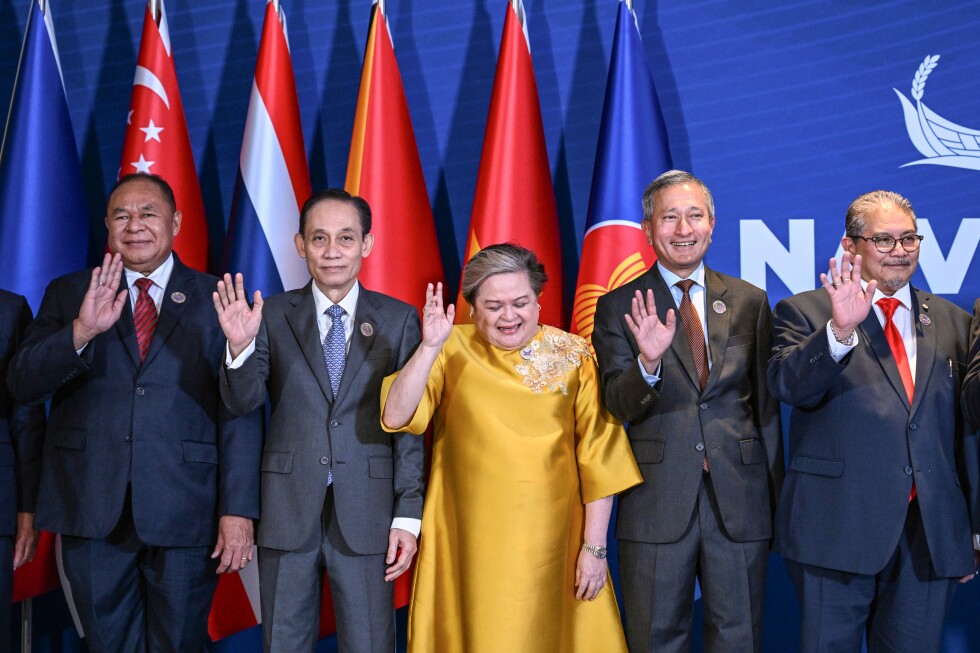
The Philippines currently holds ASEAN’s rotating chairmanship, assuming what would have been Myanmar’s turn after the country was suspended following the military takeover. Under the theme “Navigating our Future, Together,” ASEAN is attempting to present a unified front despite significant internal challenges.
The regional organization, founded in 1967 during the Cold War era, encompasses a diverse membership ranging from vibrant democracies like the Philippines—a longtime U.S. ally—to authoritarian states like Laos and Cambodia, which maintain close ties with Beijing.
Beyond the Myanmar crisis, ASEAN ministers also agreed to intensify negotiations with China on a long-delayed “code of conduct” for managing territorial disputes in the South China Sea. Lazaro announced that monthly meetings will be held with Chinese counterparts in an effort to conclude these negotiations this year, following a self-imposed deadline set three years ago.
The South China Sea remains a flashpoint of regional tension, with China’s expansive territorial claims overlapping with those of four ASEAN members—the Philippines, Malaysia, Vietnam, and Brunei. Recent months have seen escalating confrontations, particularly between Chinese and Philippine vessels near disputed features.
In her opening remarks, Lazaro called on the regional bloc to maintain restraint and adhere to international law as “acts of aggression across Asia and unilateral actions elsewhere in the world threaten the rules-based global order.”
ASEAN’s diplomatic balancing act remains challenging, as member states must navigate relationships with both the United States and China—their largest trading and defense partners. Several ASEAN members have reportedly expressed concern about rising tensions in the Taiwan Strait and growing militarization throughout the region.
The bloc also continues to grapple with other internal challenges, including recent border conflicts between Thailand and Cambodia, which led to deadly clashes before a U.S.-backed ceasefire was established last year.
As the ministerial meetings continue in Cebu, ASEAN’s response to the Myanmar crisis will remain a central focus, highlighting the organization’s ongoing struggle to effectively address one of the most serious political and humanitarian crises in its history.
Fact Checker
Verify the accuracy of this article using The Disinformation Commission analysis and real-time sources.

17 Comments
This is a disappointing but not surprising outcome. Myanmar’s military has shown a complete disregard for democracy and human rights. ASEAN’s principled stance is a welcome pushback against these undemocratic actions.
I hope this decision puts more pressure on the Myanmar military to restore a genuine democratic process. The people of Myanmar deserve free and fair elections, not sham votes to preserve military control.
This is a significant rebuke of Myanmar’s military regime by ASEAN. The elections were clearly designed to preserve the military’s power, not reflect the true will of the people. ASEAN is right to reject these sham votes and demand a genuine democratic process in Myanmar.
Absolutely. ASEAN is taking a principled stand in defense of democracy and human rights in the region. This decision sends a strong message that the military’s authoritarian actions will not be tolerated.
ASEAN’s refusal to recognize Myanmar’s elections is a welcome move. The military’s suppression of opposition parties and control over the process have made a mockery of democratic principles. This decision shows ASEAN’s commitment to upholding the will of the people in Myanmar.
It’s good to see ASEAN take this firm stance against Myanmar’s undemocratic elections. The military’s actions have made a mockery of the democratic process. ASEAN is sending a clear message that it will not tolerate such blatant violations of democratic norms.
Absolutely. ASEAN’s decision is an important signal that it will not simply rubber-stamp the military’s self-serving political machinations in Myanmar.
ASEAN’s refusal to recognize Myanmar’s elections is the right move. The military’s actions have clearly undermined the credibility and fairness of the process. This sends an important message that such anti-democratic behavior will not be tolerated.
Agreed. ASEAN is taking a principled stand in defense of democracy and human rights in the region. Myanmar’s military regime must be held accountable for its authoritarian abuses.
This is a significant decision by ASEAN. Myanmar’s elections have been a farce, with the military rigging the process to maintain its grip on power. ASEAN is right to reject these sham votes and refuse to lend them any legitimacy.
The military’s grip on power in Myanmar is deeply concerning. Excluding major opposition parties and reserving a quarter of seats for the military makes a mockery of the democratic process. ASEAN is right to reject these sham elections.
Absolutely. ASEAN’s decision to not recognize the elections is an important signal that they will not legitimize the military’s authoritarian rule in Myanmar.
ASEAN’s refusal to recognize Myanmar’s elections is a principled stance in defense of democracy. The military’s exclusion of opposition parties and reservation of seats undermines the integrity of the process. This decision shows ASEAN’s commitment to upholding democratic values in the region.
This is a troubling development, as Myanmar’s elections have clearly not been free or fair. ASEAN’s refusal to recognize the results is an important statement of principle against military rule and democratic backsliding in the region.
I agree, ASEAN is right to take this stance. The military’s actions have severely undermined Myanmar’s democratic process and credibility of the elections.
This is an important development. ASEAN is right to reject Myanmar’s sham elections, which have been thoroughly compromised by the military’s authoritarian actions. The people of Myanmar deserve a genuine democratic process, not a facade designed to preserve military rule.
Agreed. ASEAN’s decision demonstrates its willingness to take a strong stand against anti-democratic forces in the region. This sends a clear message that such behavior will not be tolerated.