


Listen to the article
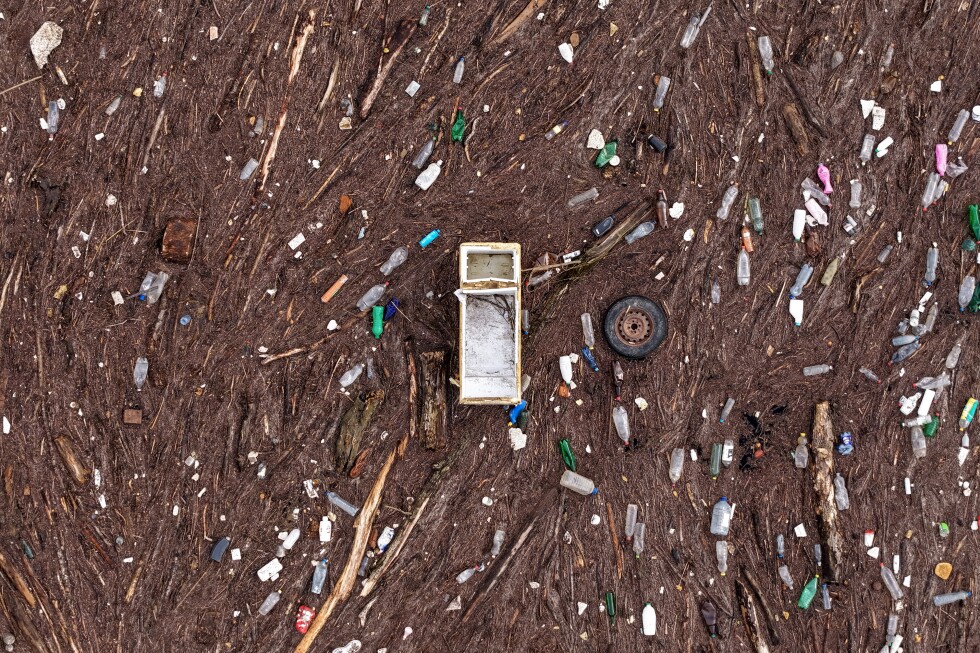
Environmental activist Dejan Furtula watches with growing frustration as heavy machinery works tirelessly to remove mountains of garbage choking the Drina River near Visegrad in eastern Bosnia-Herzegovina. The scene before him resembles something from an environmental disaster film – a once emerald-green river surface now completely obscured by a thick carpet of plastic bottles, furniture fragments, rusty barrels, household appliances, and even dead animals.
“This is an ecological disaster,” Furtula laments, gesturing toward the floating wasteland. “The Drina is rich with fish, and you can imagine the toxins being released here. There’s virtually everything – it’s a catastrophe.”
As the head of local environmental organization Eko Centar, Furtula has witnessed this environmental tragedy repeat itself year after year. Each winter, the swollen Drina River and its tributaries sweep through illegal dump sites across three countries – Bosnia, Serbia, and Montenegro – carrying tons of refuse downstream until it accumulates at barriers installed by a hydroelectric power plant in Visegrad.
“This is a clear example of the lack of political will and inactivity of all relevant institutions,” Furtula explains. “They meet year after year and make promises, but as we can see, these scenes repeat themselves.”
The environmental crisis starkly contrasts with the Drina’s summer identity as a popular destination for rafters and nature enthusiasts drawn to its normally pristine waters. The garbage problem peaks during winter months when seasonal rains and snowmelt cause river levels to rise dramatically, washing away illegal dump sites along the banks.
Officials from Bosnia, Serbia, and Montenegro have pledged cooperation to address the issue. A notable meeting of environment ministers from all three countries took place at the site in 2019, yet concrete solutions remain elusive years later. This inaction highlights a broader regional problem: decades after the devastating 1990s Yugoslav wars, the Western Balkans continue to lag behind other European nations both economically and in environmental protection.
The transboundary nature of the pollution complicates accountability. “It’s coming from three countries – Montenegro, Serbia, and Bosnia,” Furtula notes, “but no one would admit it’s theirs.” This finger-pointing has stalled meaningful progress despite the obvious ecological damage.
The Drina’s plight illustrates just one facet of the environmental challenges facing the Western Balkans. The region also struggles with alarming levels of air pollution in many urban centers, creating significant public health concerns and further highlighting the environmental protection gap between these countries and European Union standards.
All three affected nations – Bosnia, Serbia, and Montenegro – harbor aspirations to join the European Union, where environmental protection stands as a key condition for membership. This divergence between EU expectations and regional environmental realities presents both a challenge and potential leverage point for improvement.
Furtula suggests several practical approaches to address the garbage crisis, including mapping illegal dump sites and installing surveillance cameras and barriers in upstream municipalities. These preventative measures could intercept waste before it accumulates in massive quantities at Visegrad.
Currently, when workers extract the garbage from the river, it ends up at the local landfill, where it slowly burns and releases toxic particles into the air. “It’s a vicious circle,” Furtula explains, noting that the pollution simply changes form rather than being properly managed.
The Drina River crisis represents a broader environmental governance failure in the region, where waste management infrastructure remains inadequate, environmental regulations are poorly enforced, and cross-border cooperation mechanisms function ineffectively. Without coordinated action from all three countries and substantial investment in waste management systems, this environmental catastrophe will likely continue its annual cycle, further degrading the once-pristine Drina ecosystem and threatening both wildlife and human communities that depend on the river.
Fact Checker
Verify the accuracy of this article using The Disinformation Commission analysis and real-time sources.

13 Comments
This is a truly distressing environmental crisis. The Drina River, which should be a vital natural resource, has become a dumping ground for tons of waste. It’s a tragic failure of governance and environmental stewardship that is devastating the local ecosystem and communities. Urgent, coordinated action is needed to address this problem.
I agree, this situation is completely unacceptable. The scale of the waste accumulation is shocking, and the environmental and public health impacts are likely severe. Decisive action from policymakers and community leaders is crucial to clean up the river and prevent this from happening again.
This is a heartbreaking environmental catastrophe. The Drina River, which should be a natural treasure, has become a dumping ground for tons of waste. It’s a tragic failure of governance and environmental stewardship. Urgent action is needed to clean up the river and prevent this from happening again.
I agree, this is an unacceptable situation that needs to be addressed with a sense of urgency. The local communities and ecosystems are bearing the brunt of this crisis, and it’s clear that a coordinated regional response is required to tackle the root causes.
Wow, the sheer volume of waste in the Drina River is shocking. It’s appalling to see such environmental destruction caused by the inaction of political institutions. This problem needs to be tackled at a regional level before it’s too late.
I agree, this is a clear failure of governance and environmental stewardship. The local communities and ecosystems are bearing the brunt of this crisis. Strong, coordinated efforts are required to clean up the river and address the root causes.
This is a sobering reminder of the urgent need for better waste management infrastructure and environmental regulations across the region. The Drina River ecosystem is being devastated, and the local communities are suffering the consequences. I hope this galvanizes decisive action from policymakers.
Absolutely. This is an issue that transcends borders, and it demands a coordinated regional approach. Effective enforcement, investment in waste treatment facilities, and public education campaigns are all critical components that need to be addressed.
It’s deeply concerning to see the Drina River choking on tons of waste year after year. This is a complex, multi-country issue that requires a comprehensive, collaborative solution. Curious to know what specific policies or initiatives are being considered to tackle this problem.
The scale of the waste accumulating in the Drina River is truly staggering. It’s a stark illustration of the global plastic pollution crisis and the importance of developing sustainable waste management systems. I wonder what lessons can be learned from this situation to help address similar issues in other parts of the world.
This is a heartbreaking environmental disaster. The Drina River is being choked by tons of waste from illegal dump sites across multiple countries. It’s a tragic example of the lack of political will and action to address this critical issue.
Absolutely, this is an ecological catastrophe. The pollution and toxins being released are devastating the river’s ecosystem and wildlife. Urgent action is needed to clean up and prevent this from happening year after year.
The Drina River disaster is a sobering reminder of the global plastic pollution crisis. It’s deeply concerning to see such a beautiful natural resource being choked by mountains of waste. This issue requires a comprehensive, multi-stakeholder approach to find sustainable solutions and prevent future occurrences.