


Listen to the article
Tensions flared in Guatemala on Thursday as prosecutors raided voting locations during the country’s crucial Constitutional Court magistrate elections, an act President Bernardo Arévalo condemned as an attempt to undermine democratic institutions.
The raids, conducted by the internationally criticized Attorney General’s office, occurred just as Guatemala began electing magistrates to its highest court. The operation reignited longstanding conflicts between anti-corruption forces and prosecutors accused of corrupting the Central American nation’s justice system.
Agents were led by prosecutor Leonor Morales, who has been sanctioned by the United States for allegedly trying to overturn President Arévalo’s 2023 election victory. Morales briefly attempted to block lawyers from entering voting premises and declined to provide details about the raid, citing an ongoing investigation.
“Information about the raid cannot be shared, and I therefore request that the media be removed from the premises,” Morales stated. Voting eventually resumed with prosecutors watching.
In a video address, President Arévalo accused the Attorney General’s office of attempting to frighten and intimidate voters. “Guatemala’s democracy is not negotiable, it will not be intimidated, and it will not be taken away. It is to be respected,” he declared, urging lawyers to participate in the election process despite intimidation tactics.
The Constitutional Court later issued an injunction preventing the Attorney General’s office from further interfering with the election or vote count, though allowing its investigation to continue.
The Organization of American States (OAS) observation mission strongly condemned the interference, warning that such actions constitute “an extremely high constitutional risk.” The OAS statement noted that using judicial tools at critical moments in constitutional appointments represents “a pattern of institutional instrumentalization that erodes public trust, compromises judicial independence, and weakens the rule of law.”
Guatemala’s Constitutional Court has been central to the nation’s struggle against corruption. The court has previously ruled on high-profile cases regarding an international anti-corruption commission and the release of a former president charged with corruption. Its five magistrates are selected by different institutions: the president, Supreme Court of Justice, Congress, University of San Carlos, and the country’s bar association.
Thursday’s election involved the bar association selecting their representative, with other institutions making their selections in coming weeks. The court’s decisions cannot be appealed, making it Guatemala’s ultimate legal authority.
The significance of these appointments cannot be overstated. In 2019, the Constitutional Court served as a democratic safeguard when it ruled then-President Jimmy Morales’ termination of an anti-corruption commission unconstitutional. However, critics say the court took a troubling turn when new magistrates were elected in 2021.
Human rights lawyer Rafael Maldonado described the court’s composition over the past five years as “dark characters who have stopped any advance there could be in Guatemala.” In April 2024, the court upheld the release from prison of former President Otto Pérez Molina, who had been convicted in two separate corruption cases.
Beyond the Constitutional Court, Guatemala is also selecting five judges and their alternates for the Supreme Electoral Tribunal, as well as a new federal comptroller and rector for the University of San Carlos. The elections have drawn international attention, with observation missions from both the OAS and European Union monitoring the process.
Political analyst Renzo Rosal characterized these elections as putting “democracy to the test,” describing them as “the perfect laboratory to see how the institutions are steered toward greater cooptation, control and loss of independence.”
Perhaps most consequential, Guatemala will soon select a new attorney general to replace the outgoing Consuelo Porras, who has been sanctioned by both the United States and European Union for allegedly undermining democracy. Under Porras’ leadership, the Public Ministry has faced accusations of sabotaging corruption investigations and targeting former prosecutors, judges, and journalists who reported on corruption.
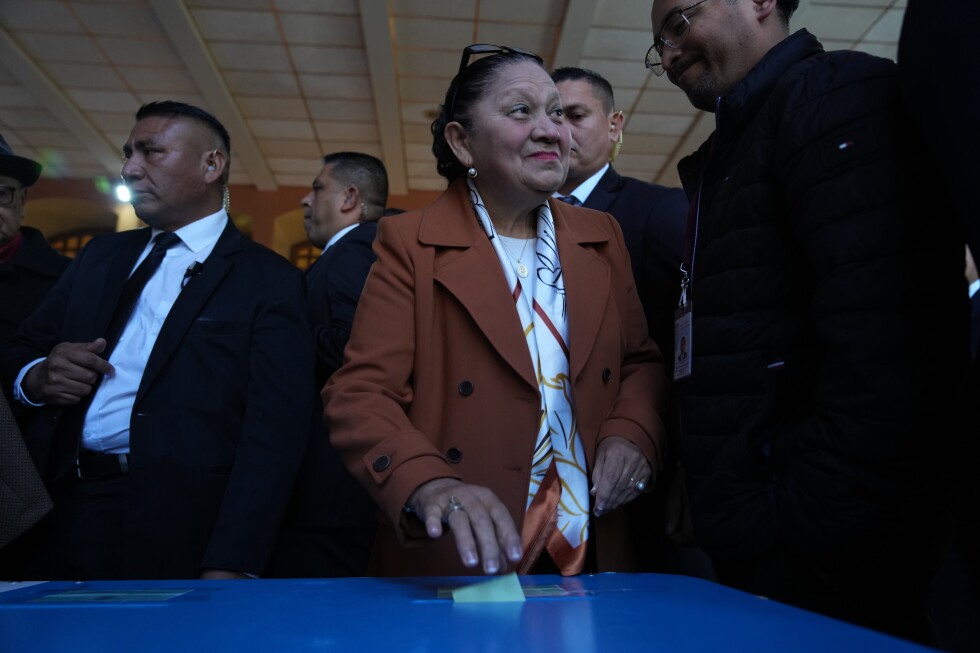
Porras’ office was also widely criticized for its role in barring anti-corruption candidates from the 2023 elections and for pursuing Arévalo’s political party in what many perceived as an attempt to prevent him from taking office after his unexpected victory. Although President Arévalo requested her resignation, Porras refused, and her eight-year term will conclude in May. She is currently seeking election as a magistrate to the Constitutional Court.
The president will select the new attorney general from six candidates proposed by a nominating committee. This transition represents a critical moment for Guatemala’s justice system and democratic institutions as the country continues its struggle against entrenched corruption.
Fact Checker
Verify the accuracy of this article using The Disinformation Commission analysis and real-time sources.

12 Comments
These raids on voting sites raise serious concerns about the fairness and integrity of Guatemala’s court elections. I’ll be following this story closely to see how it impacts the democratic process.
Absolutely, the independence of the judiciary is critical. I hope international observers can help ensure a transparent and accountable electoral process in Guatemala.
Attempts to intimidate voters and disrupt the electoral process are unacceptable. Guatemala’s leaders must ensure the rule of law and democratic norms are upheld during these critical court elections.
Agreed, the integrity of the judiciary is paramount. I hope international observers can help safeguard a fair and transparent process in the face of these concerning tactics.
This is a complex situation with high stakes for Guatemala’s democracy. I hope the elections can move forward in a transparent manner that restores faith in the country’s judicial system.
The reported attempts to disrupt the Constitutional Court elections are very worrying. Guatemalans deserve free and fair elections without political interference. I hope these issues can be resolved swiftly.
This is a concerning development in Guatemala’s high-stakes court elections. Raids on voting sites by prosecutors raise serious questions about the integrity of the democratic process. I hope the elections can proceed transparently and fairly despite these challenges.
Agreed, the timing and lack of transparency around these raids is deeply troubling. Safeguarding the independence of the judiciary is critical for Guatemala’s democratic future.
The timing of these raids is very concerning, coming just as the Constitutional Court elections begin. I’ll be following this story closely to see how it unfolds and impacts Guatemala’s democratic process.
This is a troubling development that threatens to undermine trust in Guatemala’s democratic institutions. I hope the international community closely monitors the situation and holds all parties accountable.
The alleged attempts to undermine the elections by the Attorney General’s office are alarming. I’m curious to see how the international community responds to ensure Guatemala’s democratic institutions are protected.
Absolutely, international pressure and scrutiny will be crucial here. The people of Guatemala deserve free and fair elections without political interference.