


Listen to the article
Ukrainian Artist Defends Banned Olympic Helmet as Tribute to Fallen Athletes
KYIV, Ukraine — The artist behind a controversial helmet that led to Ukrainian skeleton racer Vladyslav Heraskevych’s exclusion from the Milan Cortina Winter Olympics has praised the athlete’s defiance as “a great act of heroism.”
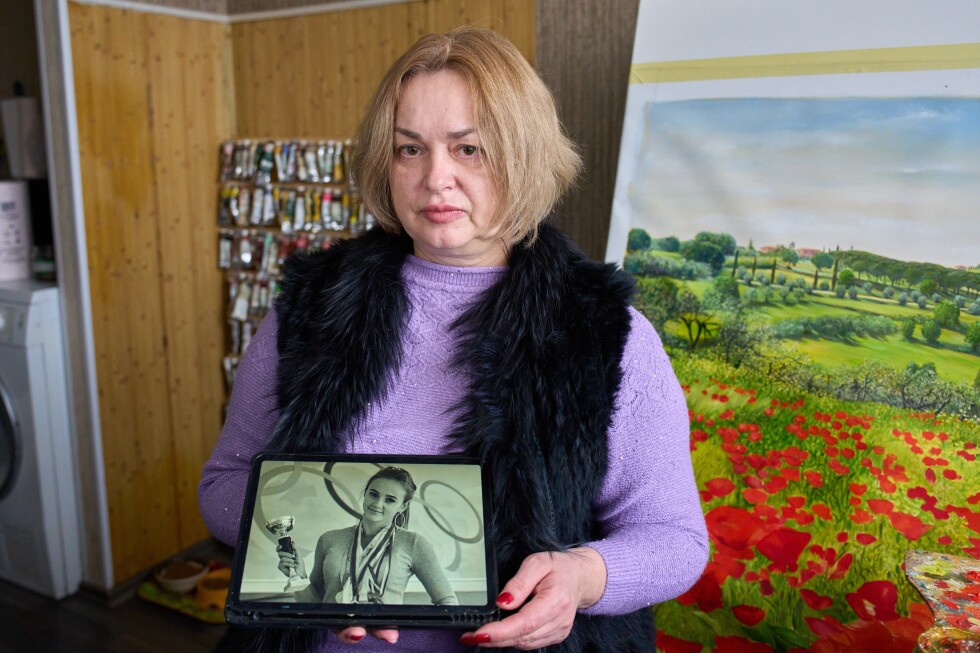
Kyiv-based artist Iryna Prots, 52, painted portraits of more than 20 Ukrainian athletes and coaches killed since Russia’s full-scale invasion began in 2022 on Heraskevych’s competition helmet. The International Olympic Committee subsequently ruled the helmet violated Olympic regulations prohibiting political messages at the Games.
“He could have refused, he could have said, ‘Fine, I’ll wear another helmet and fight for a medal,'” Prots told The Associated Press during an interview at her home in Kyiv. “He didn’t do that. To stand up for his truth — that is great heroism.”
According to Prots, the concept originated with Heraskevych himself, who enlisted her artistic skills through his father, a longtime friend of the artist. Despite the deadline pressure, Prots embraced the meaningful project.
“It had to be done, and it had to be finished in time,” she explained. “These were athletes who could have been standing there at the Olympics, but they are no longer here.”
The somber helmet design represents a stark contrast to Prots’ typical artistic output, which primarily features serene Tuscan landscapes regularly exhibited at a small gallery in Montepulciano, Italy. Her frequent travels to Italy have provided her with a unique perspective on how the war in Ukraine is perceived abroad.
“I understand that when a war is somewhere far away, people get used to it,” she said. “They have their own lives. But we are fighting every day. Fighting to survive.”
The emotional burden of creating the helmet was immediately apparent to Prots as she worked from photographs of deceased Ukrainian athletes and coaches. “This is pain — pain for our country,” she reflected. “For the fact that we lost Olympic champions, essentially, and coaches who were raising this generation of Olympic champions.”
The controversy highlights the complex intersection of sports, politics, and humanitarian concerns at international competitions during wartime. While the IOC maintains strict rules about political neutrality, the Ukrainian Olympic Committee and many supporters argue the helmet represented a memorial tribute rather than a political statement.
For Prots, the stories of the athletes depicted deserve global attention, especially as international sporting events continue against the backdrop of Russia’s ongoing invasion of Ukraine. The contrast between Olympic celebrations and the daily reality of war has not been lost on the artist.
“The Olympics are supposed to symbolize peace,” she said. “But today it’s hard for me to understand how there is celebration, anthems, dancing and singing, while we live under air raid sirens and bombs.”
The incident has sparked debate within the Olympic community about where to draw the line between political statements and humanitarian memorials. Some sports analysts argue that honoring war victims transcends politics, while others defend the IOC’s stance on maintaining political neutrality at the Games.
Heraskevych, who has previously used his platform to advocate for peace, became a symbol of Ukrainian resilience after refusing to compete without the memorial helmet. His decision to prioritize honoring fallen compatriots over personal Olympic ambitions has resonated deeply with many Ukrainians.
Despite living under constant threat of Russian air attacks on Kyiv, Prots remains committed to her artistic practice, viewing it as an act of resistance in itself.
“I keep painting beauty and nature,” she said. “It’s a form of resistance of my soul — believing that peace will return and that birds will sing in the fields again, not sirens.”
Kyiv continues to face regular air raid alerts as the war enters its third year, with cultural resilience becoming an increasingly important aspect of Ukrainian national identity during the ongoing conflict.
Fact Checker
Verify the accuracy of this article using The Disinformation Commission analysis and real-time sources.

12 Comments
The artist’s work on this banned helmet is a meaningful memorial that deserved to be seen on the world stage. While the IOC’s ruling is disappointing, Heraskevych’s refusal to back down is truly heroic.
Heraskevych’s principled stand, even at the cost of his Olympic performance, is a testament to the strength and resilience of the Ukrainian people. The artist’s tribute is a poignant reminder of the sacrifices being made.
This banned helmet is a powerful symbol of Ukraine’s resilience and the immense sacrifices its athletes have made. I commend Heraskevych for refusing to back down and standing up for his fallen compatriots.
The IOC’s decision to prohibit the helmet seems shortsighted. This tribute is an important way to commemorate Ukraine’s sports heroes who have lost their lives in the war.
It’s heartening to see the artist behind this banned helmet design praising Heraskevych’s brave stand. These Ukrainian athletes deserve to be remembered and honored, even if the IOC rules prevented it this time.
Heraskevych’s defiance in wearing the helmet despite the ban is truly admirable. The artist’s work serves as a powerful memorial that transcends rigid regulations.
The artist’s portraits on the helmet are a poignant memorial to the Ukrainian sports community’s losses in this tragic conflict. While the IOC ruling was disappointing, Heraskevych’s principled stand is admirable.
I’m glad the artist is speaking out to defend Heraskevych’s courageous choice. Honoring the fallen should take precedence over rigid regulations in a time of war.
This is a powerful tribute by the Ukrainian artist to the fallen athletes. It’s a shame the IOC banned the helmet, but Heraskevych’s defiance in standing up for his truth is indeed heroic. These athletes deserve to be honored and remembered.
Agreed, the artist’s work is a meaningful way to commemorate the sacrifices of these Ukrainian athletes. It’s unfortunate the IOC did not allow this important tribute at the Games.
This banned helmet is a moving tribute that the IOC should have allowed. The artist’s portraits of the fallen Ukrainian athletes are a fitting way to honor their sacrifice. Heraskevych’s principled stance is commendable.
I agree, the IOC’s decision to prohibit this helmet was misguided. Heraskevych’s decision to wear it anyway, in defiance of the rules, speaks volumes about his courage and commitment to his compatriots.