


Listen to the article
U.S. and Iran Clash Over Sunken Warship’s Status in Escalating Maritime Dispute
The United States and Iran have presented contradictory accounts regarding the sinking of an Iranian warship in the Indian Ocean last week, intensifying diplomatic tensions between the two nations.
On Sunday, the United States Indo-Pacific Command (INDOPACOM) rejected Tehran’s assertion that the IRIS Dena was unarmed when it was struck by a torpedo fired from a U.S. submarine on March 4 in international waters near Sri Lanka. INDOPACOM called Iran’s claim “false” in a statement posted on social media platform X.
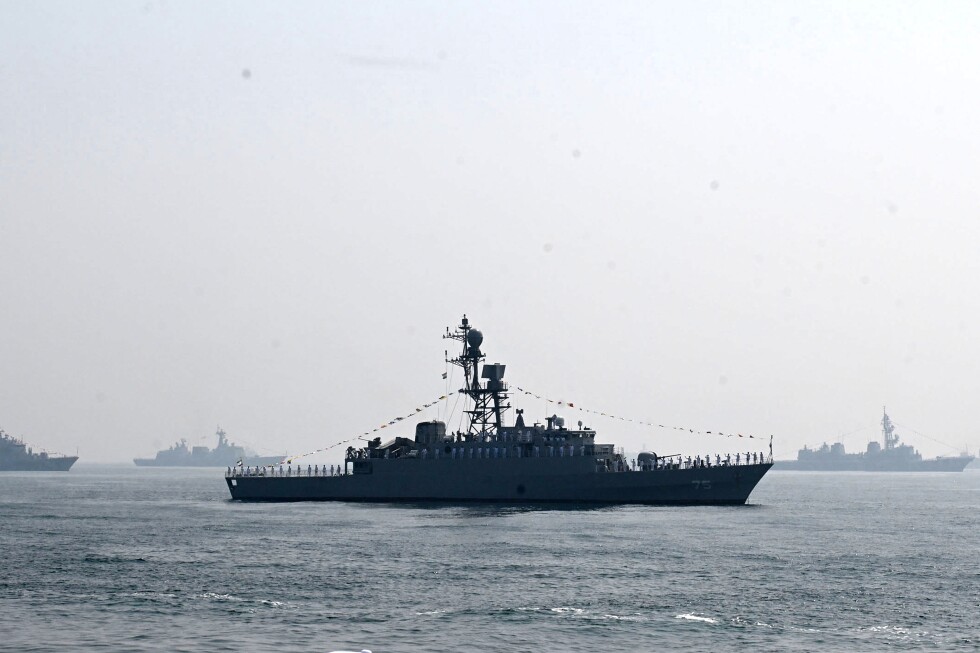
The Iranian government has consistently portrayed the vessel as defenseless, claiming it was returning home after participating in multinational naval exercises hosted by India. Iran’s Deputy Foreign Minister Saeed Khatibzadeh emphasized during a press conference in New Delhi that the ship “was by invitation of our Indian friends, attending an international exercise. It was ceremonial. It was unloaded. It was unarmed.”
This characterization was partly contradicted by an Indian navy official who, speaking on condition of anonymity, stated the Iranian vessel was not “entirely unarmed” and had actively participated in naval drills alongside warships from other nations.
The incident resulted in significant casualties, with the Sri Lankan navy rescuing 32 sailors while recovering 87 bodies from the sunken vessel. U.S. Defense Secretary Pete Hegseth described the IRIS Dena as a “prize ship” that “died a quiet death,” while Iran’s Foreign Minister Abbas Araghchi condemned the attack as “an atrocity at sea,” emphasizing that the vessel had been “a guest of India’s Navy.”
Defense analysts offer mixed perspectives on the armament status of ships participating in such naval exercises. Rahul Bedi, an independent defense analyst based in India, noted that while the vessel may have carried limited non-offensive ammunition for specific drills, standard protocol typically requires “the participating platforms to be unarmed.”
“The precondition of participating in such a parade, or such a ceremony, is that it comes unarmed. That is the precondition of the Indian Navy and it’s a precondition of most navies when they hold similar sort of fleet reviews,” Bedi explained.
However, India’s defense ministry statement following the exercises noted that “live firings as part of surface gun shoots, as well as anti-air firings, were also undertaken” by participating vessels, suggesting some level of armament was present during the exercises.
Military experts have pointed out that visiting ships at international naval events generally don’t carry a full combat load of live munitions unless specifically scheduled for live-fire demonstrations. Even during the operational phase of exercises, ships typically carry only tightly-controlled ammunition designated for particular training scenarios.
The sinking of the IRIS Dena represents a significant escalation in the ongoing tensions between the United States and Iran, potentially expanding the theater of conflict beyond the Middle East. This incident occurs against the backdrop of heightened regional tensions related to the U.S.-Israeli military operations involving Iran and its proxies.
In the aftermath of the attack, two additional Iranian vessels—the IRIS Bushehr and IRIS Lavan—have sought safe harbor in Sri Lanka and India, highlighting the precarious situation facing Iran’s naval operations in the region.
The conflicting narratives surrounding the vessel’s operational status and armament have complicated diplomatic relations, raising questions about the rules of engagement in international waters and the circumstances under which military vessels can be targeted during or after participation in multinational exercises.
As investigations continue, the incident underscores how maritime conflicts between major powers can rapidly escalate, particularly in strategically important waterways like the Indian Ocean, which serves as a critical conduit for global trade and military operations.
Fact Checker
Verify the accuracy of this article using The Disinformation Commission analysis and real-time sources.

14 Comments
The conflicting claims about the warship’s status are concerning. It’s important for both sides to provide verifiable information to the international community and work towards a transparent resolution of this dispute.
This incident highlights the complex dynamics between the US and Iran. I’m curious to see if further investigation can shed light on the exact status of the Iranian warship and the circumstances surrounding its sinking.
Yes, more clarity on the facts would be helpful in understanding the context and implications of this event. Maintaining open channels of communication is crucial to avoid further escalation.
This incident is a stark reminder of the fragility of the US-Iran relationship. I’m hopeful that both nations can work to de-escalate the situation through diplomatic channels and a focus on factual information.
This dispute highlights the complex geopolitical dynamics at play in the region. It’s crucial that the US and Iran work to establish the facts and communicate them transparently to the international community.
The contradictory accounts of the Iranian warship’s status raise serious questions. Reliable, fact-based information is essential to understand the context and prevent this situation from spiraling into a larger conflict.
This dispute over the warship’s status highlights the ongoing tensions between the US and Iran. It’s concerning to see such contradictory claims, as transparency and factual information are crucial in these sensitive situations.
I agree, the lack of clarity raises questions. It’s important for both sides to provide clear and verifiable details to avoid further escalation.
The contradictory accounts of the Iranian warship’s status raise serious questions. Transparency and reliable information are crucial in these sensitive geopolitical situations to prevent miscalculation and further escalation.
This incident underscores the delicate nature of the US-Iran relationship and the potential for miscalculation. I hope that cooler heads can prevail and that the two nations can engage in constructive dialogue to prevent further escalation.
The conflicting accounts of whether the Iranian vessel was armed or unarmed are troubling. Given the high stakes, it’s critical that the US and Iran work to establish the facts and communicate them transparently.
Absolutely, transparency and open communication are essential to prevent misunderstandings and potential escalation of tensions in such a sensitive geopolitical situation.
The conflicting claims about the Iranian warship’s status are deeply concerning. I hope that both sides can engage in open and honest dialogue to resolve this dispute and avoid further escalation of tensions.
This dispute over the warship’s status underscores the deep-seated tensions between the US and Iran. It’s critical that both sides work to establish the facts and communicate them clearly to the international community.