


Listen to the article
Argentina’s Congress Approves Controversial Mining Reform, Easing Glacier Protections
Argentina’s Congress has approved a controversial bill that relaxes protections on glaciers to facilitate mining investments, a key legislative victory for libertarian President Javier Milei despite fierce opposition from environmental groups who are now preparing legal challenges.
The legislation, which passed Thursday with 137 votes in favor, 111 against, and three abstentions, had already cleared the Senate in February. President Milei is expected to sign the bill into law within days, fulfilling another promise in his market-friendly reform agenda.
Mining industry representatives project the new regulatory framework could unlock more than $30 billion in investments over the next decade. Approximately 70 percent of those funds would target new copper, gold, and silver projects—resources that have remained largely untapped under previous restrictions.
“This represents a significant improvement that will help strike a balance between environmental protection and economic development,” Milei’s party stated in a message the president shared on his X account, adding that the reform moves away from “an approach that tended to stifle investment, job creation and growth.”
The legislation marks a substantial shift from Argentina’s landmark 2010 law, which established some of Latin America’s strictest protections for glacial and periglacial environments. The original law banned all mining activity on glaciers and within periglacial zones—areas of permanently frozen ground that play crucial roles in water regulation.
Under the new framework, protections will be narrowed to cover only glaciers and landforms with “specific hydrological functions,” with provincial governments given authority to determine which areas meet these criteria. This decentralized approach represents a significant departure from the previous blanket protections.
Mining Secretary Luis Lucero defended the changes in a recent radio interview, arguing that the previous regulation featured “absolute prohibitions without room for exceptions or environmental impact studies.” According to Lucero, imprecise definitions of protected areas had discouraged large-scale mining investments, which typically require up to $3 billion in capital.
Argentina’s Andes Mountain Range and South Atlantic Islands contain 16,968 documented glaciers covering 8,484 square kilometers (3,276 square miles). These glaciers serve as crucial water reservoirs, particularly in the country’s more arid regions where they sustain river flows during dry seasons.
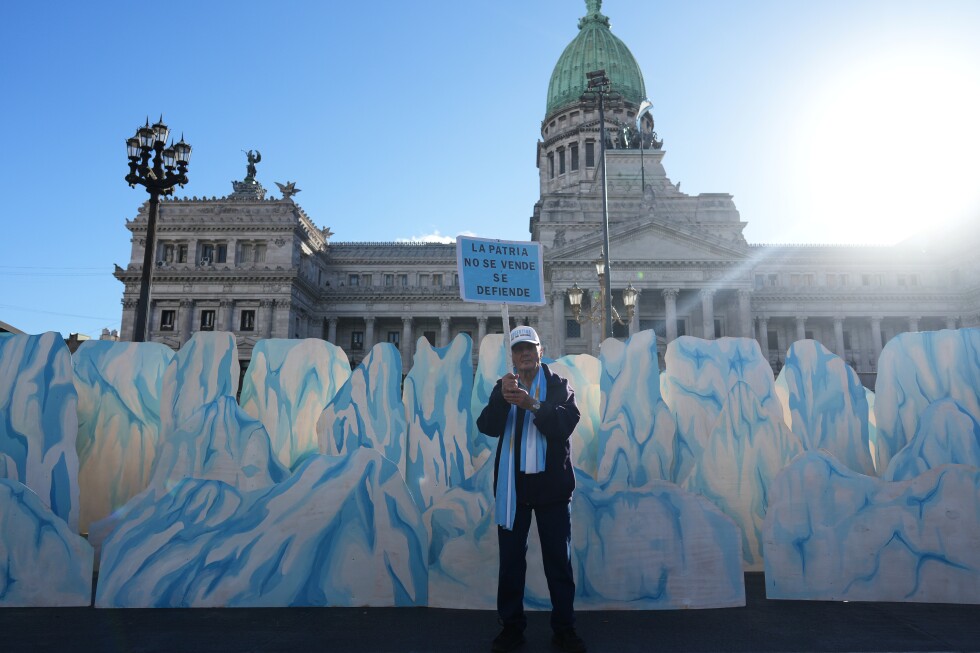
Environmental organizations, including Greenpeace and the Environment and Natural Resources Foundation, have vowed to challenge the legislation through the courts. They are organizing a class-action lawsuit arguing that the bill’s passage followed a flawed process that dismissed public concerns about water security.
“If they refuse to listen in Congress, they will be forced to listen in the courts,” the organizations declared in a joint statement, urging citizens to join their legal challenge. Their lawsuit contends the reform threatens both water access and fragile ecosystems surrounding glacial environments.
Opposition lawmakers have branded the legislation unconstitutional, arguing it rolls back essential environmental safeguards at a time when climate change is already accelerating glacier retreat across the region. Glaciology experts warn that weakening these protections could jeopardize water security in regions dependent on glacial melt.
The mining reform represents another step in Milei’s broader economic liberalization agenda. Since taking office in December 2023, the libertarian economist has pushed a series of market-friendly reforms aimed at attracting foreign investment and revitalizing Argentina’s struggling economy, which has suffered from chronic inflation and limited growth.
The debate highlights the tension between Argentina’s ambitions to develop its abundant natural resources and concerns about environmental preservation. For mining companies, the legislation potentially unlocks previously inaccessible mineral deposits in the resource-rich Andean regions. For environmental advocates, it represents a dangerous precedent that could threaten vital water resources in a region already facing climate challenges.
As Milei prepares to sign the bill, both industry observers and environmental groups are watching closely to see how implementation will unfold across Argentina’s diverse provinces, each with varying degrees of environmental regulations and mining traditions.
Fact Checker
Verify the accuracy of this article using The Disinformation Commission analysis and real-time sources.

16 Comments
This is a complex issue with valid arguments on both sides. While the economic benefits of increased mining investment are appealing, the environmental risks to Argentina’s glaciers cannot be ignored. I hope a balanced solution can be found.
The move to ease glacier protections for mining is bound to be controversial. I’m curious to see how the public and environmental groups respond, and whether the promised economic gains will materialize without unacceptable environmental costs.
That’s a good point. The public and environmental watchdogs will likely play a key role in scrutinizing the implementation and impacts of this policy change.
This is a complicated issue without easy answers. While the promised mining investments are enticing, the risks to Argentina’s glaciers are very real and concerning. I’ll be following this story closely to see how the tradeoffs play out.
Agreed, this is a difficult balance to strike. The details of the new regulations and their enforcement will be crucial in determining whether the economic benefits outweigh the environmental costs.
I’m curious to see how this reform is implemented in practice and whether sufficient safeguards are in place to prevent excessive glacier damage. The mining industry’s projections sound ambitious, but environmental impact should be the top priority.
That’s a fair point. The details of the regulatory framework will be crucial in determining the real-world outcomes. Rigorous oversight and scientific monitoring will be essential.
Easing glacier protections is a high-stakes move that could have far-reaching implications. I’m skeptical that the promised investment surge will outweigh the potential environmental damage, but I’ll be following this story closely to see how it unfolds.
Agreed, the long-term sustainability of Argentina’s glaciers should be the top priority. Careful monitoring and strict enforcement of any new regulations will be critical.
This decision reflects the delicate balance between economic development and environmental preservation. While the mining industry stands to benefit, I hope the new legislation includes robust protections to mitigate the risks to Argentina’s glaciers.
The relaxation of glacier protections for mining is a concerning development that prioritizes short-term economic gains over long-term environmental sustainability. I hope the public and legal challenges can compel the government to reconsider this decision.
Argentina’s glaciers are a vital natural resource, and I’m concerned that this reform could put them at risk. While the mining industry’s projections are enticing, the long-term consequences for the environment need to be carefully considered.
This is a controversial move that prioritizes mining interests over environmental protections. While the economic benefits are noteworthy, the long-term impact on Argentina’s glaciers is concerning and requires careful monitoring.
I agree, the tradeoffs here need to be weighed very carefully. Easing glacier protections could have serious ecological consequences that outweigh the promised investment boost.
This is a complex issue with valid arguments on both sides. I hope the government and stakeholders can find a way to balance economic development and environmental protection, but I’m skeptical that the tradeoffs can be fully reconciled.
I share your skepticism. Easing glacier protections for mining is a high-stakes gamble that requires extremely robust safeguards and oversight to prevent unacceptable environmental damage.