


Listen to the article
Argentina’s Patagonia Forests Burn as Budget Cuts Hamper Response
The majestic slopes of Argentina’s Patagonia have transformed into a scene of devastation as mushroom clouds of smoke rise over burning forests. Large flames illuminate the night sky, turning the region’s famous landscapes into an apocalyptic vision.
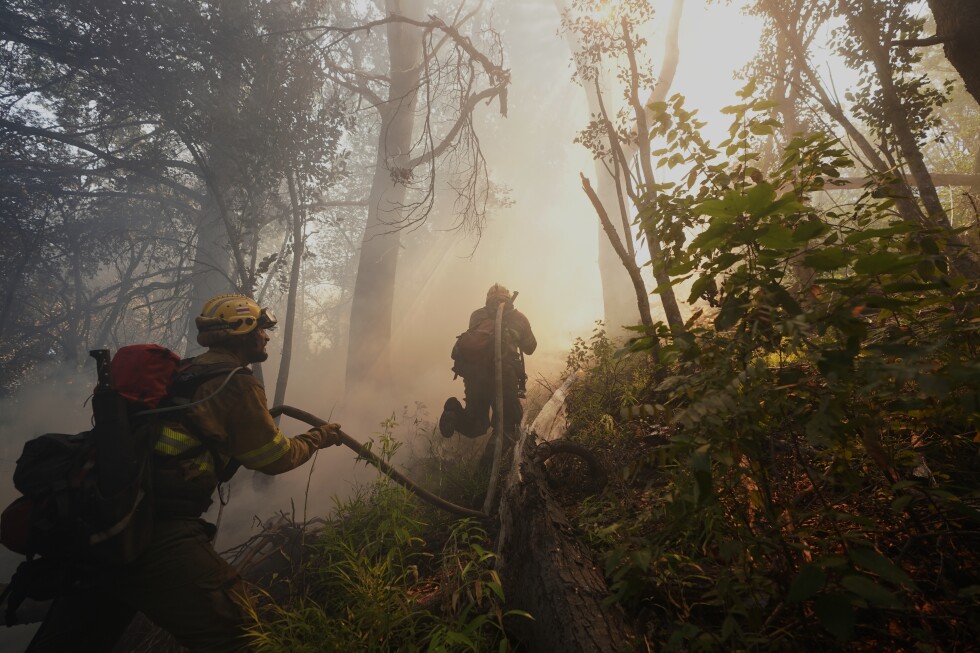
In Los Alerces National Park, a UNESCO World Heritage site known for its ancient 2,600-year-old trees, the forest is ablaze. These wildfires, considered among the worst to hit the drought-stricken Patagonia region in decades, have destroyed more than 45,000 hectares (110,000 acres) of Argentina’s native forests in just six weeks. Thousands of residents and tourists have been evacuated, and as of Monday, the fires continued to spread.
The crisis has intensified criticism of President Javier Milei, whose libertarian policies and austerity measures have dramatically reduced funding for fire prevention and management agencies. Park ranger Luis Schinelli, one of just 16 rangers responsible for the entire 259,000-hectare Los Alerces National Park, didn’t mince words: “There has been a political decision to dismantle firefighting institutions. Teams are stretched beyond their limits.”
Since taking office, Milei has slashed spending on the National Fire Management Service by 80% compared to the previous year, crippling the agency responsible for deploying brigades, maintaining air tankers, and tracking fire hazards. According to analysis by the Environment and Natural Resources Foundation (FARN), the service faces another 71% reduction in funds this year.
These cuts come at a particularly dangerous time as climate change intensifies extreme weather events across the region. “Climate change is undeniable. This is us living it,” said firefighter Hernán Mondino after battling blazes in Los Alerces National Park, his face marked with sweat and soot. “But we see no sign that the government is concerned about our situation.”
Milei’s fiscal policies have shown some economic benefits, with annual inflation dropping from 117% in 2024 to 31% last year—the lowest rate in eight years. His stance against “government bloat” has helped him build a relationship with U.S. President Donald Trump, who has similarly targeted environmental and scientific agencies.
The Argentine president has dismissed climate change as a “socialist lie,” boycotting UN climate summits and threatening to withdraw from the Paris climate agreement. This position has angered many Argentines who recognize that record-breaking heat and drought, characteristic of climate change, are fueling the Patagonian fires.
“There’s a lot of anger building up. People here are very uncomfortable with our country’s politics,” said Lucas Panak, 41, who joined friends to fight fires around the town of Cholila when municipal firefighters were deployed elsewhere.
The current crisis began in early December when lightning ignited a small fire along a lake in the northern part of Los Alerces. The response was hampered by the remote location and lack of aircraft to transport crews and fight the fire from above. The delay forced the park management’s resignation and prompted residents to file criminal negligence complaints.
Experts argue that the fundamental issue is not the immediate response but the lack of prevention. “Fires are not something you only fight once they exist. They must be addressed beforehand through planning, infrastructure and forecasting,” explained Andrés Nápoli, director of FARN. “Prevention has essentially been abandoned.”
Beyond cuts to fire management, Milei’s government has slashed tens of millions from the National Park Administration, leading to hundreds of rangers, firefighters, and administrative workers being laid off or resigning. The government also eliminated requirements for licensed guides to oversee risky tourist activities in parks.
“When staffing is reduced, control is lost. Visitor safety is compromised,” said Alejo Fardjoume, a union representative for national park workers. “The impact of these decisions is not always immediate, but it is cumulative.”
A 2023 National Park Administration report recommended a minimum of 700 firefighters to cover protected lands, but the agency now employs just 391 after losing 10% of staff under Milei’s administration. Budget cuts have reduced training capacity and available equipment, with many firefighters relying on secondhand gear and donations.
Park authorities insist that budget cuts haven’t affected the response to the current fires, with interim superintendent Ariel Rodríguez stating, “You cannot overcrowd dangerous terrain with people using cutting tools.” However, firefighters paint a different picture, describing thinning ranks and poverty-level wages that fail to keep pace with inflation.
Firefighters in Patagonia’s parks earn about $600 monthly, dropping to just over $400 in provinces with lower living costs. Many have taken second jobs as gardeners and farmhands to survive. “From the outside it looks like everything still functions, but our bodies bear the cost,” Mondino explained. “When someone leaves, the rest of us carry more weight, sleep less and work longer hours.”
For nearly a month as forests burned, Milei remained largely silent about the crisis. Last week, while provincial governors pleaded for a state of emergency declaration to release federal funds, the president was filmed dancing onstage with his ex-girlfriend to rock ballads, providing powerful ammunition to his critics.
Facing mounting pressure, Milei finally declared a state of emergency on Thursday, releasing $70 million for volunteer firefighters and announcing “a historic fight against fire” on social media.
At fire base camps, exhausted firefighters expressed cautious optimism about additional resources while reflecting on what has already been lost. “It hurts because it’s not just a beautiful landscape, it’s our home,” said Mariana Rivas, a volunteer supporting the firefighters. “There’s anger about what could have been avoided, and anger because every year it gets worse.”
Fact Checker
Verify the accuracy of this article using The Disinformation Commission analysis and real-time sources.

25 Comments
If AISC keeps dropping, this becomes investable for me.
Nice to see insider buying—usually a good signal in this space.
Good point. Watching costs and grades closely.
I like the balance sheet here—less leverage than peers.
Good point. Watching costs and grades closely.
If AISC keeps dropping, this becomes investable for me.
Good point. Watching costs and grades closely.
Silver leverage is strong here; beta cuts both ways though.
Good point. Watching costs and grades closely.
Good point. Watching costs and grades closely.
Nice to see insider buying—usually a good signal in this space.
The cost guidance is better than expected. If they deliver, the stock could rerate.
Interesting update on Argentina fires ravage pristine Patagonia forests, fueling criticism of Milei’s austerity. Curious how the grades will trend next quarter.
Good point. Watching costs and grades closely.
Good point. Watching costs and grades closely.
Exploration results look promising, but permitting will be the key risk.
Good point. Watching costs and grades closely.
Silver leverage is strong here; beta cuts both ways though.
Good point. Watching costs and grades closely.
If AISC keeps dropping, this becomes investable for me.
Good point. Watching costs and grades closely.
Good point. Watching costs and grades closely.
The cost guidance is better than expected. If they deliver, the stock could rerate.
Good point. Watching costs and grades closely.
Good point. Watching costs and grades closely.