


Listen to the article
Arctic Sea Ice Hits Record Winter Low as Global Temperatures Soar
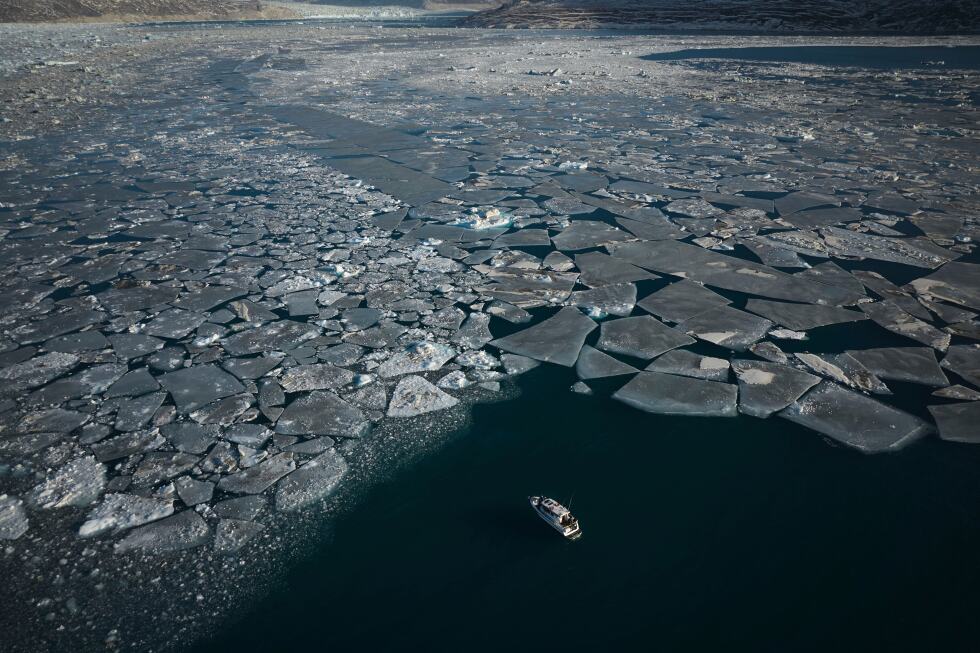
Arctic sea ice has shrunk to tie its lowest measured winter level, scientists announced Thursday, highlighting the accelerating impact of climate change on Earth’s polar regions. This critical development comes as temperature records shatter across continents, marking what some experts call the most extreme heat event in world climatic history.
The National Snow and Ice Data Center reports that Arctic sea ice peaked at just 5.52 million square miles this winter before beginning its seasonal decline. This matches last year’s record low and represents a reduction of about 525,000 square miles compared to the 1981-2010 winter average – an area roughly twice the size of Texas.
“As temperatures have warmed and are continuing to warm, especially in the polar region, there is less opportunity to grow ice,” explained Walt Meier, senior scientist at the data center. “It’s more of a steady decline in the winter and at the maximum. And it also gives us a head start on the summer melt season. We’re starting from a lower number.”
The diminishing Arctic ice cap has profound implications for global climate systems. Arctic sea ice acts as Earth’s reflective shield, bouncing sunlight back into space. When ice disappears, darker ocean waters absorb more heat, accelerating warming in a dangerous feedback loop.
This phenomenon extends beyond temperature effects. A leading theory suggests changes in Arctic conditions alter the jet stream’s movement and shape, potentially contributing to extreme weather events worldwide. The impacts also cascade through Arctic ecosystems, threatening wildlife like polar bears and seals that depend on sea ice for survival.
The transformation of the Arctic is reshaping geopolitics as well. Newly accessible shipping routes are opening across previously ice-covered waters, making once-ignored territories like Greenland strategically valuable and creating new international tensions over resource access and territorial claims.
While winter measurements provide important climate indicators, scientists emphasize that summer sea ice levels, which reach their minimum in September, remain most critical for climate assessment. However, Meier notes that the winter maximum does represent “a climate change global warming signal.”
The Arctic announcement coincides with extraordinary temperature anomalies across the globe. Sixteen U.S. states have broken March temperature records recently, with 27 locations recording temperatures high enough to match or exceed their hottest April days. Mexico has experienced thousands of shattered records, while parts of Asia have seen monthly records exceeded by a staggering 30 to 35 degrees Fahrenheit.
Climatologist and weather historian Maximiliano Herrera warned on social media that conditions are expected to worsen in the coming days. Meanwhile, Antarctica registered a contradictory extreme, setting a record for the coldest March day ever recorded on Earth at minus 105.5 degrees Fahrenheit.
Antarctic sea ice, which responds differently to climate forces than Arctic ice, reached its annual low point in February. While below the 30-year average, it remained above the record lows observed during the previous three years, highlighting the complex regional variations in how climate change manifests.
As these polar changes accelerate, they serve as stark reminders of Earth’s rapidly shifting climate state. The continued decline of Arctic sea ice particularly represents one of the most visible and concerning indicators of global warming, with ramifications extending far beyond the remote polar regions to impact weather patterns, ecosystems, and human societies worldwide.
Fact Checker
Verify the accuracy of this article using The Disinformation Commission analysis and real-time sources.

32 Comments
The cost guidance is better than expected. If they deliver, the stock could rerate.
Good point. Watching costs and grades closely.
I like the balance sheet here—less leverage than peers.
Good point. Watching costs and grades closely.
Production mix shifting toward World might help margins if metals stay firm.
Silver leverage is strong here; beta cuts both ways though.
Good point. Watching costs and grades closely.
Good point. Watching costs and grades closely.
Nice to see insider buying—usually a good signal in this space.
Good point. Watching costs and grades closely.
Uranium names keep pushing higher—supply still tight into 2026.
Good point. Watching costs and grades closely.
If AISC keeps dropping, this becomes investable for me.
Good point. Watching costs and grades closely.
Exploration results look promising, but permitting will be the key risk.
Good point. Watching costs and grades closely.
Good point. Watching costs and grades closely.
Production mix shifting toward World might help margins if metals stay firm.
Good point. Watching costs and grades closely.
The cost guidance is better than expected. If they deliver, the stock could rerate.
Good point. Watching costs and grades closely.
Good point. Watching costs and grades closely.
Exploration results look promising, but permitting will be the key risk.
Good point. Watching costs and grades closely.
Good point. Watching costs and grades closely.
Nice to see insider buying—usually a good signal in this space.
Good point. Watching costs and grades closely.
Good point. Watching costs and grades closely.
The cost guidance is better than expected. If they deliver, the stock could rerate.
Silver leverage is strong here; beta cuts both ways though.
Good point. Watching costs and grades closely.
Good point. Watching costs and grades closely.