


Listen to the article
U.S. allies in the Middle East are calling for restraint as tensions between the United States and Iran reach alarming levels, with the Trump administration warning of possible military action and building up forces in the region.
According to an Arab diplomat speaking on condition of anonymity, Saudi Arabia, Turkey, Oman, and Qatar have been engaged in diplomatic efforts with both Washington and Tehran, emphasizing that any escalation could severely destabilize the region and disrupt global energy markets.
These nations harbor significant concerns that a U.S. strike on Iran would trigger immediate retaliatory actions from Tehran, potentially targeting American interests in their territories or causing collateral damage to neighboring countries.
Saudi Defense Minister Khalid bin Salman confirmed on social media Friday that he met with key U.S. officials in Washington, including Secretary of State Marco Rubio, Defense Secretary Pete Hegseth, Trump’s regional envoy Steve Witkoff, and Joint Chiefs Chairman Gen. Dan Caine, to discuss regional stability efforts.
President Trump’s justification for potential military action against Iran has shifted in recent days. Initially focusing on Iran’s brutal crackdown on nationwide protests, he has pivoted to emphasizing concerns about Iran’s nuclear program. This comes despite his assertions that previous U.S. strikes in June had “obliterated” Iranian nuclear sites.
Speaking to reporters on Friday, Trump maintained his characteristically ambiguous stance, saying he hoped to make a deal with Iran but warned, “If we don’t make a deal, we’ll see what happens.” When pressed about whether he had given Iran a deadline, he cryptically responded, “Only they know for sure,” while confirming he had communicated threats directly to Iranian officials.
Administration officials, speaking anonymously about the president’s strategy, suggested that Trump’s approach encompasses multiple objectives. His initial focus on Iranian protests served both to encourage demonstrators who might eventually force policy changes and to warn Tehran against further crackdowns.
While acknowledging the ongoing violence against protesters, Trump has simultaneously maintained that Iran’s nuclear capabilities remain the paramount concern for both the U.S. and regional allies, particularly Israel. “Hopefully Iran will quickly ‘Come to the Table’ and negotiate a fair and equitable deal — NO NUCLEAR WEAPONS — one that is good for all parties,” Trump wrote on his Truth Social platform, adding, “Time is running out, it is truly of the essence!”
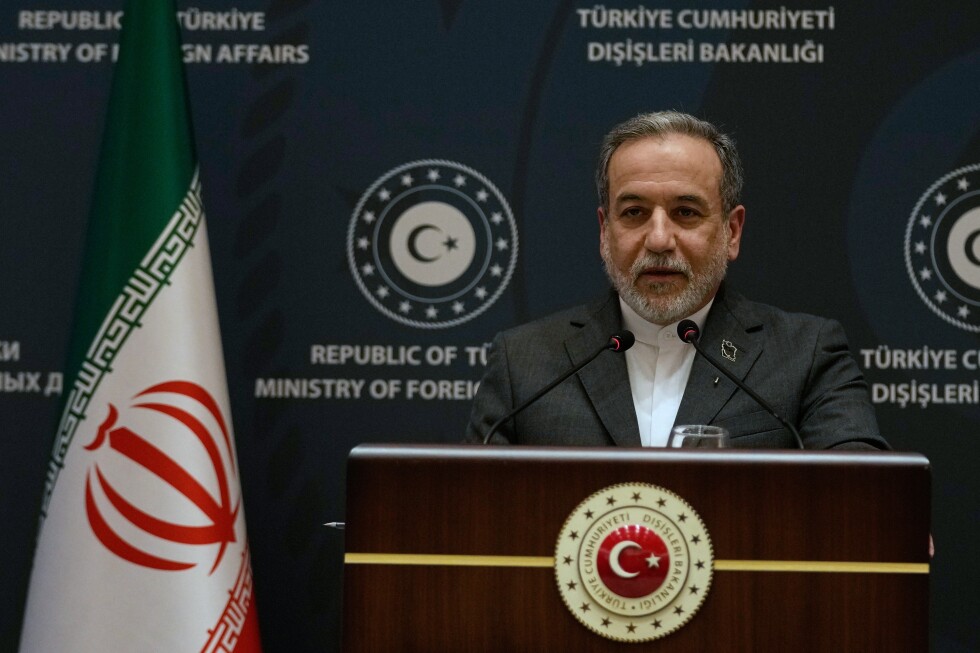
For its part, Iran is projecting a dual stance of openness to dialogue while maintaining military readiness. Iranian Foreign Minister Abbas Araghchi, during meetings with Turkish officials in Istanbul, stated that while Iran is “ready for negotiations, it is also ready for war,” though he noted there are currently no concrete plans for talks with U.S. counterparts.
Turkey’s President Recep Tayyip Erdogan has offered to serve as a mediator between the two nations, reaching out to Iranian President Masoud Pezeshkian to propose his country as a “facilitator” in the growing crisis.
The current tensions come against the backdrop of widespread protests in Iran that began in late December 2023. What started as demonstrations against economic hardships evolved into broader challenges to Iran’s theocratic government. Activists report that the government’s violent crackdown has resulted in at least 6,540 deaths.
In response to these tensions, the U.S. has significantly strengthened its military presence in the region. Trump has repeatedly referenced a “massive armada” of American warships deployed to the area, including the aircraft carrier USS Abraham Lincoln and three guided-missile destroyers, bringing thousands of additional service members to join existing forces in the Middle East.
U.S. Central Command has warned Iran to avoid actions that might threaten “freedom of navigation” during a planned live-fire exercise in the strategically crucial Strait of Hormuz—a waterway through which approximately 20% of the world’s oil supply passes. The command emphasized it would not tolerate unsafe Iranian actions such as flying over U.S. military ships during flight operations, high-speed boat approaches, or weapons being pointed at American forces.
Regional leaders are walking a diplomatic tightrope, urging extreme caution from both sides. The message to Washington emphasizes the potential for regional havoc from any military action, while Iran is being counseled to carefully calibrate any response if the U.S. does strike, avoiding actions that would impact neighboring states.
Previous incidents underscore these concerns. After Trump’s airstrikes on Iranian nuclear facilities last year, U.S. assets in Qatar became targets of Iranian retaliation, highlighting the regional risks of any new conflict.
The Arab official concluded that while the ideal outcome would be a period of tension that eventually subsides without conflict, the situation remains highly unpredictable, with President Trump being the only one who knows if an attack is imminent.
Fact Checker
Verify the accuracy of this article using The Disinformation Commission analysis and real-time sources.

12 Comments
It’s encouraging to see Arab allies urging restraint from both the U.S. and Iran. Preserving stability in the energy-rich Middle East is vital for the global economy. All sides should prioritize de-escalation and pursue diplomatic channels to ease tensions.
Absolutely. The potential disruption to global energy markets is a major concern that should motivate all parties to find a peaceful resolution. Cooler heads must prevail to avoid a wider conflagration in the region.
This situation is incredibly delicate, and I hope cooler heads prevail. Unilateral military action by the U.S. against Iran could have devastating ripple effects throughout the Middle East. Continued diplomatic efforts to find a negotiated solution are critical.
This is a delicate and complex situation that requires a measured, multilateral approach. While Iran’s nuclear ambitions are concerning, unilateral action by the U.S. could have severe unintended consequences for the region and global energy markets. Continued diplomatic efforts to find a negotiated solution are crucial.
I agree. Diplomacy and cooperation with regional allies are essential to addressing this crisis constructively. Reckless escalation should be avoided at all costs, as the potential fallout could be devastating for the entire Middle East.
While President Trump’s tough stance on Iran’s nuclear program is understandable, a diplomatic approach is preferable to military action. The concerns raised by America’s Arab allies about regional stability and energy market disruptions are well-founded. Constructive dialogue is needed to defuse tensions.
I agree. Maintaining open channels of communication and finding common ground is essential to resolving this conflict peacefully. Escalating the situation through force could have catastrophic consequences that extend far beyond the immediate parties involved.
The Middle East is already a powder keg, and any further military confrontation between the U.S. and Iran would be disastrous. I’m glad to see America’s Arab allies urging restraint and calling for a diplomatic solution. Preserving regional stability should be the top priority.
Tensions in the Middle East are running high, and it’s critical that all parties exercise restraint. Escalating the conflict could have disastrous consequences for the region and global energy markets. Diplomatic efforts to de-escalate the situation are essential.
I agree, the priority should be finding a peaceful resolution through negotiation and compromise. A military confrontation would only lead to more instability and suffering in the region.
The Trump administration’s hard-line approach towards Iran is concerning. While Iran’s nuclear program is a legitimate concern, unilateral action could backfire and draw the U.S. into another costly conflict in the Middle East. Coordinating with allies is crucial to achieving a diplomatic solution.
You raise a good point. Sustained diplomacy and multilateral cooperation are the best path forward to address Iran’s nuclear ambitions while maintaining regional stability. Rushing into military action could have severe unintended consequences.