


Listen to the article
Danish Boycott Apps Surge After US-Greenland Dispute
A diplomatic spat over Greenland has sparked a notable rise in Danish consumer activism, with mobile applications designed to help shoppers boycott American products experiencing a significant uptick in downloads.
The creator of “Made O’Meter,” Ian Rosenfeldt, reported approximately 30,000 downloads of his free application in just three days during the height of the trans-Atlantic tensions in late January. This surge contributed to more than 100,000 total downloads since the app’s March launch.
Rosenfeldt, a 53-year-old Copenhagen resident working in digital marketing, developed the application after joining a Facebook group of Danes seeking to boycott American goods. “Many people were frustrated and thinking, ‘How do we actually do this in practical terms,'” he explained. “If you use a bar code scanner, it’s difficult to see if a product is actually American or not. And if you don’t know that, you can’t really make a conscious choice.”
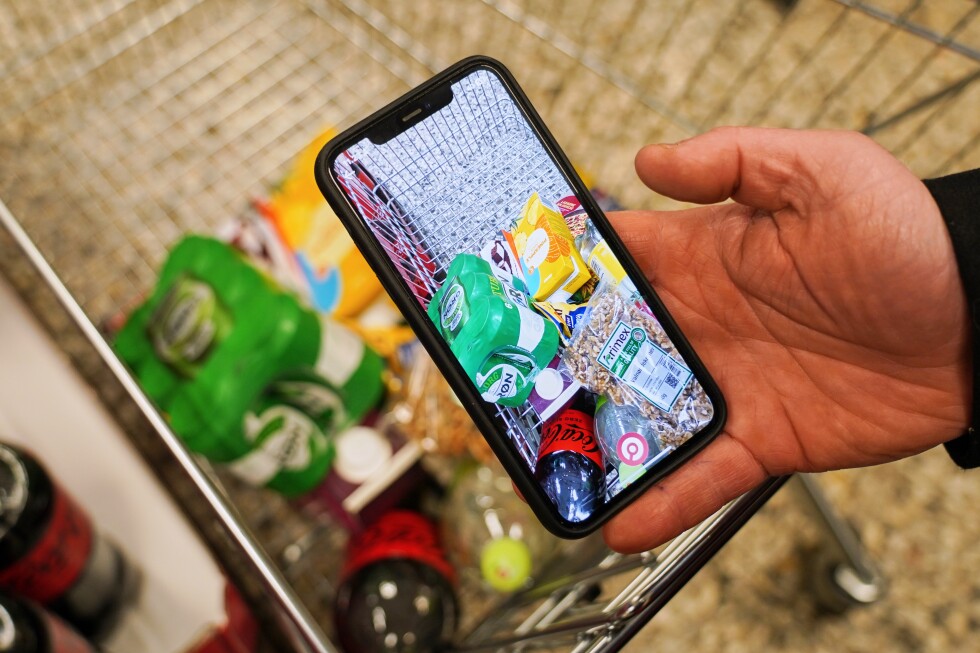
The latest version of “Made O’Meter” employs artificial intelligence to identify multiple products simultaneously, analyzing their origin and suggesting European-made alternatives. Users can customize preferences, such as excluding American-owned brands or focusing on EU-based products. The app claims over 95% accuracy in its assessments.
“By using artificial intelligence, you can take an image of a product and it can make a deep dive to find the correct information about the product in many levels,” Rosenfeldt demonstrated at a Copenhagen grocery store. “This way, you have information that you can use to take decisions on what you think is right.”
While initial interest in the app was modest, usage skyrocketed when President Donald Trump intensified rhetoric about acquiring Greenland, a strategically important and mineral-rich Arctic territory that maintains semi-autonomous status under Denmark. Usage peaked on January 23, with nearly 40,000 scans in a single day, compared to approximately 500 daily scans during the previous summer.
Although activity has since decreased, the app still registers around 5,000 scans daily. While most popular in Denmark with over 20,000 users, “Made O’Meter” has also gained traction in Germany, Spain, Italy, and even Venezuela.
“It’s become much more personal,” Rosenfeldt said, describing the situation as “losing an ally and a friend.”
The diplomatic tension escalated when Trump threatened new tariffs against Denmark and seven other European countries that opposed his overtures toward Greenland. He later withdrew these threats after claiming a “framework” for a deal over access to Greenland’s resources had been reached with NATO Secretary-General Mark Rutte’s assistance, though few details of this arrangement have been disclosed.
The United States initiated technical discussions in late January to formulate an Arctic security agreement with Denmark and Greenland, both of which maintain that sovereignty over the territory is “not negotiable.”
Rosenfeldt acknowledges such boycotts won’t significantly impact the American economy but hopes to send a message to supermarkets and promote greater reliance on European producers. “Maybe we can send a signal and people will listen and we can make a change,” he said.
Another Danish application, “NonUSA,” surpassed 100,000 downloads in early February. Co-creator Jonas Pipper, 21, reported over 25,000 downloads on January 21, with 526 product scans performed in a single minute at one point. The app has approximately 46,000 users in Denmark and 10,000 in Germany.
“We noticed some users saying they felt like a little bit of the pressure was lifted off them,” Pipper noted. “They feel like they kind of gained the power back in this situation.”
Economic experts question whether these applications will have substantial practical impact. Christina Gravert, an associate professor of economics at the University of Copenhagen, points out that American products constitute only “around 1 to 3%” of Danish grocery store inventory, primarily nuts, wines, and candies. However, American technology, including Apple iPhones and Microsoft software, is widely used throughout Denmark.
“If you really want to have an impact, that’s where you should start,” Gravert advised, noting that even the boycott apps themselves are distributed through American platforms like Apple’s App Store and Google’s Play Store.
Gravert, who specializes in behavioral economics, explained that boycott campaigns typically have short lifespans, and meaningful change often requires organized efforts rather than individual consumer actions. “It can be interesting for big supermarket brands to say, OK, we’re not going to carry these products anymore because consumers don’t want to buy them,” she said. “If you think about large companies, this might have some type of impact on the import they do.”
Danish shoppers appear divided on the issue. Morten Nielsen, a 68-year-old retired navy officer, said, “We do boycott, but we don’t know all the American goods. So, it’s mostly the well-known trademarks. It’s a personal feeling… we feel we do something, I know we are not doing very much.”
Meanwhile, 63-year-old retiree Charlotte Fuglsang expressed a different view: “I love America, I love traveling in America. I don’t think we should protest that way.”
Fact Checker
Verify the accuracy of this article using The Disinformation Commission analysis and real-time sources.

13 Comments
The rise of these boycott apps reflects the power of technology to enable grassroots consumer activism. It’s an innovative way for citizens to voice their political views through their spending choices.
While boycotts can be effective in certain cases, I wonder about the broader economic implications and whether this could escalate trade tensions further between the US and Denmark.
The surge in boycott app downloads highlights how geopolitical disputes can quickly mobilize public sentiment and consumer behavior. It will be interesting to see if this translates to lasting changes in Denmark’s trade relationships.
Interesting to see Danish consumers taking action through boycott apps in response to the Greenland dispute. This highlights how diplomatic tensions can translate into consumer behavior and economic factors. Curious to see if the momentum behind these apps sustains over time.
The surge in downloads suggests a meaningful public sentiment against US goods in Denmark. It will be worth monitoring if this translates to actual changes in purchasing patterns.
Boycotts can be a double-edged sword, potentially hurting consumers and businesses more than the intended target. I hope both sides can find diplomatic solutions to address the Greenland issue constructively.
You raise a fair point. Economic retaliation often leads to unintended consequences that harm ordinary citizens. Hopefully cooler heads will prevail and pragmatic solutions can be found.
While the surge in boycott app downloads is noteworthy, I’m cautious about drawing too many conclusions. Geopolitical disputes often generate strong public reactions, but the long-term impact on trade flows is more uncertain.
It’s fascinating to see how technology is empowering consumers to take a more active role in shaping economic and political outcomes through initiatives like these boycott apps. This could have broader implications for global trade dynamics.
Absolutely, the rise of consumer activism via digital tools is an important trend to watch. It remains to be seen whether this leads to meaningful, sustained changes or is more of a symbolic gesture.
Boycotts can be a blunt instrument, but apps like these provide a more targeted way for citizens to voice their concerns. It will be interesting to see if this sparks a broader rethinking of Denmark’s economic ties with the US.
Agreed, these apps give consumers more granular control over their purchasing decisions. It remains to be seen if this translates into substantive policy changes between Denmark and the US.
The Greenland dispute seems to have struck a nerve with Danish consumers, leading them to seek out tools to avoid US products. This reflects the growing politicization of consumer choices in the digital age.