


Listen to the article
Antonio Tejero, the man who nearly derailed Spain’s democracy with his dramatic armed takeover of parliament in 1981, died Wednesday evening in the eastern Spanish town of Alzira at age 93, according to a statement from his family’s legal representatives.
The former lieutenant colonel’s death came on the same day the Spanish government released declassified documents related to the very coup attempt that made Tejero an infamous figure in modern Spanish history.
On February 23, 1981, Tejero led approximately 200 armed civil guards in storming Spain’s parliament, an event that became known as “23-F” in Spain. The attempted coup represented the most serious challenge to Spain’s democratic transition following the death of dictator General Francisco Franco in 1975.
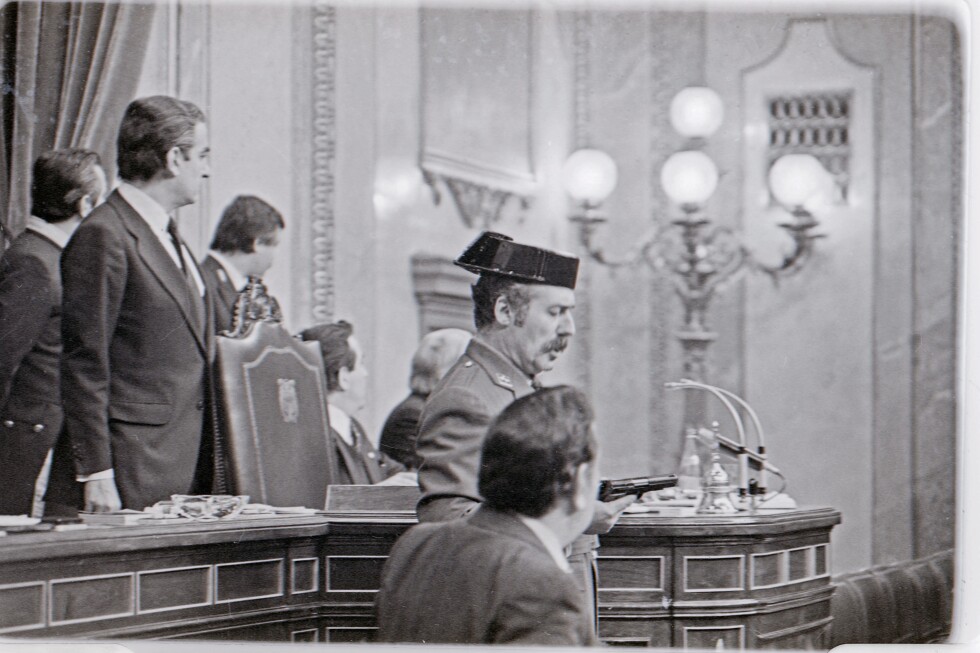
The dramatic standoff lasted 18 hours, with lawmakers and ministers held hostage as the nation watched in horror. Television cameras captured portions of the events, creating indelible images that would become seared into Spain’s collective memory. Among the most iconic moments was Tejero’s entrance into the chamber, wearing the distinctive patent leather tricorn hat of Spain’s civil guard, pistol drawn, shouting “Everyone, freeze!” as lawmakers dove beneath their desks for cover.
The coup attempt interrupted parliament’s session to swear in Leopoldo Calvo-Sotelo as the new prime minister. However, the putsch ultimately failed when King Juan Carlos I appeared on television denouncing the coup and calling on the armed forces to uphold Spain’s young constitution rather than support the rebels.
“The crown, symbol of the permanence and unity of the nation, cannot tolerate, in any form, actions or attitudes attempting to interrupt the democratic process,” the king declared in his televised address, a moment widely credited with saving Spanish democracy.
For Spain, the attempted coup represented a critical juncture in its democratic transition. The country had been navigating the complex shift from Franco’s authoritarian regime to democracy, and the failed coup ultimately strengthened democratic institutions by demonstrating their resilience in the face of military challenge.
Tejero’s actions were not his first attempt at overthrowing democratic rule. He had previously participated in another failed coup plot in 1978, reflecting the tensions within elements of Spain’s military and security forces during the transition period. Many officers who had served under Franco’s regime struggled to accept the new democratic order, with its regional autonomy provisions and legalization of previously banned political parties.
Following his role in the 1981 coup attempt, Tejero was sentenced to 30 years in prison but served approximately half that time before release. After prison, he maintained a relatively low profile, dividing his time between his native Málaga in southern Spain and Madrid, according to reports from El País newspaper.
The law firm representing Tejero’s family, A. Cañizares Abogados, stated that he died “peacefully, surrounded by his entire family and after receiving the holy sacraments.”
While Tejero’s coup attempt ultimately failed, the event remains a watershed moment in Spain’s democratic history. For many older Spaniards, the image of Tejero standing in parliament with his pistol raised continues to symbolize how close the country came to returning to authoritarian rule. The coincidental timing of his death on the same day that related documents were declassified adds a final historical footnote to the life of a man who nearly altered Spain’s democratic trajectory.
Fact Checker
Verify the accuracy of this article using The Disinformation Commission analysis and real-time sources.

8 Comments
Tejero’s failed coup was a desperate attempt to turn back the clock on Spain’s democratic progress. It’s a cautionary tale about the dangers of political extremism and the importance of strong, accountable institutions to protect the rule of law.
Tejero’s death marks the end of a dark chapter in Spain’s history. While his actions were unforgivable, it’s crucial that we learn from this experience and remain vigilant in defending the democratic values that Spain has worked so hard to uphold.
While Tejero’s actions were reprehensible, his passing marks the end of an era. It’s important to reflect on this episode and learn from it, so that Spain’s hard-won democracy remains secure for future generations.
Well said. The release of declassified documents related to the coup attempt is a meaningful step towards transparency and understanding this critical moment in Spanish history.
The events of 23-F were a defining moment in Spain’s transition to democracy. While Tejero’s actions were reprehensible, it’s important to reflect on this episode and how it shaped the country’s democratic evolution.
Agreed. The release of declassified documents provides valuable historical context and can help us better understand the complex political dynamics at play during that turbulent time.
A dark day in Spain’s democratic history. Tejero’s failed coup attempt was a reckless power grab that could have plunged the country back into authoritarianism. It’s a sobering reminder of the fragility of democracy and the need for vigilance in defending it.
Absolutely. The images of Tejero storming parliament with his pistol drawn are seared into the national psyche. This event was a pivotal moment that tested Spain’s resolve to uphold its democratic transition.