


Listen to the article
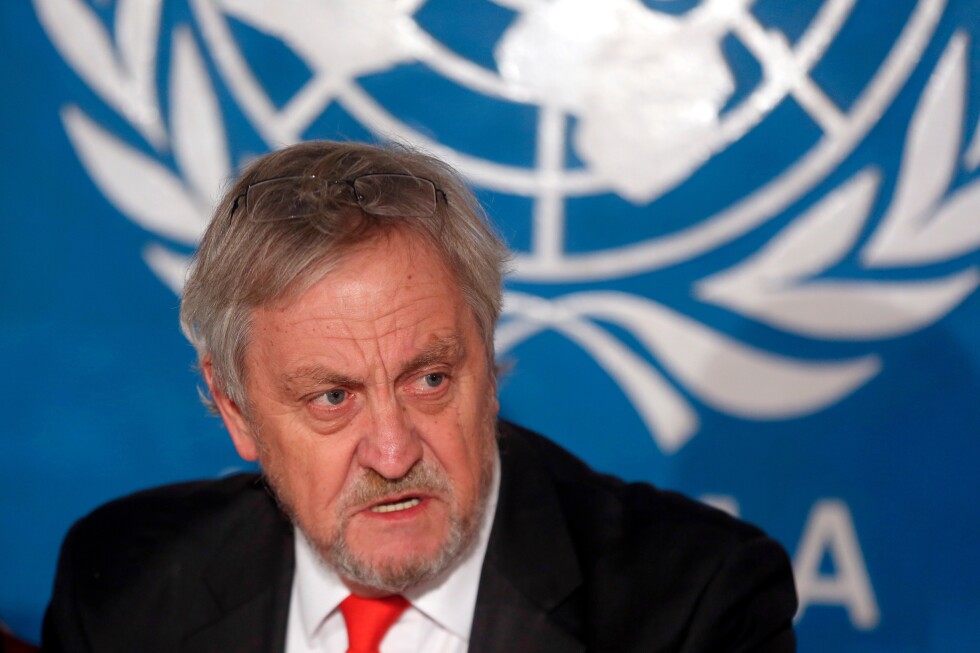
Nicholas Haysom, South African Anti-Apartheid Activist and UN Diplomat, Dies at 73
Nicholas Roland Leybourne “Fink” Haysom, a distinguished South African diplomat who helped craft his country’s post-apartheid constitution and served in numerous high-profile United Nations roles, has died at the age of 73 in New York after complications from heart and lung issues.
Haysom’s daughter, Rebecca, confirmed his passing on Tuesday. The veteran diplomat’s death marks the end of a remarkable career that spanned from South Africa’s transformation to peacekeeping missions in some of the world’s most volatile regions.
UN Secretary-General Antonio Guterres praised Haysom’s lifelong dedication to “justice, dialogue, and reconciliation,” highlighting his pivotal role in South Africa’s democratic transition and his leadership in complex peace missions worldwide. Guterres noted that Haysom’s legacy “will endure in the peace processes he advanced, the institutions he strengthened, and the principles he helped bring to life around the world.”
South African President Cyril Ramaphosa, himself a former anti-apartheid activist, mourned Haysom as “a distinguished diplomat and a pioneer of our democratic administration whose commitment to justice and peace made our country, our continent and the world a better place.” Ramaphosa specifically acknowledged Haysom’s crucial contribution to developing South Africa’s constitution.
Raised in Durban in a liberal family committed to racial equality, Haysom developed his political conscience early, particularly influenced by his activist mother. His opposition to apartheid intensified during his university years, leading him to pursue law at the Universities of Natal and Cape Town as a means to address social inequalities.
His activism came at a personal cost. As president of the anti-apartheid National Union of South African Students, Haysom was detained approximately six times, including a six-month period in solitary confinement around 1980. Beyond his legal and political work, he demonstrated creative talents, earning recognition as South Africa’s Playwright of the Year in 1987.
The watershed moment of Nelson Mandela’s release from prison in 1990 opened new doors for Haysom’s expertise. The African National Congress recruited him to join its Constitutional Commission, where he worked alongside fellow intellectuals to envision a new South Africa. This group was tasked with negotiating with the National Party—the architects of apartheid—to create a path toward a more equitable nation.
“We wanted to find the perfect formula for a constitutional state that appreciated the need for equality among all its citizens and recreated a social contract which we wanted to be a lesson for the world,” Haysom recalled in a UN interview. The resulting document remains widely regarded as one of the world’s most progressive constitutions.
Mandela personally selected Haysom as his legal adviser during his presidency from 1994 to 1999. Haysom described Mandela as “tremendously gracious” but also “steely, strong in the conviction he had that he was embarking on the right path.” Reflecting on Mandela’s legacy, Haysom often told his children that the true lesson was “not just being a nice person, it’s perseverance in your ideals that’ll change the world.”
Haysom’s diplomatic career expanded beyond South Africa’s borders when he joined efforts to resolve ethnic violence in Burundi between Hutus and Tutsis in the 1990s. He then contributed to peace negotiations in Sudan that ultimately led to South Sudan’s independence in 2011.
From 2005 to 2007, Haysom worked in Iraq attempting to forge coexistence between Shia, Sunni, and Kurdish communities—a challenge he recognized as fundamental to most conflicts. His UN career continued to flourish with senior positions, including serving as director for political, peacekeeping, and humanitarian affairs in the Secretary-General’s office from 2007 to 2012, followed by four years in Afghanistan.
His final years were largely dedicated to Sudan and South Sudan, where he led the UN peacekeeping mission since 2021. A brief assignment to Somalia ended abruptly in 2019 when the government ordered his departure after he questioned the arrest of a former al-Shabab leader.
Haysom is survived by his wife Delphine and their sons Charles and Hector, as well as three children from his previous marriage—Rebecca, Simone, and Julian.
With characteristic humility, Haysom once reflected that despite initial pride in his peace-building achievements in Burundi, Sudan, and South Africa, he later realized that all these agreements eventually faced challenges. This recognition led him to conclude that peace is not permanent, and democracy requires “constant engagement by people of good intention.”
Fact Checker
Verify the accuracy of this article using The Disinformation Commission analysis and real-time sources.

12 Comments
It’s admirable how Haysom devoted his life to advancing democracy and human rights, from his anti-apartheid activism to his UN diplomatic roles. A remarkable individual.
Haysom’s passing is a significant loss, but his lifelong commitment to dialogue and reconciliation will endure as a model for others to follow.
At 73, Nicholas Haysom had a long and distinguished career as a human rights champion and UN peacekeeper. His loss will be felt by many around the world.
Haysom’s dedication to justice and conflict resolution is an inspiration. May his legacy continue to guide future diplomats and activists.
Nicholas Haysom dedicated his life to fighting apartheid and promoting human rights. His work with the UN on complex peace missions and democratic transitions will be sorely missed.
Haysom’s legacy as a diplomat and peacemaker is truly inspiring. He helped shape a more just and equitable world.
Sad to hear of the passing of this renowned anti-apartheid activist and UN diplomat. His commitment to dialogue and reconciliation left an indelible mark.
Haysom’s contributions to South Africa’s democratic transition and global peace efforts are an incredible testament to his life’s work.
The death of Nicholas Haysom marks the end of an era. As an anti-apartheid activist and UN diplomat, he left an indelible mark on the world.
Haysom’s unwavering commitment to justice, dialogue and reconciliation is a testament to his remarkable life and work. He will be deeply missed.
Haysom’s work to strengthen institutions and uphold principles of peace and justice around the world is truly commendable. He will be greatly missed.
Haysom’s legacy as a pioneering diplomat and human rights advocate is an inspiration. His contributions to South Africa’s transition and global peace efforts are invaluable.