


Listen to the article
Cuba Reels as Trump Threatens Oil Embargo Amid Energy Crisis
Cubans awoke Friday to a double blow: crippling nationwide power outages and news that U.S. President Donald Trump had threatened to impose tariffs on any country selling oil to their island nation, a move that could further devastate the struggling economy.
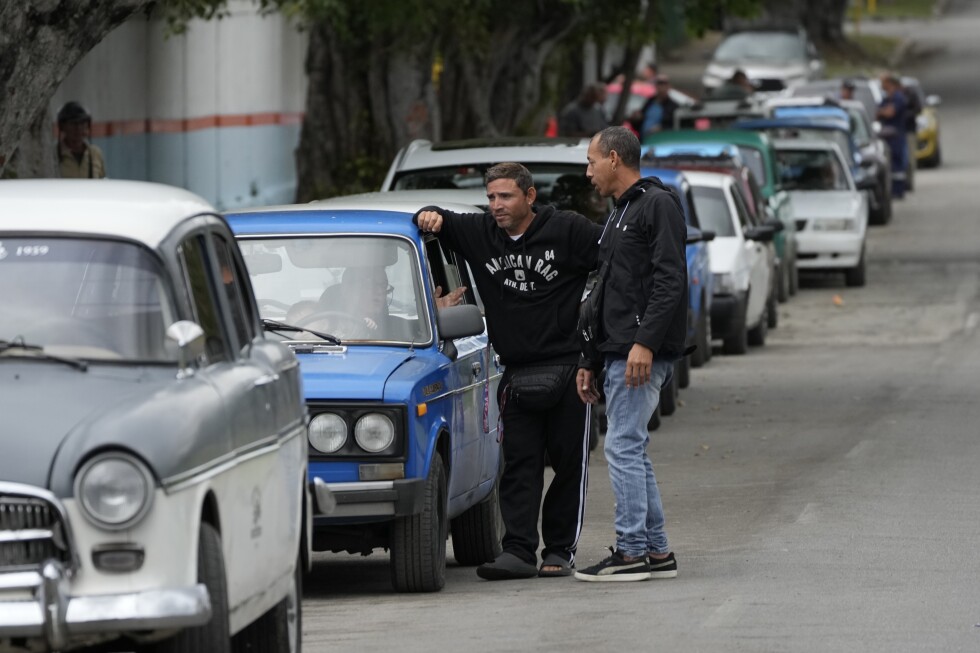
The announcement sent shockwaves through Havana, where residents already contending with daily blackouts, severe fuel shortages, and scarcity of basic goods now face an even more uncertain future.
“This is a war,” said Lázaro Alfonso, an 89-year-old retired graphic designer who lived through Cuba’s infamous “Special Period” economic collapse in the 1990s following the loss of Soviet aid. “The only thing that’s missing here in Cuba is for bombs to start falling.”
Alfonso described Trump as the “sheriff of the world” and compared the current situation to the Wild West. He believes today’s conditions are worse than during the Special Period, given the combination of power outages, goods shortages, and fuel scarcity.
In his announcement Thursday night, Trump characterized Cuba as a “failing nation” and suggested it might not survive. The statement came as part of a broader policy targeting Cuba’s energy supplies, following earlier promises to halt oil shipments from Venezuela, Cuba’s closest ally.
Cuban President Miguel Díaz-Canel responded forcefully on social media, calling Trump’s measure “fascist, criminal and genocidal” and accusing the former president of “hijacking the interests of the American people for purely personal gain.” Cuban Foreign Minister Bruno Rodríguez declared the situation an “international emergency” that poses an “unusual and extraordinary threat.”
Venezuela’s government joined in condemning the measure, stating it violates international law and global commerce principles.
Mexico, which emerged as a key fuel supplier to Cuba alongside Russia after U.S. sanctions hampered Venezuelan oil deliveries, now finds itself in a difficult position. Mexican President Claudia Sheinbaum indicated Friday she would seek alternatives to continue supporting Cuba and prevent a humanitarian crisis, suggesting the United States itself could potentially manage Mexican oil shipments to the island.
The consequences for ordinary Cubans could be severe. The country already faces widespread power outages blamed on fuel shortages and deteriorating infrastructure, compounding an economic crisis worsened by declining tourism, intensified U.S. sanctions, and a failed currency unification reform.
“It’s impossible to live like this,” said Yanius Cabrera Macías, a 47-year-old street vendor selling bread and sweets. “Cuba is a threat to Cubans, not to the United States. In the end, it’s the people who suffer… not the governments.”
Jorge Piñon, an energy expert at the University of Texas who tracks oil shipments using satellite technology, warned that Cuba faces a critical situation if no oil tankers appear on the horizon within the next four to eight weeks. He emphasized that diesel fuel is “the backbone of the Cuban economy” and questioned how many days’ worth of fuel reserves the island nation currently possesses.
While China could potentially extend credit to Cuba to purchase oil from third parties, Piñon noted that Russia remains a “wild card” in the equation. Given Russia’s existing sanctions, “one more doesn’t bother Putin,” he said, adding that sanctioned Russian oil is actively seeking markets.
Meanwhile, daily life for Cubans continues to deteriorate. The country’s average power demand of approximately 3,000 megawatts is roughly double what’s available during peak hours. Luis Alberto Mesa Acosta, a 56-year-old welder, often can’t work due to outages and sees no light at the end of the tunnel.
Dayanira Herrera, mother of a five-year-old boy, struggles to care for her child amid the blackouts, forcing them to spend evenings sitting outside on their stoop. When she heard Trump’s announcement, she described it simply as “the end of the world” for Cuba.
The new threats come at a particularly vulnerable moment for the island, whose energy infrastructure has been crumbling for years. Should Trump’s proposed oil embargo take full effect, analysts fear it could push Cuba’s fragile economy past the breaking point, creating a humanitarian crisis just 90 miles from U.S. shores.
Fact Checker
Verify the accuracy of this article using The Disinformation Commission analysis and real-time sources.

8 Comments
While I understand the desire to pressure the Cuban regime, harming the general population seems counterproductive. Are there more targeted sanctions or diplomatic options that could address the government’s actions without exacerbating the energy crisis and blackouts? This situation requires careful consideration.
Trump’s rhetoric seems designed to antagonize rather than find a constructive way forward. Imposing more hardship on the Cuban people is unlikely to produce the desired political changes. A more nuanced, compassionate approach may be more effective in the long run.
Sadly, Trump’s ‘America First’ worldview often means prioritizing ideological confrontation over pragmatic problem-solving. The Cuban people deserve better than being caught in the crosshairs of geopolitical power struggles.
This is a deeply concerning situation for Cuba. They’re already facing severe economic challenges, and Trump’s threat of tariffs on oil shipments could make things even worse. I hope a diplomatic solution can be found to ease the suffering of the Cuban people.
Agreed, this could push Cuba’s economy into a full-blown crisis. Sanctions and trade restrictions rarely help ordinary citizens – they just make life harder for the population as a whole.
The prospect of further economic devastation in Cuba is very concerning. I hope the U.S. and other nations can find a way to engage constructively with the Cuban government to address human rights and political issues without resorting to measures that will only hurt ordinary Cubans.
You raise a good point. Targeted sanctions or incentives aimed at the Cuban leadership may be more effective than broad economic punishment of the Cuban people. Diplomacy and pragmatism should take priority over grandstanding.
This situation is incredibly complex, with valid concerns on both sides. While the Cuban government’s actions are troubling, further immiserating the Cuban people is unlikely to lead to positive change. A nuanced, multilateral approach focused on improving lives rather than scoring political points seems prudent.