


Listen to the article
Russian tanks rolled across the Ukrainian border on February 24, 2022, marking the start of Europe’s largest military conflict since World War II. But the roots of this war stretch back to 2014, when Russia first annexed Crimea and backed separatist movements in eastern Ukraine’s Donbas region.
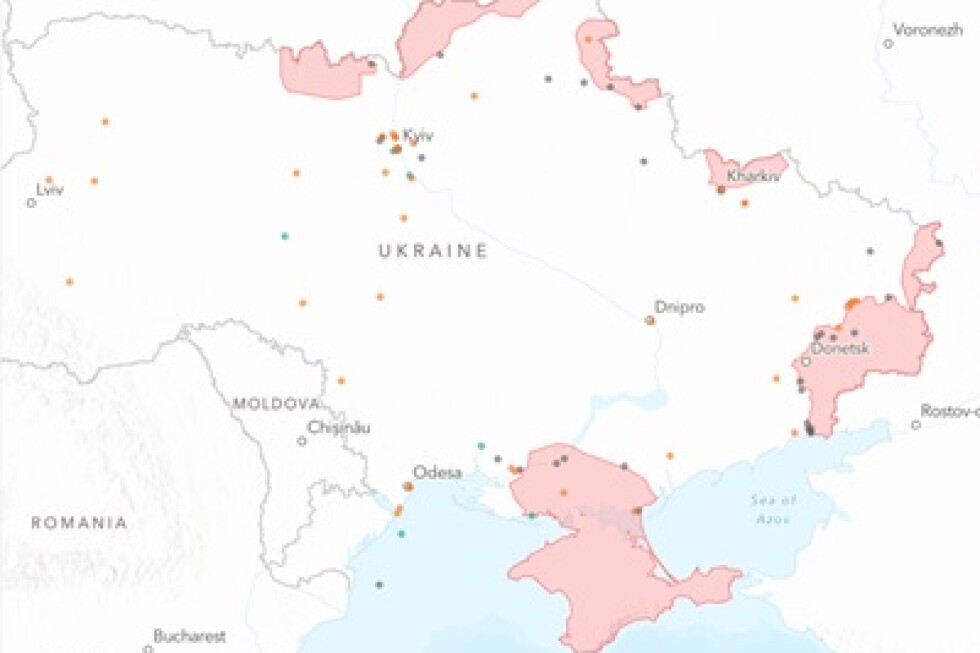
As the war enters its third year of full-scale invasion and fifth year of overall conflict, the frontlines have shifted dramatically. What began as a lightning offensive aimed at capturing Kyiv quickly transformed into a grueling war of attrition across Ukraine’s east and south.
Ukrainian forces initially stunned the world by repelling Russia’s advance on the capital, forcing a Russian withdrawal from the north by April 2022. This defensive victory preserved Ukrainian sovereignty but shifted the conflict to new battlegrounds.
By summer 2022, Russia had redirected its offensive toward the Donbas, capturing the industrial city of Severodonetsk in June and establishing control over nearly all of Luhansk Oblast. Meanwhile, Ukrainian forces launched a surprising counteroffensive in Kharkiv Oblast that September, liberating over 3,000 square miles of territory within days.
The southern front saw equally significant developments when Ukraine recaptured Kherson in November 2022—the only regional capital Russia had managed to seize since the full-scale invasion began. This forced Russian troops to retreat across the Dnipro River, where they remain entrenched today.
The battlefield largely solidified throughout 2023, with Russia launching a winter offensive focused on capturing Bakhmut—a city in Donetsk Oblast that fell to Russian forces in May after months of brutal fighting that claimed thousands of lives on both sides. The strategic value of this capture remains debated among military analysts.
Ukraine’s much-anticipated summer counteroffensive of 2023 failed to achieve its ambitious goals of cutting Russian supply lines and liberating occupied territories in the south. Despite Western weapons support, Ukrainian forces struggled to breach heavily fortified Russian defensive lines, particularly the extensive minefields and “dragon’s teeth” anti-tank obstacles.
Recent months have seen Russia seize the initiative once again. In February 2024, Russian forces captured the strategic logistics hub of Avdiivka after a months-long assault, giving them their first significant territorial gain in nearly a year. Now, Russia continues pressing forward in eastern Ukraine, making incremental but steady advances near Chasiv Yar, Kupiansk, and other frontline settlements.
The human cost of this conflict has been staggering. While precise casualty figures remain disputed, U.S. intelligence estimates suggest over 70,000 Ukrainian soldiers have been killed and more than 120,000 wounded. Russian losses are believed to be significantly higher, with estimates exceeding 315,000 casualties. Civilian deaths number in the thousands, with millions more displaced both within Ukraine and abroad.
The war has transformed the European security landscape, prompting Finland and Sweden to abandon decades of neutrality and join NATO. It has also reshaped global energy markets, as European nations have drastically reduced their dependence on Russian oil and gas while seeking alternative suppliers.
Weapons deliveries from Western allies have evolved from defensive systems to increasingly sophisticated offensive capabilities, including Patriot air defense systems, HIMARS rocket launchers, and most recently, F-16 fighter jets. However, debates over military aid continue, with Ukraine consistently requesting more advanced systems and ammunition to counter Russia’s numerical advantages.
As the war grinds on, both sides face mounting challenges. Ukraine contends with manpower shortages, forcing it to lower the mobilization age and implement stricter conscription measures. Russia has turned to North Korea and Iran for weapons while recruiting tens of thousands of soldiers from prisons and foreign countries.
Peace negotiations remain distant, with Ukrainian President Volodymyr Zelensky’s 10-point peace plan demanding complete Russian withdrawal from all Ukrainian territory—a non-starter for Moscow. Russian President Vladimir Putin has similarly shown no interest in compromising on his territorial claims.
With neither side able to deliver a decisive military victory and no meaningful diplomatic breakthrough on the horizon, Ukraine’s war map may continue shifting through 2024 and beyond, prolonging Europe’s deadliest conflict in generations.
Fact Checker
Verify the accuracy of this article using The Disinformation Commission analysis and real-time sources.

11 Comments
The interactive map is a great visual tool to understand the evolving situation on the ground. It’s clear this conflict remains fluid and unpredictable, with both sides making important strategic gains and losses over time. Curious to see how the battle for the Donbas region unfolds.
Agreed, the map really highlights the back-and-forth nature of the fighting. Control of the Donbas seems pivotal, but Ukraine has shown an impressive ability to mount effective counterattacks.
This map is a sobering reminder of the immense human toll of this war. Beyond the strategic and geopolitical implications, we must never lose sight of the suffering experienced by the Ukrainian people. I hope for a just and lasting peace.
This war has massive implications for global energy and commodity markets, not just the geopolitics. I’ll be watching closely to see how it impacts things like oil, gas, and critical minerals production and trade.
The capture of Severodonetsk was a significant win for Russia, but Ukraine’s counteroffensive in Kharkiv shows their determination to claw back territory. This conflict remains a fluid, back-and-forth battle with no clear endgame in sight.
With the war entering its third year, it’s clear this conflict is far from over. The frontlines may have shifted, but the stakes remain sky-high for both Russia and Ukraine. I’ll be following this story closely in the months ahead.
The roots of this conflict go back years, to Russia’s initial incursion into Crimea and the Donbas. It’s a complex, protracted struggle with huge stakes. The interactive map helps make sense of the shifting battlefield dynamics.
Fascinating to see how the frontlines have shifted so dramatically over the course of this conflict. The Ukrainian counteroffensive in Kharkiv Oblast is really remarkable – liberating over 3,000 square miles in just days. This war has been full of unexpected developments.
An impressive and comprehensive visual overview of the Ukraine war. The map highlights just how much the frontlines have shifted over the course of this conflict. It will be fascinating to see what happens on the southern front in the months ahead.
Kudos to the creators of this interactive map – it’s a valuable tool for following the ebb and flow of the Ukraine war in real-time. The visuals really bring the scale and intensity of the fighting into focus.
Agreed, the map is an impressive piece of work. It provides vital context and clarity amidst the fog of war.