


Listen to the article
US Launches “Shield of the Americas” to Combat Cartels and Foreign Influence in Latin America
The United States is implementing a comprehensive hemispheric security strategy aimed at dismantling transnational criminal organizations and countering the growing influence of geopolitical rivals across Latin America, according to Joseph M. Humire, acting assistant secretary of War for Homeland Defense and Americas Security Affairs.
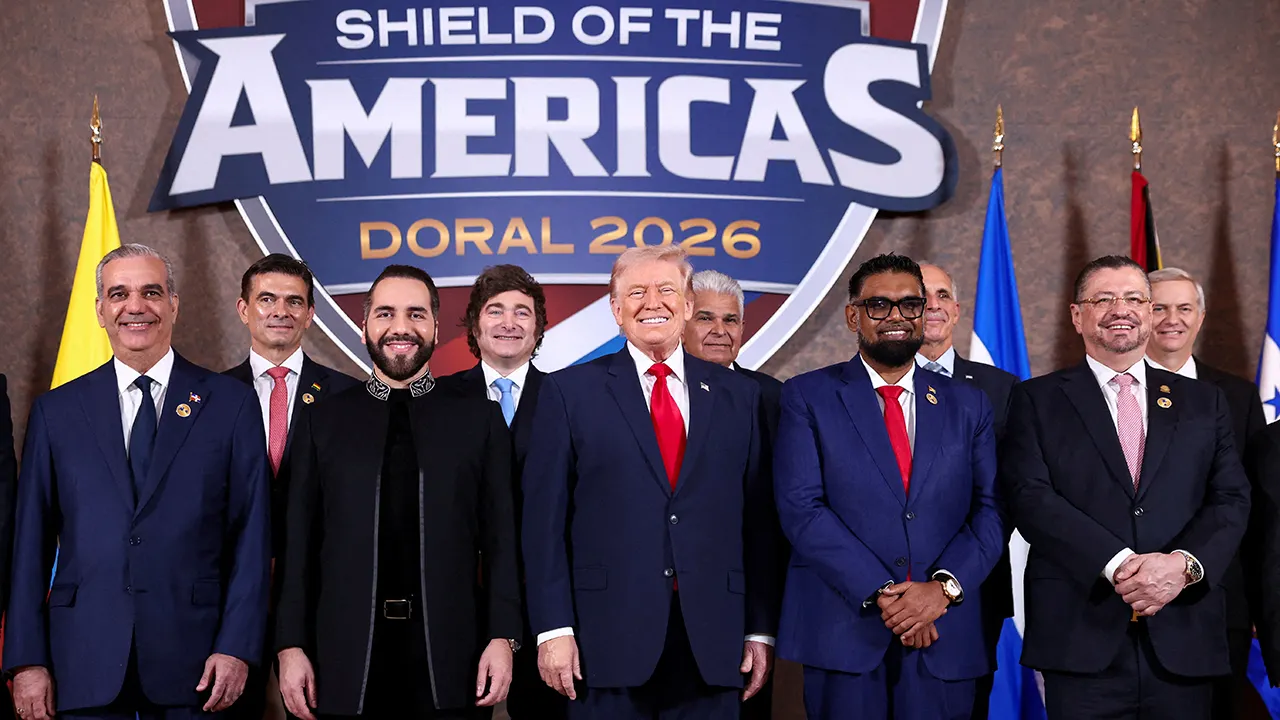
At the core of this initiative is the “Shield of the Americas,” a multi-layered framework designed to integrate military, intelligence, and law enforcement capabilities across partner nations throughout the Western Hemisphere.
“Shield of the Americas is a presidential framing to form an alliance in the Western Hemisphere. The Americas Counter Cartel Coalition fits within it, but it’s not exclusive to it. We now have 18 members in the coalition. And in the Shield, there are 13 countries,” Humire explained.
The initiative represents a significant shift in how the United States collaborates with regional partners against shared threats. Previously, the US focused primarily on providing training and capacity building to Latin American nations. Now, American forces are directly accompanying partner militaries during operations against cartels and other criminal groups.
“What is different in this administration is we are now accompanying our partners to go after the shared threats,” Humire said. “In some cases, we’ve already gotten permission to do that, like in Ecuador, where we have permission from President Daniel Noboa to not just advise and assist his military as they engage in counter-narcotic terrorist operations, but also accompany his military forces when they engage in those operations.”
This new approach emphasizes deterrence-focused operations rather than merely interdiction. While the US and its partners continue seizing narcotics and arresting cartel members, they are now also targeting cartel infrastructure and, in some cases, eliminating cartel leadership.
The Pentagon has deployed additional surveillance assets, enhanced maritime patrol operations, and integrated cyber capabilities to track and disrupt illicit networks. These efforts are complemented by capacity-building initiatives aimed at strengthening partner nations’ abilities to sustain long-term counter-cartel operations.
Mexico’s Evolving Role
Mexico, despite having strong military ties with the United States, is not yet a member of the coalition. However, American officials have expressed encouragement over Mexico’s recent operation against Nemesio Rubén Oseguera Cervantes, known as “El Mencho,” the leader of the Jalisco New Generation Cartel.
“Mexico is not a member of the coalition. We are encouraged by Mexico’s recent operation against El Mencho. That was an offensive operation against a high-value individual tied to a major cartel,” Humire stated. “Our relationship with Mexico is very strong military-wise. We have done a lot of training and capacity building with Mexico.”
The elimination of El Mencho represents a significant victory in the fight against cartel violence, which has plagued Mexico for decades and contributed to drug trafficking throughout the region. U.S. officials view this action as a positive indicator of Mexico’s commitment to combating cartel influence.
Countering China, Russia, and Iran
Beyond targeting cartels, the Shield of the Americas initiative reflects growing concern over the influence of China, Russia, and Iran in the region. U.S. officials are particularly worried about Chinese infrastructure investments with dual-use potential, Iranian-linked networks tied to illicit finance, and Russian disinformation campaigns.
To counter these efforts, the Pentagon has increased intelligence cooperation with allied governments, expanded joint cybersecurity initiatives, and supported efforts to secure critical infrastructure from foreign control or exploitation.
In Panama, for example, U.S. engagement has yielded significant results. “Since Secretary Hegseth and Secretary Rubio went to Panama last year, China has had significantly less influence inside that country. They lost access to the ports and are no longer advancing their investments,” Humire noted.
He added that Panama has withdrawn from China’s Belt and Road Initiative, becoming the first Latin American country to do so. The U.S. Department of War has established an enduring presence near the Panama Canal, including a jungle operations school on the Atlantic side and a joint security operation group on the Pacific side.
Venezuela and Operation Absolute Resolve
The U.S. strategy also encompasses stabilization efforts in Venezuela following Operation Absolute Resolve, which resulted in the capture of Nicolás Maduro. According to Humire, this operation demonstrated the limitations of support from U.S. adversaries.
“Before, during and after Operation Absolute Resolve, neither Russia, China, or Iran, or even Cuba for that matter, were able to do anything to keep Nicolas Maduro in power,” Humire explained. “The message to all the countries in Latin America, and frankly the world, is that they need to think twice when they partner with Russia, China or Iran because that partnership does not produce results.”
The capture of Maduro has reportedly created tension among Venezuela’s international backers, who despite having various levels of cooperation, do not share identical interests in the region.
Recalibrating Relations with Cuba
As part of its broader hemispheric strategy, the administration is also reassessing its approach to Cuba, viewing the island as a persistent security concern due to its ties with U.S. adversaries.
“Cuba was reliant on subsidized oil from Venezuela, in exchange for security services. But those security services didn’t do much for Venezuela when it mattered, so I believe there is a bit of a friction between the Cuban and Venezuelan governments,” Humire noted.
Recent protests in Cuba, reportedly linked to widespread blackouts, have further complicated the political situation on the island.
The Shield of the Americas represents what Humire describes as a “monumental shift in U.S. foreign policy and national security,” placing the Western Hemisphere as a top priority for U.S. national security in an unprecedented way.
“The Western Hemisphere is our neighborhood; it is intricately tied to U.S. homeland defense,” Humire concluded. “Hemispheric defense is and always has been a key part of U.S. homeland defense.”
Fact Checker
Verify the accuracy of this article using The Disinformation Commission analysis and real-time sources.

10 Comments
Combating drug cartels and foreign influence in Latin America is a longstanding challenge for the US. I’m skeptical that a new security framework alone will be enough to dismantle these entrenched criminal organizations and geopolitical threats. Effective implementation and sustained commitment from all partners will be key.
Fair point. Disrupting well-funded and highly adaptable cartels requires a comprehensive, multi-pronged approach. Coordination and information-sharing will be critical, but they’ll also need to target the financial and logistical enablers of these illicit networks.
Interesting geopolitical strategy to combat drug trafficking and foreign influence in Latin America. The “Shield of the Americas” sounds like an ambitious effort to integrate security capabilities across the region. I’m curious to see how effective this coalition will be in disrupting cartel operations and countering adversarial influence.
Agreed, it’s a complex challenge that will require strong regional cooperation. Curious to learn more about the specific initiatives and how they plan to coordinate intelligence and law enforcement efforts.
This new “Shield of the Americas” initiative seems like a significant shift in US strategy for the region, moving beyond just capacity building to a more integrated security framework. I’m curious to learn more about the specific plans for joint operations, intelligence sharing, and technological capabilities that will underpin this effort.
Agreed, the details on implementation and resourcing will be crucial. Aligning priorities and overcoming historical tensions between some Latin American nations and the US will also be a major challenge.
Drug trafficking and organized crime have devastated many communities in Latin America. While this new US-led coalition sounds like an important step, success will depend on meaningful, long-term cooperation and a holistic strategy that also addresses the socioeconomic drivers of the drug trade. I hope they can make real progress in disrupting cartel operations and countering foreign malign influence.
Well said. Tackling the root causes and taking a comprehensive approach will be critical. Coordinating law enforcement, military, and development efforts across the region won’t be easy, but it’s necessary to achieve sustainable results.
This is an important issue for the US and its partners in the Western Hemisphere. Drug trafficking and organized crime pose serious threats to stability and security in many Latin American countries. The proposed “Shield of the Americas” framework seems like a meaningful step to address these challenges through a more integrated, multilateral approach.
Yes, a collaborative regional strategy is crucial. Interested to see how they balance national sovereignty concerns with the need for cross-border coordination against transnational criminal networks.