


Listen to the article
Austria’s glaciers continue to experience significant retreat, according to a new report by the Austrian Alpine Club that highlights the accelerating impact of climate change on the country’s ice formations.
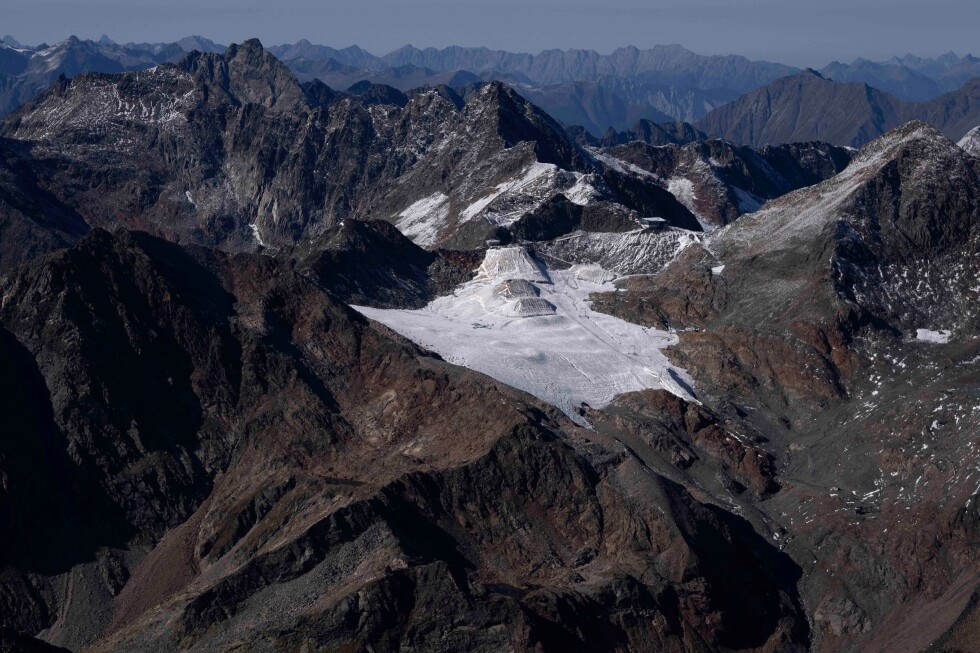
The latest monitoring data reveals that 94 of Austria’s 96 glaciers have receded over the past two years, with the Alpeiner Ferner in Tyrol and the Stubacher Sonnblickkees in Salzburg suffering the most dramatic losses. Each has retreated more than 100 meters (330 feet), while the average retreat across all monitored glaciers exceeded 20 meters (65 feet).
“The disintegration of the glacier tongue is also progressing at the Pasterze, Austria’s largest glacier, making the consequences of climate change visible,” the club stated in its report covering 2024 and 2025.
Experts point to several contributing factors behind the accelerated melting, including insufficient snowfall and unusually warm temperatures. June of last year was particularly devastating, registering nearly 5 degrees Celsius (9 degrees Fahrenheit) above the historical average, creating conditions that rapidly accelerated ice loss.
While the current retreat rate is somewhat lower than measurements from the previous two-year period, it still ranks as the eighth-largest retreat documented in the club’s 135-year history of glacier monitoring.
Nicole Slupetzky, vice president of the Austrian Alpine Club, emphasized the gravity of the situation: “The glaciers are melting — and with every new report, the urgency grows. It’s no longer a question of whether we can still save the glaciers in their old form; it’s about mitigating the consequences for ourselves.”
The implications of this ongoing glacier retreat extend far beyond the visual transformation of Austria’s iconic Alpine landscape. Glaciers serve as critical freshwater reservoirs that feed river systems during dry summer months. Their disappearance threatens drinking water supplies, hydroelectric power generation, agricultural irrigation, and tourism-dependent economies throughout the Alpine region.
Austria’s experience mirrors similar patterns observed in neighboring Switzerland, which hosts Europe’s largest concentration of glaciers. Swiss monitoring programs have documented comparable rates of glacial retreat in recent years, confirming that the phenomenon is widespread throughout the Alps.
The Alpine Club emphasized that these dramatic changes should serve as a “wake-up call” for both policymakers and the general public regarding climate action and environmental behavior.
Glaciologists warn that without significant intervention, many smaller Alpine glaciers could completely disappear within decades, while even the largest ice formations face substantial reductions. This transformation would fundamentally alter the hydrological systems that millions of Europeans depend on.
The retreat of glaciers represents one of the most visible and measurable consequences of global climate change. Unlike more abstract climate indicators, the physical shrinking of these massive ice formations provides tangible evidence that resonates with the public.
For centuries, Alpine glaciers have been central to both the ecological balance and cultural identity of mountain communities across Austria and neighboring countries. Their accelerating disappearance not only threatens water security and economic stability but also signals a profound transformation of landscapes that have defined the region for generations.
As monitoring continues, scientists expect that without substantial reductions in global greenhouse gas emissions and more aggressive climate action, the rate of glacial retreat will likely accelerate in coming years, potentially surpassing historical records as warming trends continue.
Fact Checker
Verify the accuracy of this article using The Disinformation Commission analysis and real-time sources.

10 Comments
While the current retreat rate may be lower than previous measurements, the fact that all but two glaciers have receded is still very concerning. Austria needs to prioritize glacier conservation and climate mitigation efforts to prevent further losses.
I’m curious to know what factors are driving this accelerated melting. The report mentions insufficient snowfall and unusually warm temperatures – are there any other major contributors that need to be addressed?
From the report, it seems the unusually warm temperatures in June last year were a major factor in the rapid ice loss. Addressing climate change and reducing greenhouse gas emissions will be critical to protect Austria’s glaciers.
The fact that the Pasterze, Austria’s largest glacier, is experiencing disintegration of its tongue is particularly alarming. This highlights the need for a multi-faceted approach to address the root causes of glacier retreat.
The significant retreat of Austria’s glaciers, with an average loss of 20 meters, is a concerning development. It underscores the critical importance of implementing effective policies and interventions to mitigate the effects of climate change.
The retreat of Austria’s glaciers is a stark reminder of the urgent need to address climate change. As a country known for its alpine landscapes, this is a worrying trend that requires immediate attention and action.
These glacier retreats in Austria are quite concerning. Climate change is clearly having a significant impact on the country’s ice formations. We need to take urgent action to address the root causes and mitigate further damage.
While the retreat of 94 out of 96 glaciers in Austria is undoubtedly troubling, I’m encouraged to see that the report provides specific data and analysis. This level of detail will be crucial in informing effective policy responses.
I appreciate the detailed reporting on the state of Austria’s glaciers. This data provides valuable insights into the ongoing impacts of climate change and the need for comprehensive strategies to protect these important natural resources.
It’s alarming to see that 94 out of 96 glaciers in Austria have retreated in just the last two years. This highlights the severity of the climate crisis and the need for decisive action to preserve these important natural resources.