


Listen to the article
All six crew members of a KC-135 refueling aircraft that crashed in western Iraq on Thursday have been confirmed dead, according to a statement released Friday by the U.S. military.
U.S. Central Command, which oversees military operations in the Middle East, stated that the crash followed an unspecified incident involving two aircraft in “friendly airspace.” The second aircraft involved reportedly landed safely.
Ohio Governor Mike DeWine revealed that three of the six deceased crew members were from his state, deployed with the Ohio Air National Guard’s 121st Air Refueling Wing. He expressed condolences to their families but did not identify the service members by name.
This tragic incident raises the U.S. death toll in Operation Epic Fury to at least 13 service members, with seven others previously killed in combat operations. Approximately 140 U.S. service members have been injured since the operation began, with eight suffering severe injuries, according to recent Pentagon figures.
Defense Secretary Pete Hegseth, speaking before the deaths were publicly announced, described the situation solemnly: “War is hell. War is chaos. And as we saw yesterday with the tragic crash of our KC-135 tanker, bad things can happen. American heroes, all of them.”
General Dan Caine, Chairman of the Joint Chiefs of Staff, emphasized that the crash occurred “over friendly territory in western Iraq, while the crew was on a combat mission” and stated definitively that neither hostile nor friendly fire was the cause. The specific circumstances remain under investigation.
A U.S. official speaking on condition of anonymity revealed that the other aircraft involved was also a KC-135. Israeli Ambassador to the U.S., Yechiel Leiter, indicated on social media that the second plane landed safely in Israel.
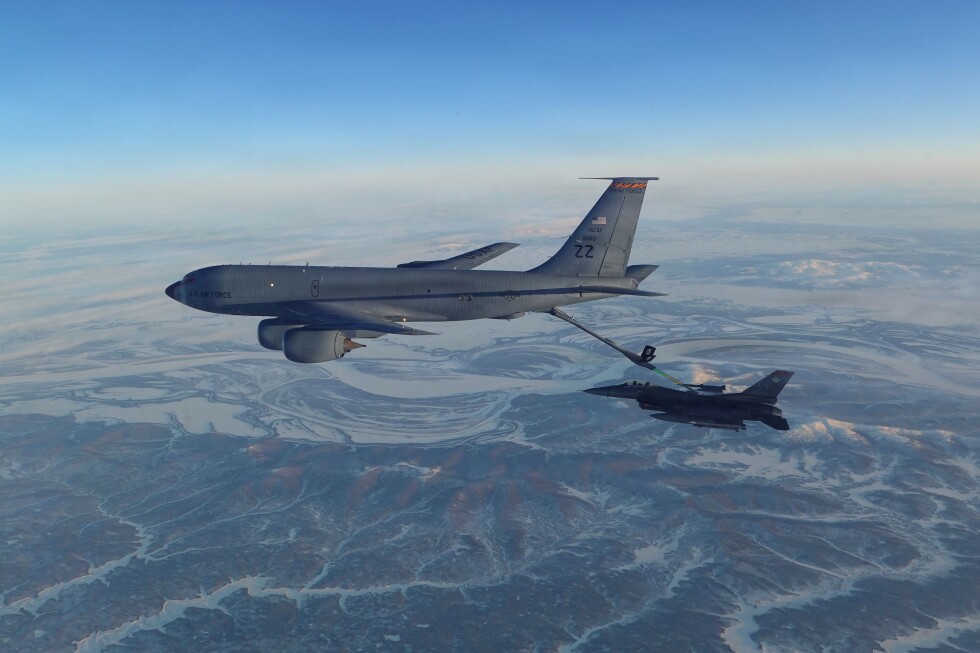
The KC-135 Stratotanker has been the backbone of U.S. aerial refueling operations for more than six decades. Based on the same design as the Boeing 707 passenger aircraft, these tankers enable other military aircraft to extend their range by providing midair refueling capabilities. They also serve in secondary roles including medical evacuations and surveillance missions.
According to the Congressional Research Service, the Air Force maintained 376 KC-135 aircraft as of last year, distributed across active duty (151), Air National Guard (163), and Air Force Reserve (62) units. The aging fleet is gradually being phased out as the newer KC-46A Pegasus tankers enter service.
Yang Uk, a security expert at South Korea’s Asan Institute for Policy Studies, noted that these planes are rarely targeted by enemy fire since refueling operations typically occur away from active combat zones. He added, “The last of these planes were produced in the 1960s,” highlighting their long service history.
The standard KC-135 crew consists of three personnel: a pilot, co-pilot, and boom operator. The latter works from the rear of the aircraft, often lying face down while looking through a window on the plane’s underside to direct the refueling boom to receiving aircraft. Additional personnel are added for specialized missions.
This crash follows other recent U.S. military aircraft losses in the region. Last week, three U.S. F-15E fighter jets were accidentally downed by friendly Kuwaiti fire, though all six crew members in that incident ejected safely.
Safety concerns about the KC-135 have been raised previously. The most recent fatal accident occurred in May 2013, when one crashed after takeoff in Kyrgyzstan while supporting operations in Afghanistan, killing all three crew members. A U.S. Air Force investigation determined that problems with the plane’s rudder led to the tail section breaking away and the aircraft exploding midair.
Questions have emerged about whether the crashed aircraft carried parachutes. According to a 2008 military news release, the Air Force had been removing parachutes from KC-135s, noting that “it was statistically safer to stay with the aircraft, especially when flying over enemy territory.”
Alan Diehl, a former investigator for the Air Force Safety Center, indicated that despite these incidents, the KC-135 has maintained a good overall safety record, with regular maintenance and equipment updates throughout its service life.
As military operations against Iran continue, refueling tankers like the KC-135 will likely play an increasingly crucial role in supporting extended combat missions, particularly if U.S. aircraft need to pursue targets deeper into hostile territory.
The military has stated only that the cause of the incident remains under investigation.
Fact Checker
Verify the accuracy of this article using The Disinformation Commission analysis and real-time sources.

12 Comments
This tragic crash in Iraq highlights the ongoing challenges and sacrifices our military faces in current operations. I hope a thorough investigation can shed light on the causes and lead to improvements that prevent similar incidents in the future.
Agreed. Understanding the factors that contributed to this accident is crucial to enhance safety and honor the memory of these fallen service members.
While the details remain unclear, one thing is certain: these six crew members made the ultimate sacrifice in service to their country. I hope their bravery and dedication are honored and remembered.
This incident is a stark reminder of the dangers our military personnel face, even in ostensibly ‘friendly’ airspace. My heart goes out to the families and loved ones of the deceased. May they find some solace in the knowledge that their loved ones died while fulfilling their duty.
Well said. The families of these fallen heroes deserve our deepest sympathy and support during this incredibly difficult time.
Tragic news about the KC-135 refueling plane crash in Iraq. My condolences to the families of the six brave crew members who lost their lives. These incidents are always a sobering reminder of the risks our military personnel face in service to their country.
Agreed. The loss of life is heartbreaking, but we must honor the selfless dedication of these service members. Their sacrifice will not be forgotten.
This is a devastating loss for the Ohio Air National Guard’s 121st Air Refueling Wing. I can only imagine the grief the local community is feeling. My sincere condolences to all affected by this tragedy.
You’re right, the impact on the local community must be immense. These service members were likely well-known and respected in their hometowns. The outpouring of support will be crucial during this time.
While the details of the incident remain unclear, it’s a stark reminder of the dangerous nature of aerial refueling operations. My thoughts are with the loved ones of the deceased crew members during this difficult time.
Yes, aerial refueling missions are extremely complex and hazardous. We must ensure our military has the best training and equipment to mitigate such risks as much as possible.
My heart goes out to the families and loved ones of the six crew members who perished in this crash. The loss of life is always a somber event, and I hope the military can provide some closure and support during this difficult time.