


Listen to the article
Former Iraqi PM Al-Maliki Defies Trump’s Warning Against His Return to Power
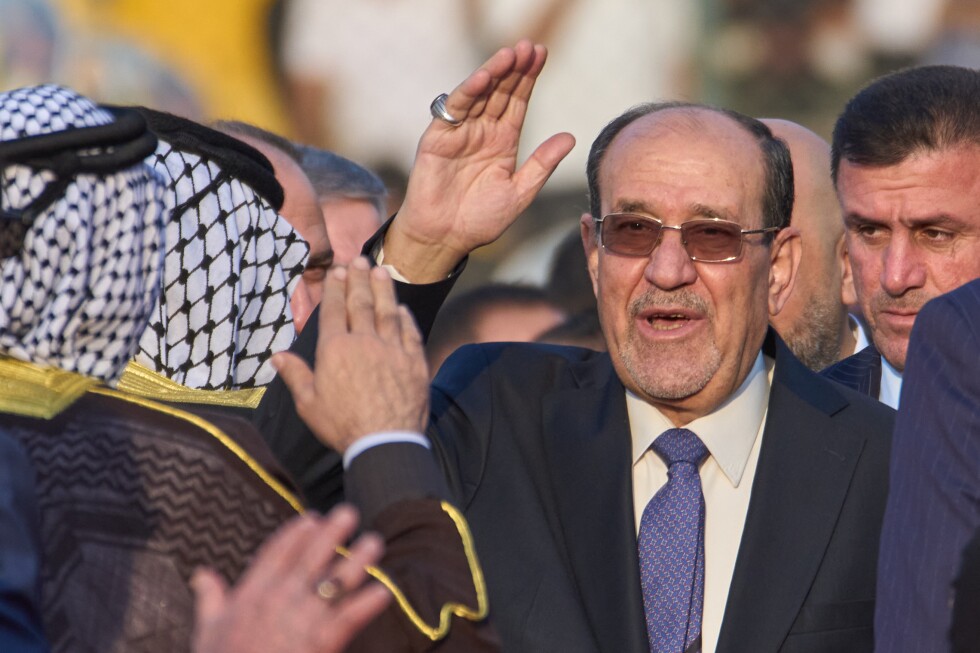
Former Iraqi Prime Minister Nouri al-Maliki issued a defiant statement Wednesday following U.S. President Donald Trump’s threat to withdraw American support for Iraq if al-Maliki returns to power.
“We reject the blatant American interference in Iraq’s internal affairs and consider it a violation of its sovereignty,” al-Maliki declared after being nominated last week by Iraq’s dominant political bloc to return to the premiership.
Trump’s warning came through a social media post Tuesday, in which he stated: “Last time Maliki was in power, the Country descended into poverty and total chaos.” The former U.S. president added, “Because of his insane policies and ideologies, if elected, the United States of America will no longer help Iraq and, if we are not there to help, Iraq has ZERO chance of Success, Prosperity, or Freedom.”
The confrontation highlights the complex geopolitical dynamics in the region. Washington has long pushed Iraq to distance itself from neighboring Iran, viewing al-Maliki as too closely aligned with Tehran. His previous term, which ended in 2014, coincided with the rise of the Islamic State group, which seized significant territory across Iraq.
The political maneuvering follows November’s parliamentary elections, in which caretaker Prime Minister Mohammed Shia al-Sudani’s list won the largest share of seats. Earlier this month, al-Sudani stepped aside, clearing the path for al-Maliki after both competed for backing from the Coordination Framework, a collection of Shiite parties that forms the largest bloc in parliament.
The Framework formally nominated al-Maliki last week. A parliamentary session scheduled for Tuesday to elect a president, who would then appoint the prime minister, was canceled due to lack of quorum. No alternate date has been announced.
Al-Maliki emphasized he would continue to pursue the premiership “out of respect for the national will and the Coordination Framework’s decision.”
Before Trump’s public statement, U.S. Charge d’Affaires Joshua Harris had already sent written messages to Coordination Framework members expressing concern. “We recall the period of previous governments headed by Prime Minister Maliki negatively in Washington,” the message stated, according to copies widely circulated on social media and confirmed by Framework members.
The message acknowledged Iraq’s sovereignty in selecting leadership while noting the U.S. would make “sovereign decisions regarding the next government in accordance with U.S. interests.” The U.S. embassy did not respond to requests for comment.
Trump’s intervention comes at a sensitive time, as he weighs potential new strikes against Iran and as the U.S. has begun transferring Islamic State militants from detention sites in Syria to facilities in Iraq.
Al-Sudani, who became prime minister in 2022 with Coordination Framework backing, has managed to balance relations with both Iran and the United States during his tenure. Notably, he restrained pro-Iran militias from intervening in support of Tehran during last year’s brief Israel-Iran conflict.
Some of those militias have voiced strong support for al-Maliki. Abu Alaa al-Walae, commander of the Kataib Sayyid al-Shuhada militia, denounced Trump’s statement as “blatant interference in Iraqi affairs,” adding that “the criminal Trump, who physically assassinated the leaders of victory now wants to repeat the act by politically assassinating” al-Maliki.
This reference recalls Trump’s 2020 order for a drone strike that killed Iranian General Qassim Soleimani and Abu Mahdi al-Muhandis, deputy leader of Iraq’s Popular Mobilization Forces, on Iraqi soil.
Analysts suggest the political maneuvering may be more complex than it appears. Tamer Badawi, an Iraq specialist at the Royal United Services Institute in London, proposed that al-Sudani might have anticipated the pushback against al-Maliki and stepped aside as a tactical move, allowing al-Maliki to “temporarily steal the spotlight” while his path to office narrows under domestic and international pressure.
“Iraq cannot afford the economic consequences of Donald Trump delivering upon his threats,” Badawi noted, pointing to potential sanctions and restrictions on Iraq’s access to U.S. dollar reserves, which are housed at the U.S. Federal Reserve.
Despite these pressures, Badawi cautioned that “this does not automatically mean the race is now decided in Sudani’s favor,” suggesting that “a third candidate emerging as a compromise pick remains one of the plausible outcomes.”
Fact Checker
Verify the accuracy of this article using The Disinformation Commission analysis and real-time sources.

16 Comments
This is a complex and concerning situation. The US is clearly determined to prevent Maliki from regaining power, fearing his alignment with Iran. But Maliki’s defiant response suggests he is unwilling to back down. It will be crucial to monitor how this confrontation plays out.
Absolutely, the geopolitical dynamics at play here are incredibly intricate. The US-Iraq relationship has always been fraught, and Maliki’s perceived ties to Iran are a major sticking point. This confrontation could have significant implications for the region.
The confrontation between the US and Iraq over Maliki’s potential return to power highlights the ongoing power struggles and geopolitical tensions in the region. It will be interesting to see how this situation unfolds and what it means for Iraq’s future.
You make a good point. The US-Iraq relationship has always been fraught, and Maliki’s perceived closeness to Iran is a major source of tension. This confrontation could have far-reaching consequences for regional stability.
This is an intriguing development in the ongoing power struggle in Iraq. The US seems determined to prevent Maliki from regaining influence, fearing his alignment with Iran. But Maliki appears defiant and unwilling to back down.
Absolutely, the geopolitical dynamics at play here are complex. The US is trying to counter Iranian influence in Iraq, while Maliki and his allies are asserting Iraqi sovereignty. It’s a delicate balancing act.
The tension between the US and Iraq over Maliki’s potential return to power is deeply concerning. It highlights the ongoing power struggles and geopolitical tensions in the region, with the US trying to counter Iranian influence in Iraq. Maliki’s defiant response suggests this confrontation will not be easily resolved.
You’re right, this situation is incredibly complex. The US-Iraq relationship has always been complicated, and Maliki’s perceived closeness to Iran is a major point of contention. It will be crucial to monitor how this confrontation unfolds and what it means for regional stability.
The US threat to withdraw support for Iraq if Maliki returns to power is a bold move. It reflects the deep distrust between Washington and Baghdad, particularly over Maliki’s ties to Iran. This confrontation will have significant implications for the region.
You’re right, the US-Iraq relationship is fraught with tension. Maliki’s perceived closeness to Iran is a major sticking point for the US. It will be crucial to see how this situation unfolds and what it means for Iraq’s future.
The tension between the US and Iraq over Al-Maliki’s potential return to power is concerning. It’s a complex geopolitical issue with deep historical roots. I’m curious to see how this plays out and what it means for regional stability.
You’re right, the US-Iraq relationship has always been fraught. Maliki’s ties to Iran are a major sticking point for the US. It will be interesting to watch how this confrontation unfolds.
This is a concerning development, as it highlights the ongoing power struggles and geopolitical tensions in Iraq. The US seems determined to prevent Maliki from regaining influence, but his defiance suggests he is unwilling to back down. I’m curious to see how this plays out.
Absolutely, the complex dynamics between the US, Iraq, and Iran make this a delicate situation. Maliki’s ties to Tehran are a major concern for Washington, and this confrontation could have significant regional implications.
This is a concerning development, as it underscores the delicate geopolitical dynamics at play in the region. The US is clearly determined to prevent Maliki from regaining power, fearing his alignment with Iran. Maliki’s defiant response suggests he is unwilling to back down, and this confrontation could have significant implications for Iraq and the broader region.
Absolutely, the tension between the US and Iraq over Maliki’s potential return to power is deeply concerning. The US-Iraq relationship has always been fraught, and Maliki’s perceived ties to Iran are a major sticking point. This confrontation will be crucial to monitor as it could have far-reaching consequences.