


Listen to the article
Airstrikes hammered Iran while Iranian missiles and drones targeted Tel Aviv and locations across the Middle East on Tuesday, even as President Donald Trump claimed the United States was engaged in talks with Iran to end the escalating conflict.
The war’s intensity shows no sign of diminishing despite Trump delaying his self-imposed deadline for Iran to reopen the Strait of Hormuz. Tehran’s blockade of this crucial maritime passage has severely disrupted international shipping, causing fuel prices to skyrocket by nearly 40 percent since hostilities began, with Brent crude pushing back above $100 per barrel Tuesday.
Pakistan has stepped forward as a potential mediator, offering to host diplomatic negotiations between the warring parties. According to multiple officials speaking on condition of anonymity, the U.S. had agreed “in principle” to join talks in Pakistan, though mediators were still working to bring Iran to the table. These diplomatic efforts have reportedly grown more complicated since news of the initiative leaked.
Iranian leadership appears divided on the prospect of negotiations. While Foreign Minister Abbas Araghchi has been discussing the conflict with international counterparts, Parliament Speaker Mohammad Bagher Qalibaf dismissed talk of negotiations as “fakenews.” An Iranian military spokesman struck a defiant tone, stating that Iran’s armed forces would continue fighting “until complete victory.”
Any potential U.S.-Iran negotiations face formidable obstacles. Washington’s objectives, particularly regarding Iran’s ballistic missile and nuclear programs, remain challenging to achieve. It’s unclear who within Iran’s fractured government would have the authority to negotiate, especially as Israel continues targeting Iranian leadership. Tehran also remains deeply suspicious of the United States, which twice under the Trump administration has launched attacks during high-level diplomatic talks, including the February 28 strikes that ignited the current conflict.
An Egyptian official involved in mediation efforts said the focus is currently on “trust-building” between the U.S. and Iran, aiming for a pause in fighting. The priorities include preventing attacks on energy infrastructure and developing a “mechanism” for Iran to reopen the Strait of Hormuz.
On the battlefield, Israel reported conducting extensive strikes on Iranian “production sites” without elaborating further. Residents of Tehran reported massive explosions in both the northern neighborhoods and city center.
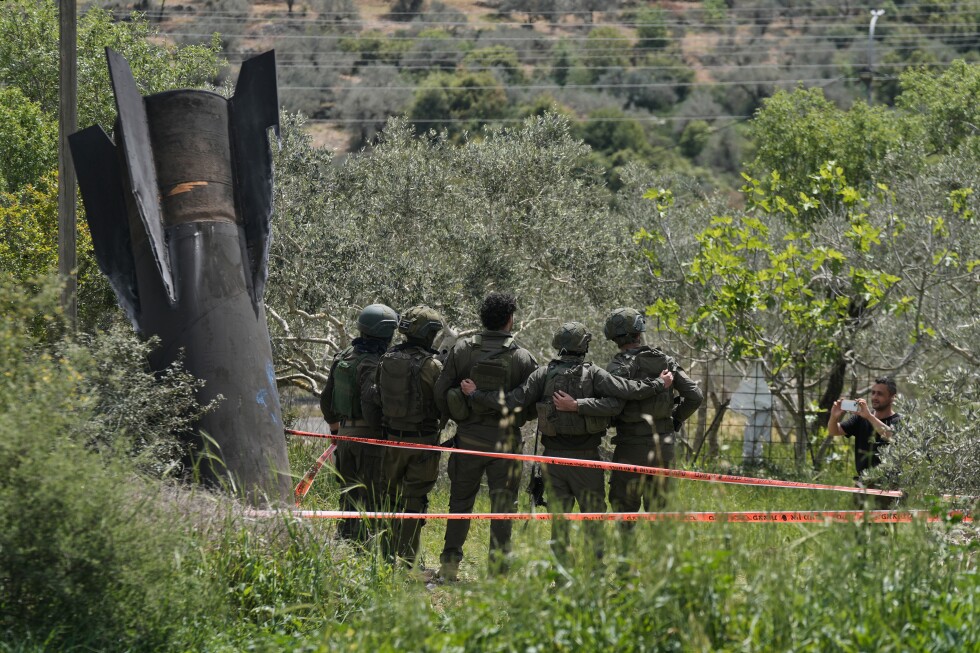
Iran retaliated by launching at least ten waves of missiles at Israel. In Tel Aviv, a missile with a 220-pound warhead slammed into a street in the city center, blowing out apartment windows and sending smoke billowing. Four people suffered minor wounds. In southern Israel, first responders reported a 40-year-old man in moderate condition and a woman and infant with minor injuries from another attack.
“It feels like you’re a sitting duck,” said Amir Hasid as he emerged from a shelter in Tel Aviv.
The conflict has spread across the region. Kuwait experienced partial power outages after air defense shrapnel hit electrical lines. Bahrain reported missile and drone attacks that killed an Emirati soldier serving with its forces. The United Arab Emirates activated air defense systems against similar attacks, while Saudi Arabia said it destroyed Iranian drones targeting its oil-rich Eastern Province.
In Lebanon, Israeli forces pounded Beirut’s southern suburbs, claiming to target infrastructure used by the Iran-linked Hezbollah militant group. A strike on a residential apartment southeast of the Lebanese capital killed at least three people, including a 3-year-old girl, according to the Lebanese Health Ministry. Another five people died in southern Lebanon.
Diplomatic tensions in the region continue to escalate, with Lebanon declaring Iran’s ambassador persona non grata and ordering him to leave by Sunday. Lebanese authorities have banned Iranian flights from landing in the country, fearing they might transport weapons or funding for Hezbollah. Some top Lebanese officials have criticized Tehran’s role, accusing it of dragging Lebanon into another war with Israel.
The human cost of the conflict is mounting. Iranian health officials report more than 1,500 deaths in their country, while Lebanese authorities say Israeli strikes have killed over 1,000 people and displaced more than a million. In Israel, 15 people have lost their lives. U.S. military casualties stand at 13, with additional civilian deaths reported in the occupied West Bank and Gulf Arab states.
As diplomatic efforts proceed uncertainly, thousands of U.S. Marines are heading to the Persian Gulf, fueling speculation about a possible operation to seize Iran’s Kharg Island, a vital component of Iran’s oil infrastructure. The U.S. previously bombed the island’s defenses while claiming to leave oil facilities intact. In response, Iran has threatened to mine the Gulf if American troops appear poised to land.
Trump stated he would delay threatened strikes on Iran’s power stations while talks unfold—a move that could be buying time for the Marines to arrive or potentially seeking an exit strategy from the conflict. While the president has said he has no plans to send ground forces into Iran, he has not ruled out this option, and Israel has suggested its ground forces might participate in the war.
Fact Checker
Verify the accuracy of this article using The Disinformation Commission analysis and real-time sources.

7 Comments
The disruption to global energy supplies and shipping in the Strait of Hormuz is deeply concerning. Fuel prices spiking by 40% will have major economic impacts. I hope a diplomatic resolution can be found to reopen this critical maritime passage.
The disruption to global energy markets and shipping due to the Strait of Hormuz blockade is very concerning. Diplomatic efforts to find a peaceful resolution must be the top priority to avoid further economic harm.
Airstrikes, missile attacks, and the blockade of the Strait of Hormuz – this situation is rapidly spiraling out of control. Effective mediation led by Pakistan could be crucial to bring all sides to the negotiating table and de-escalate the conflict.
The geopolitical tensions around Iran, Israel, and the Gulf states are highly complex. Airstrikes and missile attacks only seem to be ratcheting up the conflict further. Effective mediation will be crucial to de-escalate the situation.
You’re right, this requires very delicate diplomacy. Bringing all the parties to the table in Pakistan could be an important first step, if Iran can be convinced to participate.
This is a concerning escalation of the conflict in the Middle East. The blockade of the Strait of Hormuz has had major impacts on global energy markets and the economy. I hope diplomatic efforts can find a peaceful resolution soon.
This conflict is deeply worrying, both in terms of the military escalation and the economic fallout. Diplomatic efforts to find a peaceful solution need to be the top priority right now. Tensions in the region are already incredibly high.