


Listen to the article
SpaceX Returns Ailing Astronaut and Crew in NASA’s First Medical Evacuation from Space
An unprecedented medical evacuation brought four astronauts back to Earth on Thursday, cutting short their International Space Station mission by more than a month. The SpaceX capsule splashed down in the Pacific Ocean near San Diego under the cover of darkness, less than 11 hours after departing the orbital outpost.
“Obviously, we took this action because it was a serious medical condition,” NASA Administrator Jared Isaacman told reporters following splashdown. “The astronaut in question is fine right now, in good spirits and going through the proper medical checks.”
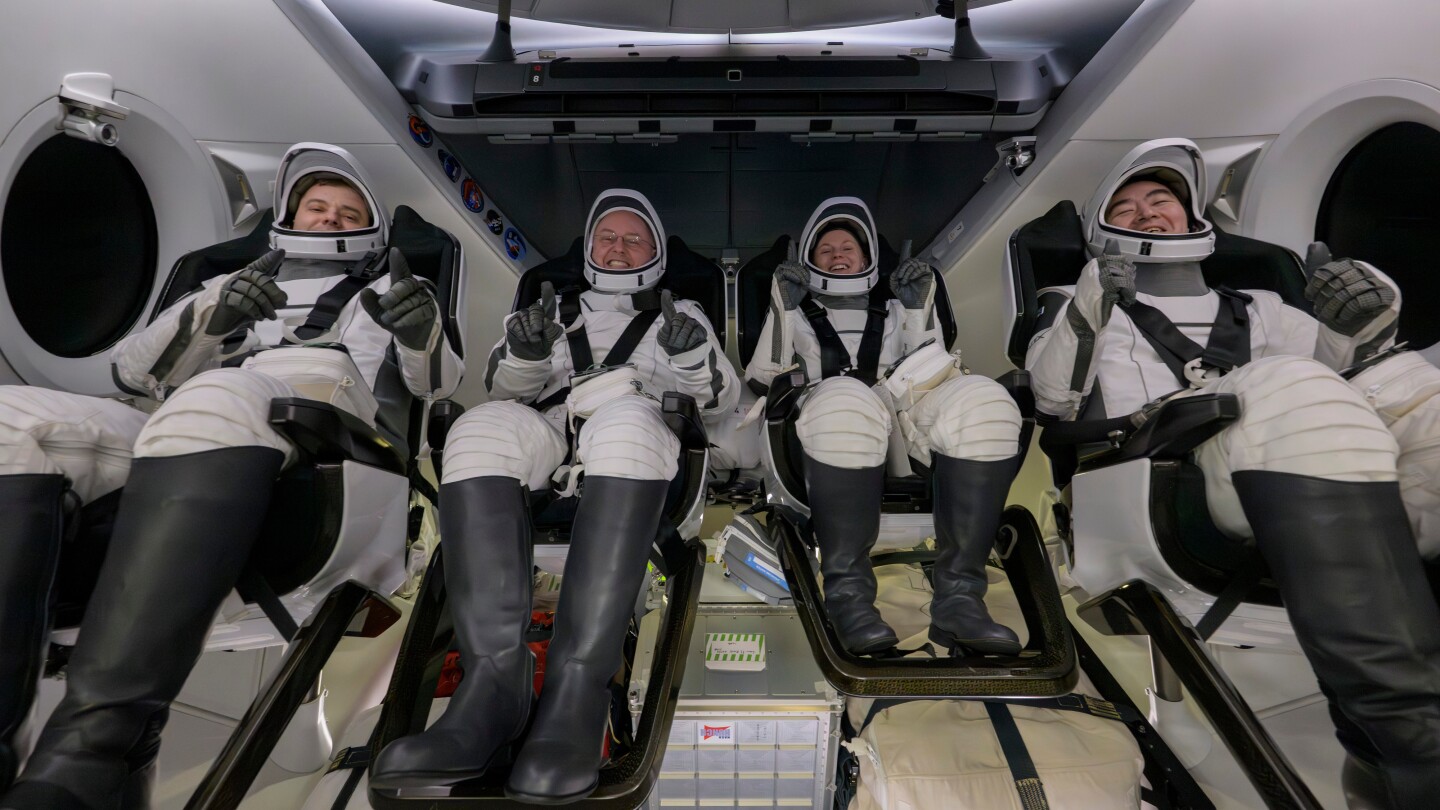
The crew consisted of NASA astronauts Zena Cardman and Mike Fincke, Japan’s Kimiya Yui, and Russia’s Oleg Platonov. Their mission, which began in August, ended prematurely after one crew member developed a medical issue on January 7. NASA has declined to identify the affected astronaut or provide details about the medical condition, citing privacy concerns.
Despite the urgency of the situation, NASA officials emphasized that this was not considered an emergency. “It would be very premature to draw any conclusions or close any doors at this point,” Isaacman noted, adding that it’s unclear whether the same medical issue could have occurred on Earth.
Within an hour of splashdown, all four astronauts emerged from the capsule and were helped onto reclining cots before being transported for standard medical examinations. In an unusual move, NASA decided to take the entire crew directly to a San Diego-area hospital for overnight observation rather than following standard post-landing protocols.
The medical evacuation marks a historic first for NASA, though Russia has previously conducted similar operations. The decision to bring the entire crew back rather than just the affected astronaut highlights the agency’s cautious approach to crew health and safety in the challenging environment of space.
The early return leaves the space station with a minimal crew of just three—one American and two Russian cosmonauts. NASA has acknowledged operational limitations with the reduced staffing, noting they will be unable to perform spacewalks, even for emergencies, until reinforcements arrive.
NASA and SpaceX are now working to accelerate the launch of the next crew, currently scheduled for mid-February. This upcoming mission will deliver two American astronauts alongside French and Russian crew members to restore the station’s operational capabilities.
The incident comes at a particularly busy time for NASA, which is simultaneously preparing for its first crewed mission around the Moon in over half a century. The Artemis II rocket is scheduled to move to the launch pad this weekend at Kennedy Space Center, with final preparations continuing through early February.
When asked about potential scheduling conflicts between the expedited space station crew launch and the Artemis lunar mission, Isaacman expressed optimism: “If it comes down to a point in time to where we have to deconflict between two human spaceflight missions, that is a very good problem to have at NASA.”
The medical evacuation highlights the inherent risks of space travel even as commercial companies like SpaceX have made access to orbit more routine. It also demonstrates the effectiveness of NASA’s contingency planning and the flexibility of modern spacecraft to adapt to unexpected situations.
The returning astronauts are expected to fly back to Houston on Friday after completing their medical evaluations, while plans for Platonov’s return to Moscow remain unclear. Meanwhile, NASA continues its investigation into the medical incident that prompted this unprecedented early return.
Fact Checker
Verify the accuracy of this article using The Disinformation Commission analysis and real-time sources.

11 Comments
This is an important milestone for NASA, even if it’s under unfortunate circumstances. Handling medical emergencies in space must require a high level of coordination and expertise.
You’re right. Evacuating an astronaut from the ISS is no easy feat and speaks to NASA’s advanced capabilities in space medicine and operations.
Interesting to hear about NASA’s first medical evacuation from the International Space Station. I hope the affected astronaut is doing okay and recovering well. It’s good they were able to return them safely back to Earth quickly.
I’m glad the astronaut is doing well and that NASA was able to get them back to Earth safely. It will be interesting to learn more about the specific medical issue and how it was managed in space.
A medical evacuation from the space station is certainly not something you see every day. I’m curious to learn more about the specific medical issue and how NASA handles such situations in the future.
A medical evacuation from the International Space Station is a rare and complex undertaking. I commend NASA for their quick response and for ensuring the astronaut’s well-being.
It’s good that NASA was able to respond quickly and get the affected astronaut back to Earth. Space exploration is inherently risky, so having robust medical protocols in place is crucial.
Absolutely. Maintaining the health and safety of astronauts is of paramount importance for any space program.
Space travel comes with many risks, and it’s reassuring to see NASA taking a cautious approach by prioritizing the health and safety of its crew members. Wishing the astronaut a full recovery.
While concerning, it’s reassuring to see NASA acting promptly and prioritizing the astronaut’s health. Maintaining crew safety is critical for the success of any long-duration space mission.
This is certainly an unprecedented situation for NASA. Medical emergencies in space must be incredibly challenging to manage. I’m glad the astronaut is in good spirits and receiving proper medical attention now.