


Listen to the article
The trial for one of Greece’s deadliest train disasters began Monday in Larissa, as 36 rail and transport officials faced criminal charges over a catastrophic collision that claimed 57 lives in February 2023. The defendants stand accused of serious charges related to endangering public transport in a case that has become a national symbol of institutional negligence.
The fatal crash occurred near Tempe in northern Greece when a passenger train carrying numerous college students was erroneously directed onto the wrong track, placing it directly in the path of an oncoming freight train. The resulting impact triggered a massive fireball, leaving passengers trapped in mangled rail cars with little chance of escape.
Investigators have uncovered a troubling pattern of systemic failures that contributed to the disaster. The initial track placement error was compounded by non-functioning signal systems throughout the network. Years of postponed safety upgrades, inadequate staffing, insufficient oversight, and poor maintenance created the perfect conditions for catastrophe on Greece’s rudimentary rail system.
Given the unprecedented scale of the proceedings, which involve hundreds of witnesses, authorities have converted a local campus into a makeshift courthouse. Legal experts anticipate the trial could extend for up to two years as the court works through extensive testimonies and evidence.
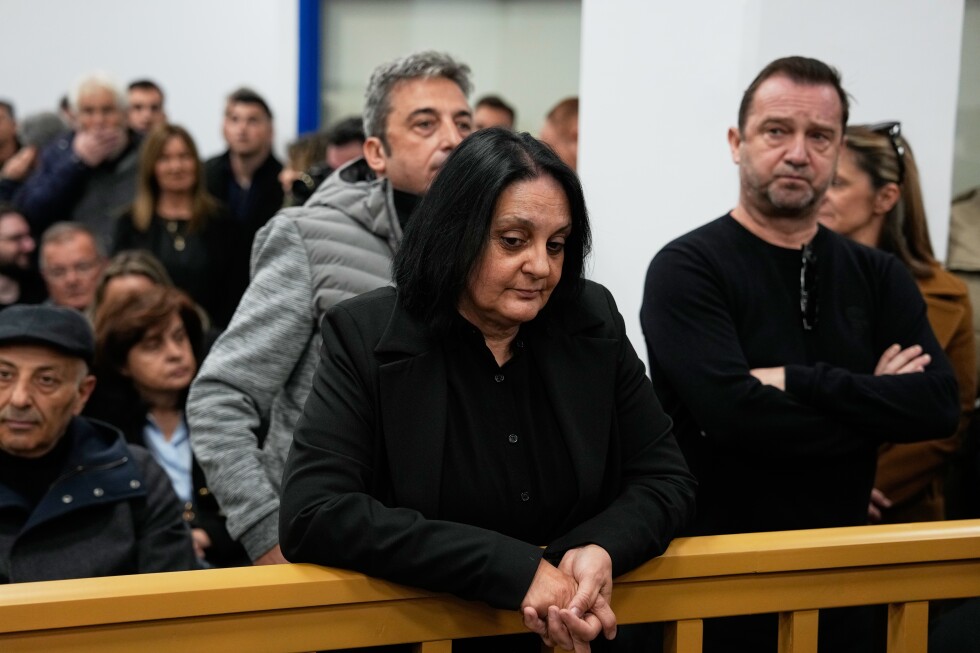
The opening day saw several hundred demonstrators gather outside the courthouse, prompting authorities to deploy riot police to maintain order. Inside, victims’ relatives dressed in black arrived to witness the start of proceedings many have waited over a year to begin.
“Real justice would be to get our kids back. But what we are asking for now is the exemplary punishment of those responsible,” said Pavlos Aslanidis, whose 27-year-old son Dimitris perished in the crash. “It is very sad that three years later, no one has gone to jail.”
The defendants represent various levels of Greece’s rail system, including station masters who were on duty during the fatal night, their supervisors, former rail administrators, senior transportation ministry officials, and former executives from Hellenic Train, the Italian-owned operator of the country’s rail service.
Many family members of the victims have become nationally recognized figures as they have persistently demanded accountability in the months following the disaster. Several attended the first day of the trial, holding photographs of their loved ones in a poignant display of grief and determination for justice.
The emotional weight of the proceedings was evident when Eleni Vasara, mother of 23-year-old victim Agapi, expressed frustration at the insufficient seating arrangements that prevented many relatives from attending. “It’s not right that all the relatives cannot attend. They have a right to have their day in court,” she said, before adding with determination, “But no matter what they do, there will be justice.”
The disaster remains a politically charged issue in Greece, having sparked multiple public protests and labor strikes since February 2023. Critics have accused the conservative government of deflecting responsibility onto rail officials while avoiding broader questions about political oversight and accountability for the country’s aging transportation infrastructure.
The victims remain honored at a makeshift memorial outside the Greek parliament in Athens, where their names appear in red paint surrounded by candles and flowers—a constant reminder of the human cost of the disaster.
Beyond this primary criminal trial, several separate legal proceedings connected to the crash are currently underway, including a parliament-sanctioned investigation into potential political accountability for the systemic failures that led to the tragedy.
The trial represents a crucial moment for a nation still grappling with questions about infrastructure safety, institutional responsibility, and justice for the dozens of lives—many of them young students—lost in one of Greece’s most preventable transportation disasters.
Fact Checker
Verify the accuracy of this article using The Disinformation Commission analysis and real-time sources.

19 Comments
A devastating tragedy that underscores the critical importance of robust safety protocols and proper maintenance of transportation infrastructure. I hope this trial leads to real accountability and substantive reforms.
Agreed. Institutional negligence of this magnitude is unacceptable. Meaningful change is needed to prevent such a catastrophe from ever happening again.
This is a sobering reminder of the real human cost when safety is neglected. My condolences to the victims’ families – they deserve answers and accountability.
Agreed. Institutional negligence of this magnitude is unacceptable. Reforms must be made to prevent such a catastrophe from ever happening again.
This is a heartbreaking case that underscores the critical importance of robust safety protocols and proper maintenance of rail infrastructure. My condolences to the victims’ families.
Agreed. Institutional negligence of this scale is unconscionable. Hopefully this trial will lead to real accountability and substantive reforms to prevent future tragedies.
Tragic and unacceptable. I hope this trial sheds light on the full extent of the failures that led to this disaster, so that meaningful changes can be implemented.
Tragic loss of young lives due to clear institutional failures. I hope this trial brings the responsible parties to justice and leads to meaningful changes in railway safety practices.
Heartbreaking. My condolences to the victims’ families. This trial must shine a light on the failures that led to this disaster, so that meaningful changes can be implemented to improve rail safety.
A tragic case that highlights the human cost of institutional failures. I hope this trial leads to real accountability and tangible reforms to enhance rail safety in Greece.
Absolutely. Preventable disasters like this erode public trust, and concrete steps must be taken to address the systemic issues that allowed it to happen.
This is a tragic case that highlights the critical need for robust safety protocols and proper maintenance of rail infrastructure. The victims, many young students, deserve justice and accountability from those responsible.
Absolutely. Such preventable disasters erode public trust in transportation systems and must be thoroughly investigated to prevent future occurrences.
Systemic failures like these erode public confidence. I’m curious to see if this case leads to broader improvements in railway safety and oversight across Greece.
I hope this trial leads to meaningful reforms and prevents similar tragedies in the future. Cutting corners on safety is unacceptable, especially when it results in such devastating loss of life.
Agreed. Institutional negligence of this magnitude is unconscionable. The victims and their families deserve answers and real change to the system.
Devastating. This trial must uncover the full truth and ensure those responsible are held accountable. Meaningful change is needed to improve rail safety and prevent such disasters.
This is a heartbreaking case, but an important one. Rigorous safety standards and consistent maintenance are critical for any transportation network, especially one carrying passengers.
Absolutely. Hopefully this tragedy will spur much-needed reforms to prevent similar disasters in the future.