


Listen to the article
Morocco Awarded Africa Cup of Nations Title After Overturning Senegal’s Victory
In a stunning reversal that has sent shockwaves through African football, Morocco has been declared the winner of the 2023 Africa Cup of Nations (AFCON) after the Confederation of African Football (CAF) overturned Senegal’s on-field victory from January.
The CAF appeals board ruled on Tuesday that Senegal “forfeited the final” after their players left the field for 15 minutes during stoppage time in protest of a controversial penalty awarded to host nation Morocco. The original 1-0 Senegalese victory has now been converted to a 3-0 default win for Morocco.
Senegal has vowed to appeal the decision to higher authorities, likely the Court of Arbitration for Sport (CAS) in Lausanne, Switzerland, though this process could take up to a year to resolve.
The controversy stems from the January 18 final in Rabat, where tensions escalated when Senegal was denied what appeared to be a legitimate goal minutes before Morocco was awarded a penalty. When Morocco’s Brahim Diaz attempted a “Panenka” chip shot from the spot, Senegalese goalkeeper Édouard Mendy made the save. After play resumed following the Senegalese protest, Senegal went on to score the match’s only goal in extra time.
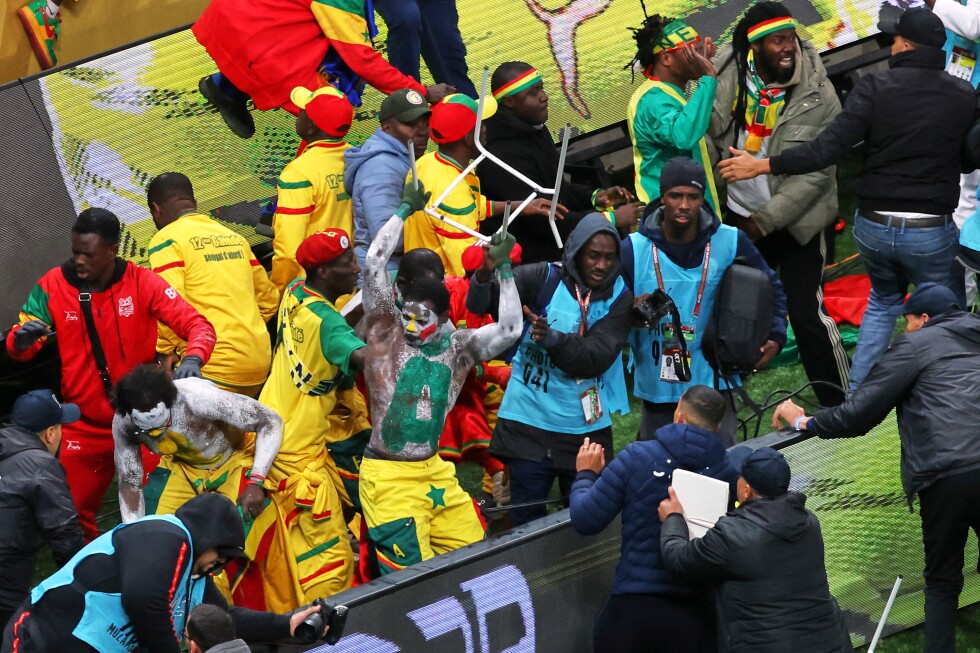
The protest was sparked by multiple contentious officiating decisions. In the second minute of stoppage time, Senegal’s apparent go-ahead goal was ruled out for what the referee deemed a foul by Abdoulaye Seck on Morocco’s star defender Achraf Hakimi, though television replays showed minimal contact. The subsequent penalty award to Morocco further inflamed the situation, leading to the Senegalese walkout and attempted pitch invasion by spectators.
Senegalese star Sadio Mané reportedly convinced his teammates to return to the field to complete the match, but the damage had already been done in the eyes of CAF’s judicial bodies.
“We will not back down. The law is on our side,” said Abdoulaye Seydou Sow, secretary general of the Senegalese Football Federation, in a statement to state broadcaster Radiodiffusion Télévision Sénégalaise. He described the ruling as “a shame for Africa” and “a travesty that rests on no legal basis.”
CAF cited Article 82 of tournament regulations to justify their decision, which states that if a team withdraws from a match, refuses to play, or leaves the ground before the regular end without referee authorization, it “shall be considered loser and shall be eliminated for good from the current competition.” Critics note, however, that this ruling appears to override the referee’s on-field authority, who allowed the match to continue after the Senegalese protest.
The verdict awards Morocco its first African championship since 1976, while denying Senegal what would have been its second AFCON title after winning in 2021.
Senegalese players have expressed their outrage on social media. Defender Moussa Niakhaté posted an image of himself with the trophy and the defiant message: “Come and get it! They’re crazy!” Teammate El Hadj Malick Diouf added: “It’s not what I expected… this thing isn’t going anywhere.”
The ruling comes at a pivotal time for both nations as they prepare for the 2026 World Cup. Senegal will face France, Norway, and potentially Iraq in their group stage matches at MetLife Stadium near New York. Morocco, which made history as the first African semifinalist at the 2022 World Cup in Qatar, will compete against Brazil, Scotland, and Haiti.
Ironically, Morocco’s coach during that historic World Cup run, Walid Regragui, resigned just two weeks ago following criticism for not winning the AFCON title on the field. He stated that “the team needs a new lease of life before the World Cup.” Now, barring a successful Senegalese appeal, Morocco will enter the tournament as the reigning African champions.
The controversy highlights ongoing tensions in African football governance and raises significant questions about the application of disciplinary measures that can overturn on-field results months after competitions have concluded.
Fact Checker
Verify the accuracy of this article using The Disinformation Commission analysis and real-time sources.

8 Comments
This is a highly controversial decision by the African soccer confederation. Stripping Senegal of the title and awarding it to Morocco raises a lot of questions about the fairness and integrity of the process. I hope the appeals process can shed more light on what happened.
This is a concerning development for African soccer. The credibility of the confederation is really on the line here. I hope they can thoroughly review the facts and make a fair ruling, regardless of the political tensions involved.
I’m curious to learn more about the specifics of Senegal’s appeal. Were there clear violations of the rules, or does this seem more like a political decision by the confederation? Fans deserve to know the truth behind this highly controversial outcome.
This is a messy situation that highlights the challenges of refereeing high-stakes international tournaments. While I understand the desire to maintain order, stripping Senegal of the title seems like an extreme measure that may do more harm than good for African soccer’s reputation.
As an avid fan of African soccer, I’m really disappointed to see this level of controversy surrounding the Cup of Nations final. The players and fans deserve better than this. I hope the appeals process can restore some faith in the fairness of the competition.
It’s unfortunate to see such a high-profile tournament marred by these types of disputes. The penalty decision and players leaving the field were clearly major flashpoints. I wonder if VAR could have helped provide clearer rulings on the key incidents.
You raise a good point about VAR. Proper use of video review technology could have helped provide more transparency and consistency in the officiating decisions.
It’s concerning to see the African soccer confederation overturning the original result in this manner. Were there clear and unambiguous violations of the rules, or does this seem more like a politically-motivated decision? I hope the appeals process can shed light on the facts.