


Listen to the article
Historic Kabul Cinema Demolished as Taliban Continues Cultural Crackdown
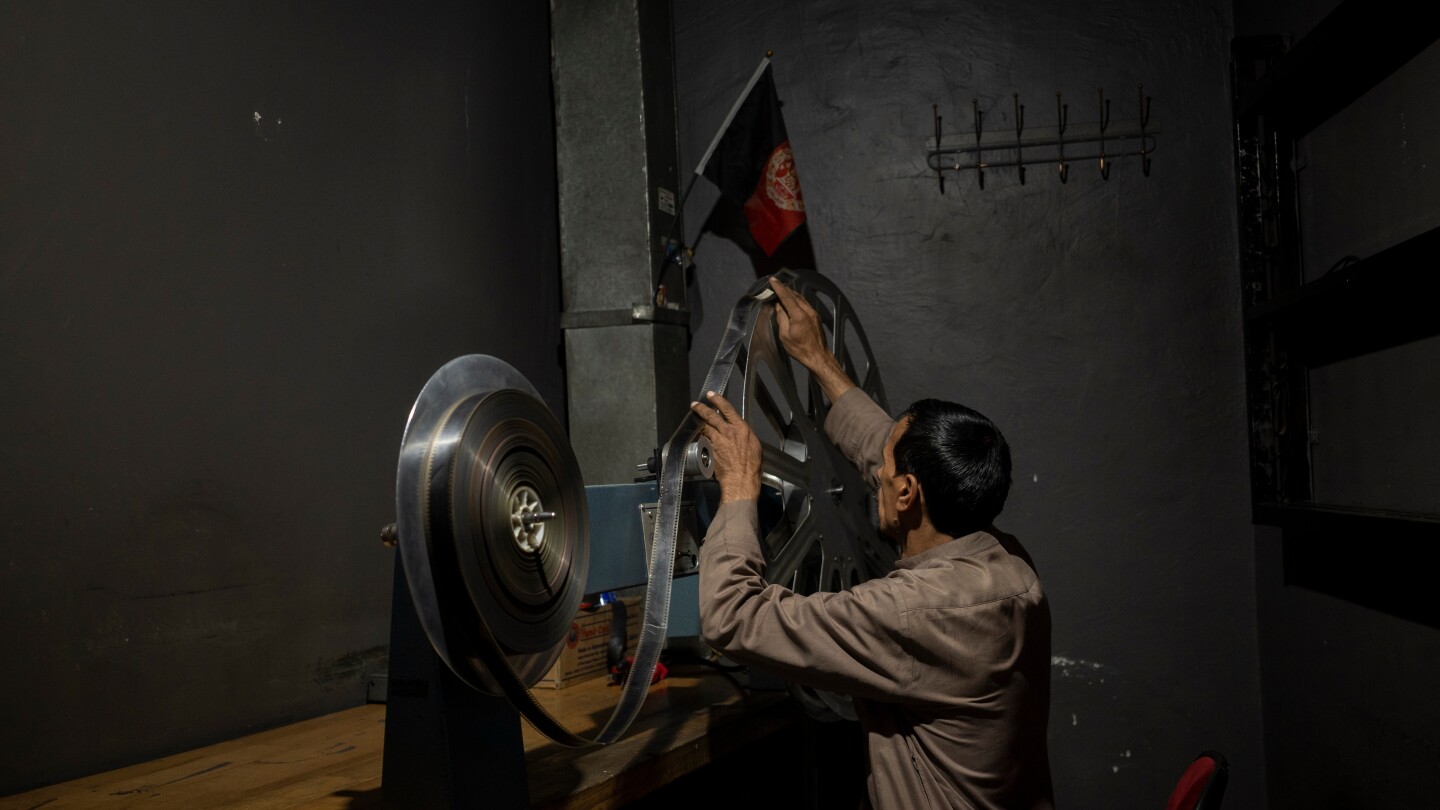
Through decades of revolution and war, the Ariana Cinema in downtown Kabul had remained standing, battered but resilient, continuing to entertain Afghans with Bollywood movies and American action films. Now, it is no more.
On December 16, demolition crews began tearing down the historic cinema, which first opened its doors in the early 1960s. Within a week, the cultural landmark had vanished completely from Kabul’s landscape.
“It’s not just a building made of bricks and cement that is being destroyed, but the Afghan cinema lovers who resisted and continued their art despite the hardships and severe security problems,” Afghan film director and actor Amir Shah Talash told The Associated Press. Talash, who has worked in Afghanistan’s film industry since 2004 but now lives in France following the Taliban takeover, described the news as “very painful and sad.”
The demolition represents another significant cultural loss under Afghanistan’s Taliban government, which seized power in 2021 following the chaotic withdrawal of U.S. and NATO troops. Since taking control, the Taliban has imposed a strict interpretation of Islamic law, introducing numerous restrictions including bans on most forms of entertainment such as films and music.
Shortly after assuming power, the Taliban ordered all cinemas to cease operations. This May, the government announced the dissolution of the Afghan Film Administration, leaving cultural institutions like the Ariana in limbo. The cinema, situated on municipal land near a busy traffic roundabout with its stylish marquee and plush red seats, stood empty until authorities decided it would be replaced with a commercial development.
“Cinemas themselves are a kind of commercial activity, and that area was a completely commercial area and had the potential for a good market there,” explained Kabul Municipality spokesman Niamatullah Barakzai. He added that the municipality aims to develop land it owns “to generate good income from its resources and bring positive changes in the city.”
The Ariana Cinema opened in 1963, its modern architecture reflecting the liberalizing spirit that Afghanistan’s then-ruling monarchy was trying to introduce to the deeply traditional nation. It represented a brief window of cultural openness before Afghanistan descended into decades of conflict.
The Soviet invasion in 1979 marked the beginning of prolonged instability. By the late 1980s, war had engulfed the country as Soviet-backed President Najibullah’s government fought against an American-backed coalition of warlords and Islamic militants. Following Najibullah’s overthrow in 1992, civil war erupted, causing extensive damage to the cinema. When the Taliban first took control of Kabul in 1996, the Ariana and other surviving cinemas were shuttered.
After the U.S.-led invasion in 2001 ousted the Taliban, the Ariana experienced a revival. With assistance from the French government, it was rebuilt in 2004 and once again became a cultural hub for Kabul residents. Indian films drew particularly large audiences, as did action movies and Afghan productions that emerged during a renaissance of domestic filmmaking.
For Talash, the Ariana held personal significance. His childhood visits to the cinema with his brothers sparked his interest in film. “It was from this cinema that I fell in love with film and turned to this art form,” he recalled. Later, one of Talash’s own films was screened at the Ariana, creating what he described as “one of the unforgettable memories for me.”
The cinema served as more than entertainment—it was a cultural gathering place where Kabul residents would go to “relieve their sorrows and problems and to calm their minds and hearts,” according to Talash. “But now, a very important part of Kabul has been taken away. In this new era, we are regressing, which is very sad.”
The Ariana also attracted visitors from neighboring Pakistan during the 1960s and 1970s. After Pakistan imposed heavy taxes on Indian films following the 1965 war over Kashmir, Pakistani Bollywood fans would travel to Kabul to watch popular Indian movies.
Among them was Sohaib Romi, a Pakistani film enthusiast who recalled watching the Indian film “Samjhauta” (Compromise) at the Ariana in 1974 with his uncle. For him, the loss transcends borders: “My memories are buried in the rubble of the Ariana Cinema,” he said.
Despite the destruction, Talash maintains cautious optimism about the future of Afghan art. “Buildings may collapse, but art lives on in the minds and hearts of people,” he said. “The future looks difficult, but it is not completely dark.”
Fact Checker
Verify the accuracy of this article using The Disinformation Commission analysis and real-time sources.

24 Comments
Silver leverage is strong here; beta cuts both ways though.
If AISC keeps dropping, this becomes investable for me.
Good point. Watching costs and grades closely.
If AISC keeps dropping, this becomes investable for me.
Exploration results look promising, but permitting will be the key risk.
Good point. Watching costs and grades closely.
Exploration results look promising, but permitting will be the key risk.
Good point. Watching costs and grades closely.
Good point. Watching costs and grades closely.
The cost guidance is better than expected. If they deliver, the stock could rerate.
Good point. Watching costs and grades closely.
Good point. Watching costs and grades closely.
Silver leverage is strong here; beta cuts both ways though.
I like the balance sheet here—less leverage than peers.
Good point. Watching costs and grades closely.
Good point. Watching costs and grades closely.
I like the balance sheet here—less leverage than peers.
Good point. Watching costs and grades closely.
Good point. Watching costs and grades closely.
Uranium names keep pushing higher—supply still tight into 2026.
Good point. Watching costs and grades closely.
Good point. Watching costs and grades closely.
If AISC keeps dropping, this becomes investable for me.
I like the balance sheet here—less leverage than peers.