


Listen to the article
Afghan Hunger Crisis Worsens as Aid Cuts Leave Millions Without Support
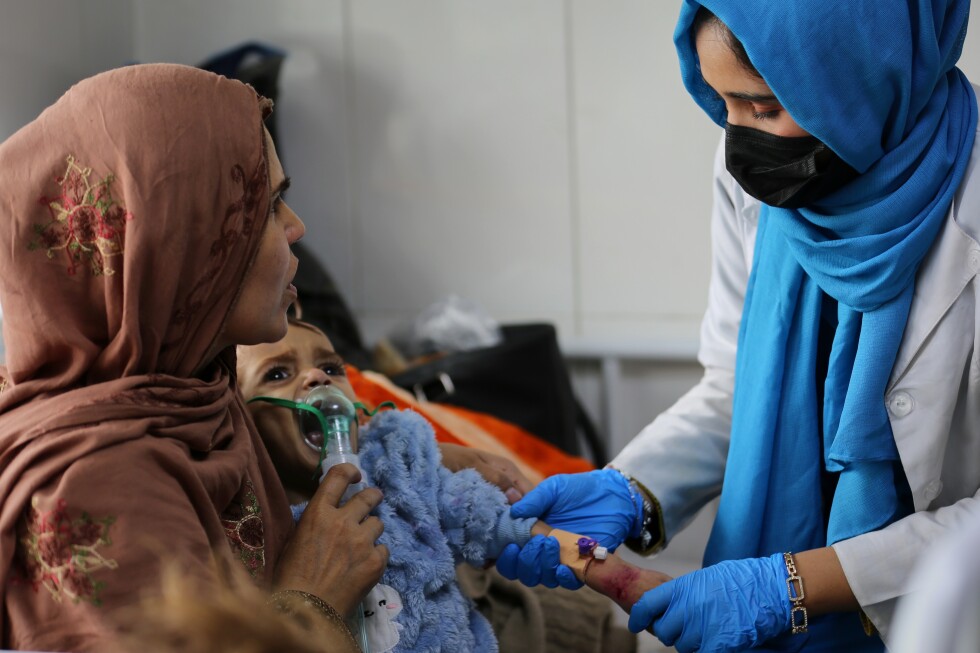
KABUL, Afghanistan — The toddler’s cries echo through the ward as medical staff fit an oxygen mask over his gaunt face. At just 2 ½ years old, Abu Bakar fought for his life when he arrived at Indira Gandhi Children’s Hospital in Kabul a month ago. Weighing only 6 kilograms (13 pounds) — roughly half his healthy weight — he represents the dire malnutrition crisis gripping Afghanistan.
His mother Latifa, 36, cradles her son gently. “I can control my hunger. I will handle it. But my child can’t,” she says, her voice tinged with desperation.
For every child like Abu Bakar receiving treatment, countless others suffer without help as humanitarian organizations face unprecedented funding cuts. The World Food Program (WFP) reports that two-thirds of Afghanistan is experiencing severe or crisis-level acute malnutrition.
“This is the highest surge in malnutrition ever recorded in the country. And the lives of 4 million children are hanging in the balance,” said John Aylieff, WFP Country Director for Afghanistan.
Afghanistan’s fragile humanitarian situation has deteriorated rapidly. After four decades of conflict, the Taliban takeover in 2021 triggered an immediate halt to direct foreign aid, sending millions into poverty. The crisis has intensified due to a stagnant economy, severe drought, two devastating earthquakes in 2025, and the return of 5.3 million Afghans expelled primarily from Pakistan and Iran.
Recent funding cuts to humanitarian organizations, including suspended U.S. aid to WFP’s food distribution programs, have eliminated critical support for vulnerable populations. “The aid cuts have been devastating,” Aylieff told The Associated Press. “We are forced now to turn away three out of four of them because we simply don’t have the money.”
The situation represents an unprecedented humanitarian challenge. Of the 17.4 million Afghans facing acute hunger, WFP can now reach only 2 million, and even those receive reduced rations.
Donor fatigue has set in as countries distribute limited humanitarian budgets among multiple global crises, including famine in Sudan and conflicts in Gaza and Ukraine. WFP’s Afghanistan budget, which stood at $600 million in 2024, has plummeted to an expected $200 million this year.
For families like Abu Bakar’s, the consequences are immediate and devastating. His mother recalls receiving food assistance three years ago, but that support has vanished. With her husband, a construction worker, unemployed for a year, she often has nothing to feed her five sons.
The health impacts are increasingly fatal. WFP has documented more than 500 child deaths in recent months due to hunger-related causes, a figure Aylieff describes as “the tip of the iceberg” since many deaths in remote, snow-blocked villages go unrecorded.
“How many more Afghan children will die here before the world wakes up?” Aylieff questioned. “How many? What is the number? I really don’t know.”
In another ward at Kabul’s Ataturk Hospital, 21-year-old Sharara keeps vigil over her 6-month-old son Samir. After being transferred between hospitals in Badakhshan province and Kunduz city, Samir arrived in Kabul with severe pneumonia and heart problems compounded by malnutrition. Despite 13 days of hospitalization, his weight remains dangerously low.
The Afghan government acknowledges the hunger crisis and reports expanding malnutrition treatment facilities from 800 to approximately 3,200. Health Ministry spokesman Sharafat Zaman said about 3 million malnourished children and mothers received treatment in 2025.
“Malnutrition is not a one-day problem. Malnutrition has been a problem in Afghanistan for decades due to poverty, war and other problems,” Zaman explained, emphasizing that “health is separate from politics.”
Women bear a disproportionate burden in this crisis. Taliban restrictions that ban women from most employment have left widows with children particularly vulnerable. Aylieff reported an alarming trend: “We’re getting more and more suicide calls from women because they just don’t know how to feed their children.”
WFP nutrition programs have documented a 30% increase in acutely malnourished pregnant and breastfeeding women, an unprecedented rise in the nutrition community.
“These are the women to whom the world pledged unwavering solidarity in the aftermath of the takeover of the country in 2021,” Aylieff noted. “Those same women are asking us, where is the solidarity of the international community?”
As international attention shifts to other global crises, humanitarian workers fear Afghanistan’s hunger emergency is being forgotten at a critical moment when millions of lives hang in the balance.
“If I had one plea,” Aylieff said, “it’s to not walk away from Afghan women who are now facing abject misery, hunger, malnutrition and watching their children die.”
Fact Checker
Verify the accuracy of this article using The Disinformation Commission analysis and real-time sources.

10 Comments
The humanitarian crisis in Afghanistan is truly heartbreaking. With the WFP forced to turn away 3 in 4 children due to aid cuts, the situation has become catastrophic. Malnutrition rates are the highest ever recorded in the country. This is a moral crisis that requires immediate, large-scale intervention to save lives.
This is a devastating humanitarian crisis unfolding in Afghanistan. To have the WFP turning away 3 in 4 children due to lack of resources is heartbreaking. Malnutrition rates at record highs – the international community must act quickly to provide the necessary aid and support to these vulnerable communities.
The worsening hunger crisis in Afghanistan is deeply concerning. With the WFP forced to turn away three-quarters of children in need, the situation has become catastrophic. Urgent action is required to scale up emergency food and medical assistance to these vulnerable populations. This is a moral imperative.
Tragic to see the malnutrition crisis in Afghanistan spiraling out of control. With aid organizations like the WFP having to turn away most children in need, the situation has become dire. Something must be done quickly to get emergency food and medical supplies to these vulnerable populations.
This is an absolute tragedy unfolding in Afghanistan. The fact that the WFP has had to turn away 3 in 4 children due to lack of resources is devastating. Malnutrition rates at record highs – something has to be done immediately to get food and medical aid to these vulnerable communities.
I agree, this crisis demands a swift and robust humanitarian response from the international community. Allowing millions of children to suffer from severe malnutrition is unconscionable.
This is a devastating situation. The humanitarian crisis in Afghanistan continues to worsen, with millions of children facing severe malnutrition. Aid cuts have forced the WFP to turn away three-quarters of the children in need of assistance. This is an unacceptable tragedy that demands urgent global action.
The humanitarian situation in Afghanistan has reached a dire tipping point. It’s heartbreaking to see the WFP forced to turn away 3 in 4 children in need due to funding constraints. This level of malnutrition and suffering is unacceptable. Urgent action is needed to get emergency aid to these vulnerable populations.
Afghanistan is facing a catastrophic hunger crisis that is leaving millions of children at risk. It’s unacceptable that the WFP has had to turn away 3 in 4 children due to funding shortfalls. This humanitarian disaster requires a urgent, coordinated global response to avert a devastating loss of life.
Absolutely, the international community needs to step up with substantial aid and resources to address this crisis. Letting millions of children suffer from malnutrition is unconscionable.