


Listen to the article
American Academic Released by Taliban After Year-Long Detention
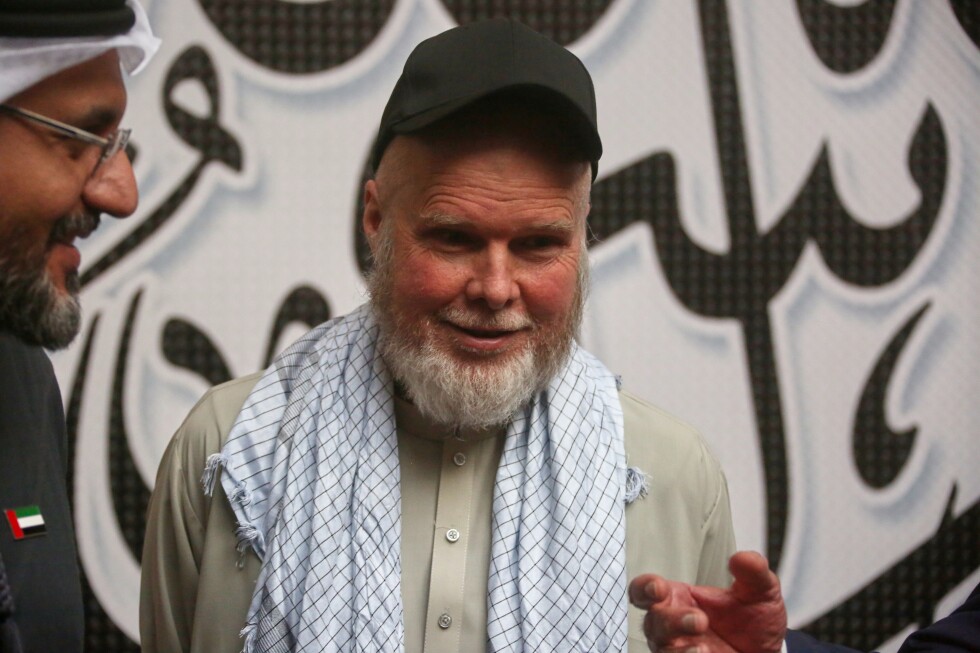
Afghan Taliban authorities freed American academic Dennis Coyle on Tuesday after holding him for more than a year, marking a rare diplomatic breakthrough between the isolated regime and the United States.
Afghanistan’s Foreign Ministry announced the release was timed to coincide with Eid al-Fitr, the Muslim holiday celebrating the end of Ramadan. The ministry stated that Coyle was freed in Kabul following appeals from his family and after Afghanistan’s Supreme Court determined his “previous imprisonment sufficient.”
Coyle had been detained since January 2025, though Afghan officials never specified which laws he allegedly violated. His case highlights ongoing tensions between the Taliban government and Western nations since the group’s return to power in 2021.
U.S. Secretary of State Marco Rubio welcomed the development, framing it within the context of the Trump administration’s broader diplomatic efforts. “President Trump is committed to ending unjust detentions overseas – Dennis joins over 100 Americans who have been freed in the past 15 months under his second term in office,” Rubio said in a statement.
The release comes just weeks after the U.S. State Department designated Afghanistan as a sponsor of wrongful detention, accusing the Taliban of engaging in “hostage diplomacy.” Afghanistan joined Iran as the only countries singled out by the United States for allegedly detaining Americans to gain political leverage.
Taliban officials have consistently rejected these characterizations. Afghan Foreign Minister Amir Khan Muttaqi insisted his country “has not arrested citizens of any country to achieve political goals,” claiming Coyle was released “after going through the judicial process as a result of violating the laws.”
According to the State Department, at least three other U.S. nationals remain in Taliban custody. Among them is Mahmood Habibi, an Afghan American businessman who worked as a contractor for a Kabul-based telecommunications company. The FBI and Habibi’s family believe he was taken by Taliban forces in 2022, though Afghan authorities deny holding him.
Ahmad Habibi, Mahmood’s brother, expressed mixed emotions about Coyle’s release. “We hope that our family will soon have the same feeling of relief when Mahmood is returned home to us,” he said in a statement.
Secretary Rubio also mentioned Paul Overby, an American listed on the FBI’s missing persons website who disappeared in eastern Afghanistan’s Khost province in 2014 while researching a book. “We are still seeking the immediate return of Mahmood Habibi, Paul Overby, and all other unjustly detained Americans,” Rubio said. “The Taliban must end their practice of hostage diplomacy.”
Both American and Afghan officials acknowledged the diplomatic roles played by the United Arab Emirates and Qatar in facilitating Coyle’s release. The Foreign Ministry also revealed that Muttaqi had met in Kabul with former U.S. Special Representative for Afghanistan Zalmay Khalilzad prior to the release, suggesting behind-the-scenes negotiations.
The Taliban government, which has struggled to gain international recognition since seizing power following the U.S. military withdrawal in August 2021, appeared to frame the release as a goodwill gesture. Afghanistan released Coyle “based on humanitarian sympathy and goodwill, and believes that such steps can further strengthen the atmosphere of trust between countries,” the Foreign Ministry stated.
The statement added that Kabul “also expresses the hope that both countries will find solutions to the remaining problems through understanding and constructive dialogue in the future” – potentially signaling openness to further engagement with Washington on remaining detainee cases and other issues.
Since returning to power nearly three years after being ousted in a U.S.-led invasion following the 9/11 attacks, the Taliban have implemented strict interpretations of Islamic law and faced widespread international criticism for their treatment of women and minorities. No country has officially recognized their government, complicating humanitarian aid efforts in a country facing severe economic challenges.
Fact Checker
Verify the accuracy of this article using The Disinformation Commission analysis and real-time sources.

16 Comments
If AISC keeps dropping, this becomes investable for me.
Uranium names keep pushing higher—supply still tight into 2026.
Interesting update on Afghan Taliban government frees American held since January 2025. Curious how the grades will trend next quarter.
The cost guidance is better than expected. If they deliver, the stock could rerate.
Silver leverage is strong here; beta cuts both ways though.
Production mix shifting toward World might help margins if metals stay firm.
Good point. Watching costs and grades closely.
Exploration results look promising, but permitting will be the key risk.
Good point. Watching costs and grades closely.
Good point. Watching costs and grades closely.
Silver leverage is strong here; beta cuts both ways though.
Good point. Watching costs and grades closely.
Nice to see insider buying—usually a good signal in this space.
Good point. Watching costs and grades closely.
Exploration results look promising, but permitting will be the key risk.
Good point. Watching costs and grades closely.