


Listen to the article
Despite War, Iran Continues Oil Exports Through Partially Closed Strait of Hormuz
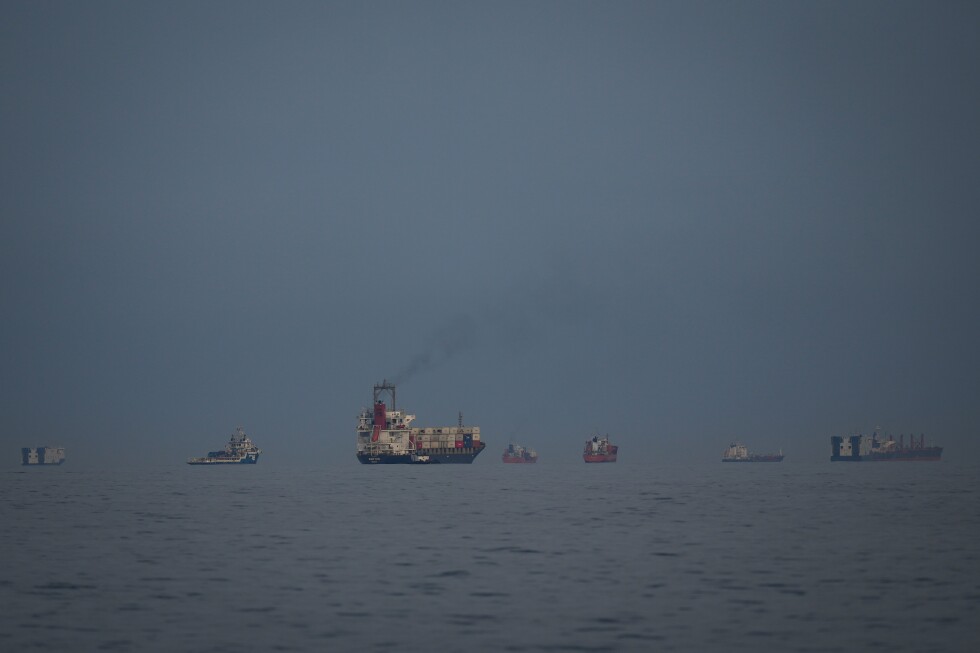
About 90 vessels, including oil tankers, have successfully navigated the Strait of Hormuz since the outbreak of hostilities with Iran, according to data from maritime tracking firms. This traffic persists even as the vital waterway—responsible for approximately one-fifth of the world’s crude oil supply—has been largely closed since early March.
Maritime data firm Lloyd’s List Intelligence reports that many of these passages involve “dark” transits evading Western sanctions, with vessels likely connected to Iran. More recently, ships affiliated with India and Pakistan have also managed to cross the strait as diplomatic negotiations intensify.
The continued movement through this strategic chokepoint comes as crude oil prices have surged above $100 per barrel, prompting U.S. President Donald Trump to pressure allies and trading partners to deploy warships and help reopen the waterway to bring prices down.
Despite the conflict and Iran’s threats that it won’t allow “even a single liter of oil” destined for the U.S., Israel and their allies to pass through the strait, Iran itself has maintained significant oil exports. Trade analytics platform Kpler estimates that Iran has exported more than 16 million barrels of oil since early March, with China emerging as the primary buyer amid Western sanctions.
“There’s been continued resilience in Iran’s oil export volumes,” said Ana Subasic, a trade risk analyst at Kpler. The situation has allowed Iran to both profit from oil sales and “preserve its own export artery” by maintaining control over the chokepoint, according to Kun Cao, client director at consulting firm Reddal.
The passage statistics reflect this selective approach to blocking traffic. Lloyd’s List Intelligence documented 89 vessels crossing between March 1-15, including 16 oil tankers—a dramatic reduction from the pre-war daily average of 100-135 vessel passages. Approximately one-fifth of these recent crossings involved Iran-affiliated vessels, with Chinese and Greek-affiliated ships also making the journey.
Diplomatic intervention appears to be facilitating some of these passages. The Pakistan-flagged crude oil tanker Karachi, operated by the Pakistan National Shipping Corporation, successfully transited the strait on Sunday. While Pakistan Port Trust spokesman Shariq Amin declined to confirm the vessel’s route, he indicated the ship would soon arrive safely in Pakistan.
Two Indian liquefied petroleum gas carriers—the Shivalik and Nanda Devi, both owned by the state-run Shipping Corporation of India—also navigated the strait in mid-March. This transit holds significant importance for India, as LPG serves as the primary cooking fuel for millions of households across the country. India’s Foreign Minister Subrahmanyam Jaishankar confirmed to the Financial Times that these vessels passed following diplomatic talks with Iran.
Similarly, Iraq has initiated discussions with Iran to secure passage for Iraqi oil tankers through the strait, according to Iraq’s state-run news agency.
Richard Meade, editor-in-chief of Lloyd’s List, suggests that vessels may be transiting “with at least some level of diplomatic intervention,” and that Iran might have “effectively created a safe corridor” for certain ships passing close to the Iranian coast.
Some vessels attempting to cross the strait have reportedly declared themselves as China-linked or staffed entirely by Chinese crew to reduce the risk of attack, leveraging China’s relatively closer ties with Iran.
In an effort to stabilize oil markets, the U.S. has adopted a selective approach as well. Treasury Secretary Scott Bessent told CNBC on Monday that the U.S. is allowing Iranian oil tankers to cross the strait: “The Iranian ships have been getting out already, and we’ve let that happen to supply the rest of the world.”
While U.S. forces bombed military sites on Iran’s Kharg Island—a key node in Iran’s oil network—President Trump stated that he had deliberately avoided targeting oil infrastructure for now.
The current situation indicates the strait isn’t completely closed but rather “closed selectively against some traffic, while still functioning for Iranian exports and a narrow set of tolerated non-Iranian movements,” Cao explained.
However, analysts at Dutch bank ING caution that if Iran’s strategy is to “inflict pain through higher energy prices, the number of tankers it allows through the Strait of Hormuz may be very limited” going forward.
Fact Checker
Verify the accuracy of this article using The Disinformation Commission analysis and real-time sources.

18 Comments
The Strait of Hormuz is a key chokepoint, so Iran’s ability to maintain exports through this turbulent period is noteworthy. It speaks to their resilience and determination to sustain their economic interests.
With oil prices surging, the pressure is on to find a diplomatic solution that keeps the strait open. Leveraging both economic and military pressure will be a delicate balance.
The continued movement of ships through the Strait of Hormuz, despite the conflict, highlights the complexities of global energy geopolitics. Iran seems intent on maintaining its oil export revenue during this turbulent time.
I’m curious to see how the U.S. and its allies navigate this situation. Keeping the strait open for all legitimate commerce will be crucial to stabilize global energy markets.
Interesting to see Iran continuing oil exports despite the ongoing conflict. It’s a strategically important waterway, so the ability to keep traffic flowing is crucial for global energy markets.
I wonder what diplomatic negotiations are underway to help reopen the Strait of Hormuz. Maintaining stability in that region is vital for energy security worldwide.
Iran’s persistence in maintaining oil exports through the Strait of Hormuz, despite the ongoing conflict, is a significant development. It speaks to the complexities of energy geopolitics and the strategic importance of this critical waterway.
The involvement of ships from India and Pakistan in traversing the strait is also noteworthy. It suggests the potential for multilateral diplomacy to help resolve the situation and maintain stability in this vital energy chokepoint.
Iran’s ability to sustain oil exports through the Strait of Hormuz, despite the conflict, is a significant development. It speaks to their resilience and the complexities of energy geopolitics in this volatile region.
The involvement of ships affiliated with India and Pakistan in traversing the strait is also noteworthy. It suggests the potential for multilateral diplomacy to help resolve the situation and maintain stability in this critical energy chokepoint.
The persistent movement of ships through the Strait of Hormuz, even as the waterway is largely closed, is a testament to Iran’s determination to maintain its oil exports. This will likely be a key point of contention in the ongoing geopolitical tensions.
With oil prices soaring, the pressure is on to find a diplomatic solution that keeps the strait open for all legitimate commerce. Maintaining global energy security will be crucial in the weeks and months ahead.
Iran’s continued oil exports through the Strait of Hormuz, despite the ongoing tensions, highlights the complexities of energy geopolitics. Keeping this strategic waterway open will be a delicate balancing act for all parties involved.
The ability of Iran to sustain these ‘dark’ transits amid sanctions is noteworthy. It will be interesting to see how the international community responds to maintain stability in this critical energy chokepoint.
The continued flow of ships through the Strait of Hormuz, even as it is largely closed, highlights the strategic importance of this waterway. Iran’s ability to sustain oil exports during this turbulent period is a testament to their determination to preserve a vital economic lifeline.
With oil prices surging, the pressure is on to find a diplomatic solution that keeps the strait open for all legitimate commerce. Maintaining global energy security will be a delicate balancing act in the weeks and months ahead.
The ability of Iran to sustain oil exports through the Strait of Hormuz, even in the midst of conflict, demonstrates their determination to preserve a critical economic lifeline. This will likely be a key point of contention going forward.
With the surge in oil prices, the pressure to find a diplomatic solution is high. Maintaining the free flow of energy through the strait is vital for the global economy.